The Untold Stories Behind Everyday Objects: How History Hides in Plain Sight
Everyday objects tell extraordinary stories—from jeans that sparked rebellion, to pencils that shaped ideas, to coffee cups that fueled revolutions. History is hiding in plain sight.
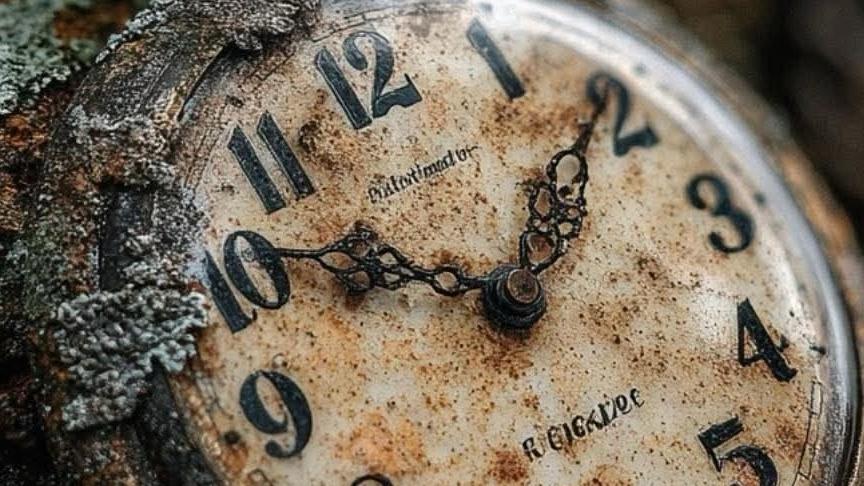
History isn’t just in ancient monuments, dusty archives, or famous battles. Sometimes, it’s hiding in plain sight, on your dining table, in your wardrobe, or even in your pencil case.
Everyday objects we use without thinking often have fascinating stories of invention, culture, and change.
Take an example, even the top fine dining restaurants in Jaipur, or for that matter any place, have a layout of forks on their dining tables as an indispensable part of cutlery.
However, what one doesn’t know is that this amazing tool is the latest addition in cutlery. People got along without forks for thousands of years.
However, the shape of the fork has been around for centuries, even a lot longer than other utensils.
Another example, take jeans, they started as tough work clothes for miners but became symbols of youth rebellion and fashion.
Or the pencil, a simple tool that helped writers, inventors, and thinkers create ideas that shaped the world.
Even a coffee cup has a story, coffee traveled from Ethiopia to Europe, shaping trade, culture, and social life along the way.
History isn’t just in books or museums, it’s all around us. By looking closely at everyday things, we can discover the amazing stories they carry and see how the past still affects our lives today.

Denim: From Workwear to Global Symbol
Denim jeans began as simple, durable workwear for miners and laborers in the 19th century.
The fabric was strong enough to withstand tough conditions, and reinforced stitching made the pants last longer than regular clothing.
Levi Strauss, a German immigrant, recognized the need for sturdy pants during the California Gold Rush and created what became the first modern pair of jeans.
But denim didn’t stay just for work. In the 1950s, jeans became a symbol of rebellion for teenagers, popularized by movie stars like James Dean and Marlon Brando.
History
Rewind the Stories that Made Africa, Africa
A Journey Through Time, Narrated with Insight.
Wearing jeans was no longer about practicality, it was a statement.
Over the decades, denim evolved with culture, appearing in punk, rock, and hip-hop fashion, and even reaching the runways of high fashion designers.
Denim also reflects economic and social history. It tells stories of industrial growth, globalization, and even labor struggles in factories around the world.
From humble work pants to designer jeans worth hundreds of dollars, denim connects everyday life with history, showing how a simple fabric can carry powerful cultural meaning.

The Pencil: A Tiny Tool of Big Ideas

The pencil may seem ordinary, but it has played a remarkable role in human creativity and progress.
Its story begins in the 16th century, when a large deposit of pure graphite was discovered in England.
Early pencils were simply sticks of graphite wrapped in string or sheepskin. Over time, wooden casings were added, giving the familiar pencil shape we know today.
Pencils have been essential tools for inventors, architects, writers, and artists.
Leonardo da Vinci sketched ideas that would inspire generations, and Isaac Newton used pencils to jot down mathematical theories.
Writers like Mark Twain and Virginia Woolf drafted their masterpieces with nothing more than a pencil and paper.
Even modern engineers and designers continue to rely on pencils for quick sketches and detailed plans before turning ideas into reality.
The pencil also reflects scientific and industrial advances, and the development of different hardness grades, erasers, and mechanical pencils shows how innovation improves even simple tools.
Moreover, pencils have shaped education worldwide, giving generations of students the means to learn, experiment, and express themselves.
From humble beginnings as a stick of graphite to a precise tool in the hands of creators, the pencil demonstrates that even the simplest objects can have a profound impact on human history.
History
Rewind the Stories that Made Africa, Africa
A Journey Through Time, Narrated with Insight.
Coffee Cups and the Rise of Global Culture
A cup of coffee is more than just a drink, it carries history in every sip. Coffee started in the Ethiopian highlands and spread to the Arab world, where it became an important part of daily life.
By the 17th century, coffee reached Europe, and cafés began appearing in cities like Paris and London.
These cafés were more than places to drink, they became hubs for ideas, debates, and even political planning.
Writers, philosophers, and businesspeople met over coffee to share information, inspire change, and sometimes spark revolutions.
Coffee also shows how cultures connect. Its trade involved travel, colonies, and global networks.
Over time, coffee culture adapted everywhere, from espresso bars in Italy to modern cafés worldwide.
Even a simple coffee cup reminds us how ordinary objects can carry history and shape our world.
Conclusion
Everyday objects carry echoes of the past that shape the present.
By paying attention to what surrounds us, we can uncover history not just in textbooks, but in our daily lives.
Whether it’s the jeans we wear, the pencil we write with, or the coffee cup we cradle, history hides in plain sight, inviting us to explore, reflect, and appreciate the stories that connect us all.