The Rise of AI in Governance, Risk and Compliance: Can AI Be Trusted With Political Power?
AI is moving beyond everyday technology into politics, government and national security, raising difficult questions about accountability, transparency, bias and whether democratic institutions can safely trust AI with decisions that affect citizens.
Artificial intelligence, not so long ago, was something most people encountered through science-fiction films or a recommendation algorithm quietly deciding what they should watch next.
Now, it can draft a government document, analyse public data, assist with policy research and shape how political campaigns communicate with voters.
The transition has happened so quickly that the more interesting question is no longer whether governments can or will use AI. It is whether democratic institutions are prepared for what happens when they do, and, underneath that, whether AI should be trusted with governance at all.
The attraction is obvious. Governments everywhere are buried under documents, applications, complaints and statistics that would take enormous amounts of human time to process. In the UK, more than 20,000 civil servants took part in a generative AI trial covering drafting, meeting summaries and record updates, saving an average of 26 minutes per day, and the country has since developed an AI Playbook calling for meaningful human control and an understanding of AI's limitations.
That sounds sensible, but the government is not simply another workplace. When an AI tool errs helping draft an internal email, the consequences may be embarrassing.
When it contributes to a decision concerning national security, the question becomes considerably larger: who answers for the mistake?
When AI Stops Being a Tool and Starts Influencing Power
The important distinction is between AI helping governments work and AI influencing what governments decide. The first is gradually becoming normal, Britain has experimented with AI tools across administrative work and local council processes, while Estonia is exploring digital identities that could perform defined tasks on behalf of people and organisations.
And that is where governance becomes difficult. A government employee can read a document and disagree with it; a minister can question a briefing; a civil servant can ask where a statistic came from.
But an AI-generated recommendation can arrive with the appearance of neutrality simply because it was produced by a machine, and that appearance can be dangerous.
AI does not possess political neutrality merely because it has no political ambitions, its outputs are shaped by training data, design and the people who deploy it. Biased or incomplete underlying information produces biased or confidently incomplete recommendations, and arriving in a polished paragraph does not make an inaccurate output true.
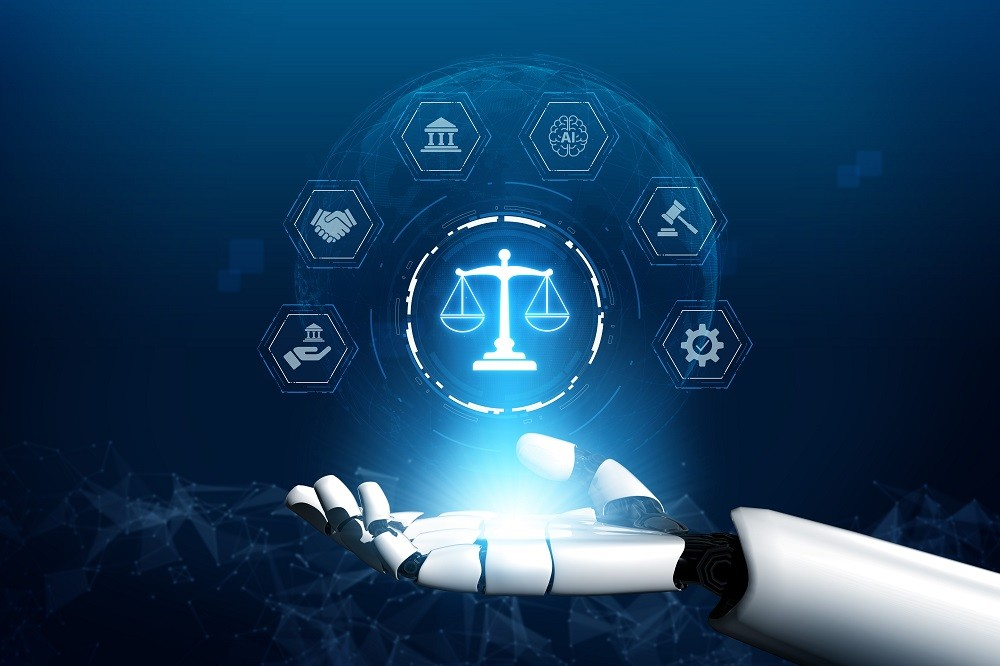
This is why governance matters more than the technology itself. The US National Institute of Standards and Technology's AI Risk Management Framework places governance, mapping, measurement and management at the centre of responsible AI use, with accountability built in.
The principle is straightforward: AI should not simply be deployed and trusted;its risks have to be identified, measured and continuously managed. Politics makes that requirement even harder.
Democracy Was Already Struggling With Information. AI Changes the Scale
Consider what is happening around elections. AI can help candidates communicate with voters, translate political messages and process public feedback, potentially making participation more accessible at a scale traditional town halls cannot.
Japan's Team Mirai, for example, has used AI-enabled conversations to gather constituent views. Used carefully, that could make politics less distant and feel closer to the common man.
But the same technology can make political manipulation cheaper and faster. Brazil's 2026 election is a clear case study: as the country approaches its October election, AI-generated political content has surged, prompting authorities to consider tighter rules around deepfakes and synthetic media.
The Superior Electoral Court received 19 AI-related complaints in the first 11 days of the campaign, and authorities have also confronted AI systems recommending or ranking candidates.
This creates a strange contradiction: AI can help voters understand politics, but it can also make it harder for them to know what they are looking at.
A politician can now have an artificial version of their voice; a video can appear to show an event that never happened. The problem is not simply misinformation, the cost and speed of producing persuasive misinformation are changing, and democracy depends heavily on citizens knowing what is real.
The Military Question Is Even More Uncomfortable
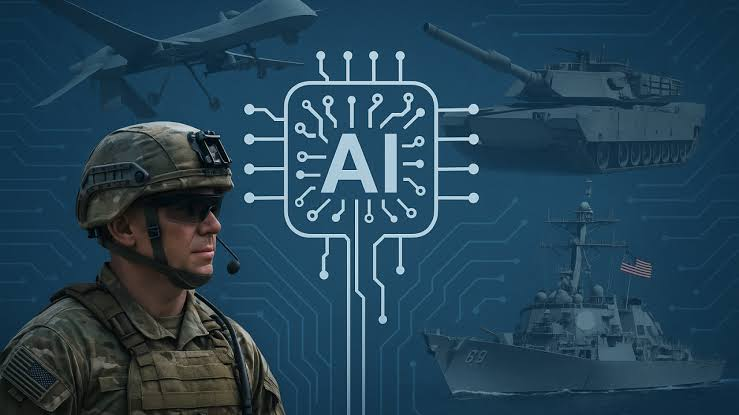
If using AI in elections raises questions about information and trust, embedding it into national security and military institutions raises questions about responsibility itself.

Governments are already exploring AI for defence, intelligence and decision-support systems. Japan, for instance, is planning increased investment in AI alongside drones and advanced defence technologies, including a platform to support command and decision-making.
The concern here is not whether AI is going to replace human leaders. It is what happens when decision-makers become too comfortable accepting machine-generated assessments because they appear faster, more comprehensive or more objective than human analysis.
A machine can calculate probabilities and identify patterns, but it cannot carry democratic legitimacy or explain why a decision was morally justified, and saying "the system recommended it" cannot substitute for accountability.
That is the central problem with AI in governance: automation can distribute responsibility so widely that nobody feels responsible.
The Real Test Is Whether Humans Remain Accountable
This does not mean governments should reject AI, that would be unrealistic, and even counterproductive. Used properly, AI could make public institutions faster, help officials process overwhelming information and create new ways for citizens to participate in policymaking. The problem begins when efficiency becomes an excuse to remove scrutiny.
Governments therefore need something more substantial than an AI policy document: clear ownership of every significant AI system, records of how it is used, independent testing, privacy protections, mechanisms for challenging automated decisions and meaningful human oversight, echoing the UK's own framework for automated decision-making, which emphasises transparency, explainability, fairness and accountability.
Citizens should also know when AI is influencing decisions that affect them, the public should not discover years later that an algorithm helped determine who received a service or what shaped a political decision.
AI is becoming part of government because the government has the same problem almost every modern institution has: too much information, too little time.
But democracy has another problem, it requires trust. That is why the question we should be asking is not whether AI is intelligent enough to enter politics.
It is whether our political institutions are accountable enough to use it, and whether AI can, in fact, be trusted with governance. The greatest risk may not be an AI that becomes too powerful; it may be humans becoming too willing to surrender difficult decisions to something they believe is more objective than they are.
AI can help governments see more, process more and perhaps even serve people better. But when it enters the rooms where political power is exercised, efficiency cannot be the only standard. The machine can assist with the decision. The human being must still own it.