Starmer’s China Reset: Economic Deals Take Center Stage as UK–Beijing Ice Thaws
Keir Starmer’s Beijing visit signals a thaw in UK-China relations, with visa-free travel, trade talks, and economic deals outweighing political tensions.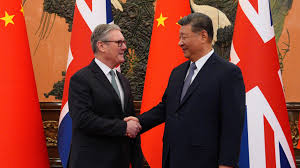
Keir Starmer’s three-day visit to Beijing has signaled a notable recalibration of Britain’s relationship with China, with the prime minister declaring an end to what he described as an eight-year diplomatic “ice age.” The trip, which included talks with President Xi Jinping, reflected a clear shift toward economic pragmatism as the UK government seeks to revive growth at home while cautiously navigating political and security sensitivities.
One of the most immediate outcomes of the visit was an agreement granting visa-free travel for Britons visiting China for up to 30 days. The move places the UK alongside dozens of other countries already benefiting from relaxed entry rules and is expected to boost tourism, business travel, and people-to-people exchanges by removing a long-standing administrative barrier.
Economic priorities dominated the agenda. The UK currently exports around £13 billion worth of services to China each year, and both sides agreed to launch a feasibility study into a potential free trade deal focused on services. While exploratory in nature, such an agreement could eventually provide clearer, legally binding rules for British firms operating in the Chinese market. Talks were also revived under the UK-China joint economic and trade commission, which had been dormant since 2018, signaling a broader attempt to normalize commercial dialogue.
British exporters also secured sector-specific gains. Pharmaceutical giant AstraZeneca confirmed plans to invest £10.8 billion in its Chinese operations, underlining the importance of the market to UK life sciences. Meanwhile, tariffs on Scotch whisky imports to China were cut from 10% to 5%, a move expected to deliver an estimated £250 million boost to the industry over five years, with China ranking among its key overseas markets.
Beyond trade, the visit produced agreements on cooperation against organised crime and illegal immigration. UK officials believe the intelligence-sharing framework could help disrupt the supply chains behind small-boat crossings of the English Channel, noting that many engines and components used in such vessels are manufactured in China. Starmer said the deal would help “cut off supply at source” and restore control of Britain’s borders. Additional memorandums of understanding were signed covering areas such as product standards, health, sports industries, technical education, food safety, and animal and plant quarantine.
Despite the economic emphasis, Starmer acknowledged that difficult issues were raised during his meetings. He said human rights concerns, including the detention of Hong Kong activist Jimmy Lai and the treatment of Uyghur Muslims, were discussed “respectfully” with Chinese leaders. National security threats were also addressed, though Downing Street offered limited detail on the substance of those exchanges.
Speculation over a potential return visit by Xi Jinping to the UK quickly drew criticism from British MPs who remain sanctioned by China over human rights issues. Several lawmakers argued that any invitation would be politically fraught while sanctions remain in place and Chinese diplomats are barred from parliament over espionage concerns. The Speaker of the House confirmed that, under current rules, Xi would not be permitted to address Parliament.
China’s state media offered a measured welcome to the visit, framing it as an act of economic realism rather than a dramatic political realignment. Commentaries suggested the UK was reassessing its China policy under domestic economic pressure, with economics taking precedence over ideology. President Xi, for his part, called for a “broader, deeper and more sophisticated” relationship, urging both sides to manage differences and pursue cooperation that could “stand the test of history.”