Return of a Legend: Apple TV Unearths David Bowie's Lost Horror Series for Streaming
The British-Canadian horror anthology 'The Hunger,' hosted by David Bowie and Terence Stamp, is experiencing an unexpected resurgence on streaming charts, likely driven by the recent film 'Obsession.' This renewed interest in classic horror aligns with a Collider quiz that helps users determine their survival odds against iconic villains like Jason Voorhees and Freddy Krueger. Both phenomena underscore the enduring appeal and diverse ways audiences engage with the horror genre.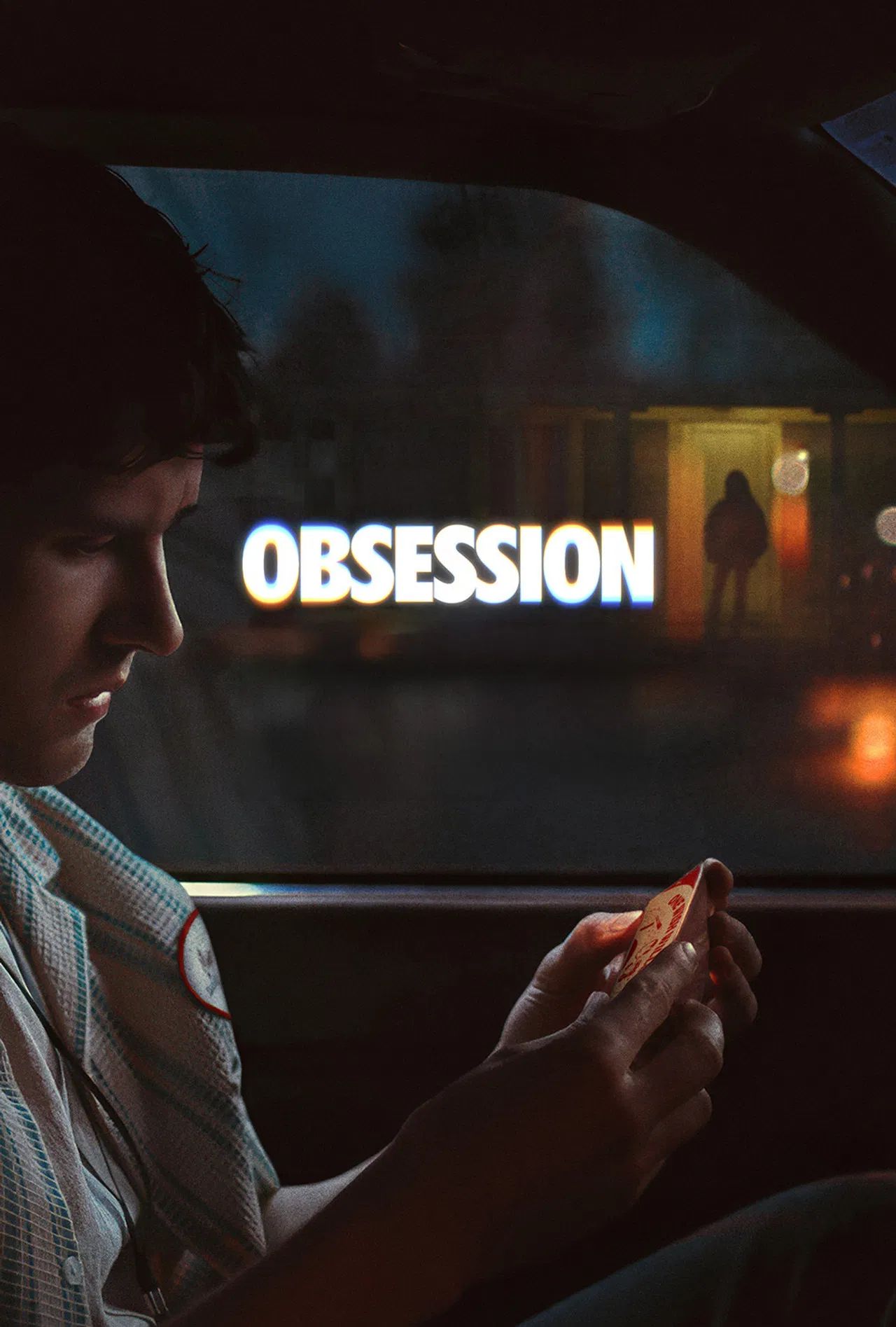
An unexpected phenomenon is currently unfolding on streaming platforms, where old shows find a second life for reasons that defy conventional explanations. This isn't due to a cast member's new role, a reboot, or an anniversary. Instead, a British-Canadian horror anthology that concluded in 2000, titled 'The Hunger,' has suddenly climbed PVOD charts, particularly on the Apple TV Store in the United States, where it currently ranks as the #7 most popular TV show. This resurgence is particularly perplexing as it's not October, ruling out a seasonal horror bump, and there are no new spin-offs or revivals in production.
'The Hunger' originally ran for two seasons between 1997 and 2000, accumulating 44 standalone episodes. It cultivated a reputation as an erotic, more horror-drenched counterpart to 'The Twilight Zone,' boasting significant talent both in front of and behind the camera. Acclaimed actor Terence Stamp hosted the first season, while the legendary musician and actor David Bowie took over hosting duties for the second season.
The most plausible explanation for 'The Hunger's' sudden comeback is its thematic connection to the recent film 'Obsession.' After becoming a major cultural phenomenon, 'Obsession' made its way to VOD on June 30. Its premise, which revolves around dangerous desire, the supernatural, and dark romance, closely mirrors the core themes of 'The Hunger.' Viewers seeking more content in this vein after watching 'Obsession' are likely discovering the forgotten series that explored these concepts years prior.
Episodes of 'The Hunger' consistently focused on the unsettling transformation of desire into horror, often culminating in very dark endings. For those unfamiliar with the series, a close mainstream reference point could be the 'Amateur Night' segment from the original 'V/H/S,' which features men unknowingly bringing a shapeshifting succubus back to their hotel room. 'The Hunger' employed a similar template, delving into narratives involving vampires, cannibalism, cults, and curses, making it available for rent or purchase on the Apple TV Store for new audiences.
Complementing this deep dive into horror content, Collider offers an exclusive 'Horror Survival Quiz' designed to determine which iconic horror villain a user has the best chance of surviving. This interactive quiz evaluates a participant's instincts, environment preferences, strengths, fears, group roles, common horror movie mistakes, and potential advantages against five notorious killers: Jason Voorhees, Michael Myers, Freddy Krueger, Pennywise, and Chucky.
For those facing Jason Voorhees, the quiz suggests survival hinges on exploiting his predictability. Jason is relentless but moves in straight lines, lacking strategy or adaptability. Survivors in Crystal Lake were those who kept moving, utilized the environment's terrain, water, and distance, and refused to be where he expected, resisting the panic that often leads to capture.
Against Michael Myers, survival is tied to meticulous spatial awareness and observation. Michael is patient, methodical, and adept at blending into ordinary suburbia, becoming almost impossible to detect until it's too late. Noticing subtle anomalies, like a shape in a window or a car parked incorrectly, and mapping out exits and shadows are crucial, akin to the instincts displayed by Laurie Strode.
Freddy Krueger, who operates by invading one's mind and weaponizing fears and memories, is vulnerable to psychological resilience. Those who have confronted their inner demons are harder to destabilize. Survivors on Elm Street understood what was happening and chose to face Freddy rather than flee, as his power diminishes in the presence of someone who refuses to give him the fear he feeds on.
Pennywise, the ancient, shapeshifting entity that feeds on terror, has a critical weakness: it cannot function against someone who genuinely stops being afraid. Like the Losers Club, survival comes from facing fears directly and honestly, asking uncomfortable questions, and refusing to let fear fester in the dark. A lack of fear renders its primary weapon ineffective, making such an individual its worst nightmare.
Finally, against Chucky, the killer doll, the key to survival is taking the threat seriously from the outset. Chucky exploits the gap between his innocuous appearance and his deadly reality. Those who do not underestimate threats based on size or appearance, and who close the delay between recognizing the danger and responding, have the best chance. Treating every unfamiliar thing with skepticism, rather than dismissing it as absurd, is paramount to overcoming Chucky's surprise attacks.