Rain Does Not Fall on One Roof Alone: A Call to Remember Our Shared Humanity
Once, rain brought people together, now it only reminds us how far apart we’ve grown. The proverb “Rain does not fall on one roof alone” asks us to remember what empathy means, and that no roof is truly waterproof.
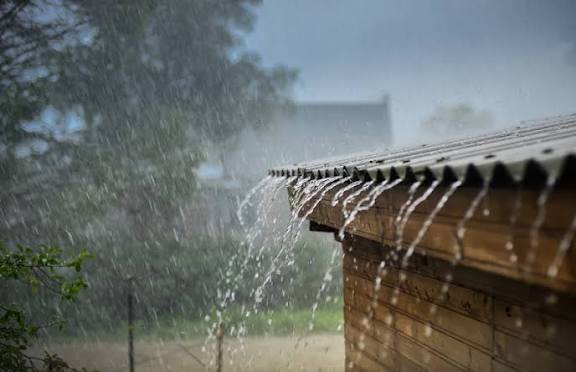
Have we lost our empathy? Once, the rain was not just weather; it was the sound that gathered people under the same shelter, the sky’s way of reminding us that no one really lived alone. When it started to pour in the village, mothers called out to neighbors to bring in their laundry, children ran from compound to compound laughing under the grey clouds, and elders sat by the doorway watching as heaven’s water united every roof in a common rhythm. It was a shared reminder that the same sky stretched over everyone.
But now, the world has changed. We still live under that same sky, but our roofs have grown apart. The African proverb of Cameroonian origin, “Rain does not fall on one roof alone”, carries a wisdom we seem to have forgotten. It is a simple truth that life’s storms touch everyone.
It doesn’t matter who we are, where we live, or how much we own, the rain does not discriminate. It falls on the rich and the poor, the proud and the humble, the old and the young. It connects us in our humanity. Yet, somehow, we have started to live as though the weather obeys our boundaries.
In African thought, the proverb’s meaning stretches beyond the literal. It teaches that no hardship belongs to one person alone. It is an acknowledgment of our shared struggles, a reflection of our interconnectedness, an encouragement to offer support, and a reminder to stay empathetic. These are the foundations on which African societies were built, and perhaps what our modern world needs to remember most.

The Sky Darkens for Everyone
In traditional African life, hardship was never seen as private. Life itself was a shared responsibility, and empathy was instinctive. Everyone understood what the rain understood, that pain, like the weather, does not fall neatly on a single roof. Today, the rains still come, but our response to it has changed. We have learned to draw curtains instead of drawing closer. Individualism has taught us to mind our own business, to protect our own peace, and believe that other people’s troubles are none of our concern. But life doesn’t work that way. Sooner or later, every roof will leak.
One of life’s great equalizers is shared struggles. It humbles the wealthy, tests the proud, and brings the distant ones closer, but if only we allow it to. The old proverb reminds us that no matter how high our walls are, the rain has a way of finding us. And when it does, we realize that empathy is not a favor we give to others; it is the thread that keeps the fabric of society from tearing apart.
The Ripple Beyond One Roof
When it rains on one roof, the sound does not stop there. It echoes, it travels, it ripples through the neighborhood. That is how life works, too. What happens to one person inevitably touches another. We are bound by invisible cords, whether we admit it or not, and African wisdom has always understood this. Community was very essential; each person was a vital part of the whole, and the health of one affected the well-being of all. Modern life, however, celebrates disconnection. We measure our worth by how independent we can be, by how little we need anyone.
However, isolation is an illusion. The rain that begins over one roof soon drifts to another. Hence, to believe that another’s pain does not concern us is to forget that we breathe the same air, eat from the same produce, and live beneath the same unpredictable sky. If we truly remembered our interconnectedness, empathy would come naturally.
Holding the Umbrella Together
Empathy in African culture was once woven into the very language of living. People greeted one another not with empty words, but with care. A greeting was an opening to connection, a chance to notice when something was wrong. Today, those questions have become formalities and we have traded intimacy for efficiency. Yet the proverb calls us back to the rhythm of compassion and reminds us that we are meant to hold the umbrella together.
When one person suffers, the community’s instinct should still be to gather to listen, to help, to share the burden. Sadly, in today’s digital villages, empathy is thinning out like smoke and the world’s pain only seems like background noise. However, we are to resist that numbness.
When African communities practiced shared support, they built more than houses, they built resilience. Today, even in our cities, that spirit can return through small gestures, generosity that asks for nothing back and the courage to care again.
No Roof is Waterproof
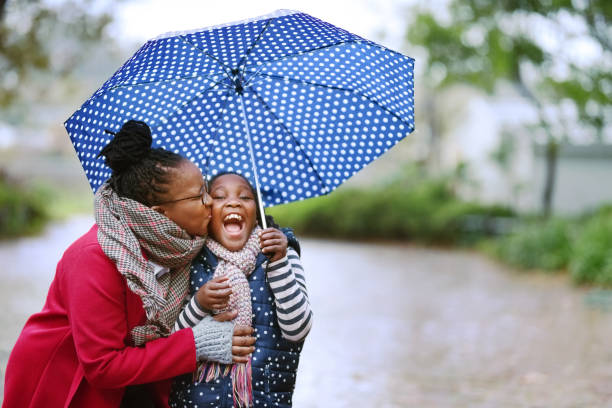
Humility is another quiet yet profound lesson in the proverb. The rain is impartial, and in the same vein, life's ordeals can visit anyone and often without warning.To remember this truth is to walk softly, to treat others gently and to resist the temptation to measure people by their storms.
Empathy grows in the soil of humility. When we recognize that our own comfort is temporary, we become slower to judge and quicker to understand. We learn that life’s balance is delicate, that the one who helps today might need help tomorrow. And in that realization, community becomes more than a word, it becomes a way of surviving the unpredictable weather of our existence. This humility is what our modern societies urgently need. We live in an age of self-made pride, where people flaunt independence as if it were immunity. But no roof is waterproof. Everyone, no matter how strong, will one day need shelter from someone else’s kindness.
When the Sky Opens

There is something very deep and spiritual about rain in African culture. It is both a giver and a taker. It nourishes crops and floods rivers, cleanses the earth and tests the strength of many homes. Perhaps that is why so many African proverbs use it as metaphor, because rain is life’s most honest symbol. It touches everyone.
Joy and sorrow, loss and renewal, pain and peace, all of these things are common to everyone, and part of the characteristics of simply being human. In villages, when heavy rain fell, people gathered under shared porches, waiting for it to pass. They talked, laughed, and sometimes fell silent together. That was empathy made simple, in togetherness. Imagine if we carried that spirit into our modern lives, choosing to remember that life is communal and not competitive.
Remembering the Village Within Us
Deep down, there is a village that still lives inside us, one that knows how to care, how to share and how to listen. It may be buried in lieu of modern lifestyles, but it’s there. African societies have always thrived on interdependence and the modern world may have pulled us apart, but it has not erased that truth. If anything, the loneliness of our times proves how deeply we still need one another.
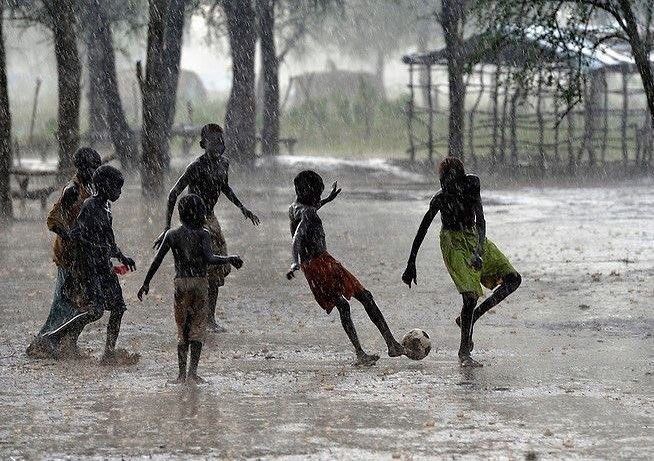
Empathy is not weakness; it is wisdom. It is what allowed our ancestors to endure hardship and celebrate joy together. It is what made the community sacred. The rain keeps teaching us this. It refuses to fall on one roof alone, no matter how tall the walls around it. It falls everywhere, insisting that we remember we belong to each other.
The Sky Belongs to All of Us
When it rains, the sound is shared. It is a sound of equality, the only sound that speaks the same language everywhere. The Cameroonian proverb is not just an observation of the weather; it is an invitation to live differently. To listen, to care, and to be aware of the roofs beyond our own.
So, have we lost our empathy? Maybe not. Maybe it’s still there, just waiting for the next storm to wake it up. And when it does, may we remember what our elders knew: that when the rain falls on every roof, humanity begins.