President Tinubu Unveils Monumental 2026 Budget Amidst High Stakes
President Bola Tinubu unveiled Nigeria's ₦58.18 trillion 2026 Appropriation Bill, themed 'Budget of Consolidation, Renewed Resilience and Shared Prosperity,' focusing on security, education, health, and infrastructure. While the National Assembly pledged cooperation, the opposition PDP criticised it as a 'budget of consolidated renewed sufferings,' citing persistent economic hardship and poverty.
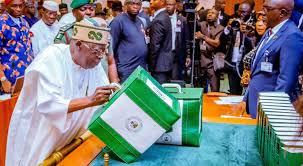
President Bola Tinubu on Friday, December 19, 2025, presented the 2026 Appropriation Bill, themed “Budget of Consolidation, Renewed Resilience and Shared Prosperity,” to a joint session of the National Assembly. The fiscal plan, totalling ₦58.18 trillion, is anchored on national renewal, stability, and sustainable development, and guided by the administration’s Renewed Hope Agenda.
The budget proposes a total revenue of ₦34.33 trillion, resulting in a fiscal deficit of ₦23.85 trillion, which represents 4.28 per cent of Gross Domestic Product (GDP).
The budget framework is built on conservative macroeconomic assumptions, including a crude oil benchmark of US$64.85 per barrel, projected oil production of 1.84 million barrels per day, and an exchange rate of ₦1,400 to the US dollar. Capital expenditure is estimated at ₦26.08 trillion, while recurrent (non-debt) expenditure stands at ₦15.25 trillion. According to President Tinubu, these allocations reflect a deliberate effort to balance fiscal prudence with growth-enhancing investments.
The 2026 Budget was prepared against the backdrop of an improving global outlook and followed a period of economic reforms that yielded measurable outcomes. In Q3 2025, Nigeria’s economy grew by 3.98 per cent, up from 3.86 per cent in Q3 2024. Inflation moderated for eight consecutive months, declining to 14.45 per cent in November 2025 from 24.23 per cent in March 2025, driven by stabilising food and energy prices, tighter monetary conditions, and improved supply responses.
In addition, oil production improved, non-oil revenues expanded, investor confidence rebounded, and external reserves rose to a seven-year high of approximately US$47 billion by November 14, 2025.
The budget is guided by four core objectives: consolidating macroeconomic stability, improving the business and investment environment, promoting job-rich growth and poverty reduction, and strengthening human capital while protecting the vulnerable. President Tinubu stressed the need for stronger discipline in budget execution, noting that directives have been issued to key ministers to ensure strict implementation. He also projected improved revenue performance through new National Tax Acts, ongoing oil and gas sector reforms, and strict compliance with revenue targets by Government-Owned Enterprises (GOEs), supported by end-to-end digitisation of revenue mobilisation.
Defence and security received the single largest allocation of ₦5.41 trillion, underscoring their foundational role in economic growth and social cohesion. The administration is pursuing a comprehensive overhaul of Nigeria’s national security architecture, with emphasis on modernisation, intelligence-driven operations, and technology-enabled surveillance. A major component of this strategy is the implementation of a new national counterterrorism doctrine, which classifies any armed group or individual operating outside state authority as a terrorist, including bandits, militias, and those who finance or facilitate such groups, including politicians and community leaders.
Human capital development remains a priority, with a combined allocation of ₦6 trillion for education and healthcare — ₦3.52 trillion for education and ₦2.48 trillion for health. In the education sector, access to tertiary institutions has expanded through the Nigerian Education Loan Fund, which has supported over 418,000 students across 229 institutions. Healthcare spending, accounting for about six per cent of the total budget, is aimed at strengthening public health infrastructure and expanding access to care. Nigeria also secured over US$500 million in grant funding from the United States for targeted health interventions.
Infrastructure development and economic productivity form the third major pillar of the budget, with an allocation of ₦3.56 trillion. The budget deliberately links food security with national security, prioritising input financing, mechanisation, climate-resilient irrigation systems, and the development of storage, processing, and agro-value chains. These interventions are designed to reduce post-harvest losses, increase smallholder incomes, deepen agro-industrialisation, and build a more resilient and diversified economy with reduced import dependence.
The budget presentation was met with assurances of continued legislative–executive collaboration and fiscal discipline. Senate President Godswill Akpabio described the joint sitting as a “defining national conversation”, defending the close cooperation between both arms of government and citing historical precedents where institutional alignment drove national transformation. While acknowledging the economic and social pressures facing Nigerians, he highlighted the country’s resilience and pointed to the 10th Senate’s high legislative output on key reforms.
Speaker of the House of Representatives, Abbas Tajudeen, echoed similar sentiments, describing the 2026 budget as “more deliberate, realistic, and results-oriented”, having drawn lessons from the volatility of the 2025 fiscal year. He referenced positive indicators such as near four per cent real GDP growth, easing inflation, and stronger external reserves, noting that these developments have restored Nigeria’s macroeconomic credibility. Tajudeen also welcomed the directive for a single fiscal framework to eliminate parallel budgets and assured that security allocations would yield tangible improvements in public safety.
The Peoples Democratic Party (PDP), however, sharply criticised the budget, branding it a “budget of consolidated renewed sufferings” that obscures the economic realities confronting ordinary Nigerians. The opposition party cited the 2025 World Bank Poverty & Equity Brief, which indicates that over 30.9 per cent of Nigerians live below the international extreme poverty line, and questioned whether the reported 3.98 per cent GDP growth has translated into improved living standards amid rising hunger and a high cost of living.
While welcoming increased security funding, the PDP demanded effective, transparent, and accountable execution, expressing concern that security agencies are sometimes outgunned by non-state actors. The party also raised alarms over the President’s acknowledgment of the simultaneous operation of the 2024 capital budget (extended to December 2025) alongside the 2025 budget, arguing that the practice undermines fiscal discipline, transparency, and accountability, and called for stronger oversight in public finance management.