Nigerian Opposition Summit Reveals 2027 Strategies, Ignites Single Term Debate
Six Nigerian opposition parties have begun negotiations to form a stronger coalition ahead of the 2027 elections, including plans for a consensus presidential candidate, reform agenda and single-term transition charter.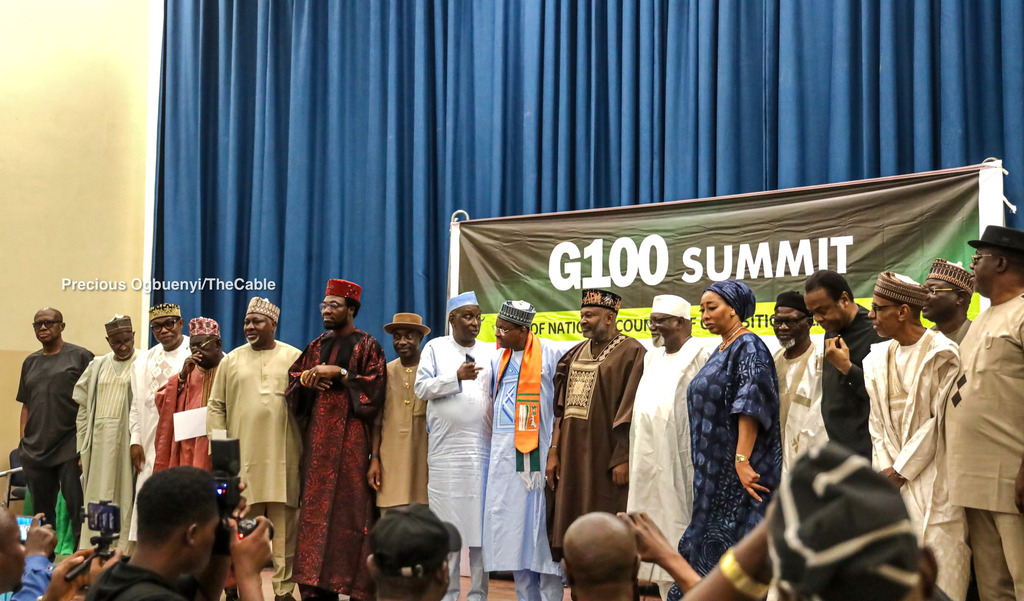
An important summit recently convened in Abuja where six prominent opposition political parties including the African Democratic Congress (ADC), Allied Peoples Movement (APM), Nigerian Democratic Congress (NDC), Peoples Democratic Party (PDP), Peoples Redemption Party (PRP), and Social Democratic Party (SDP), formally agreed to initiate structured negotiations for robust cooperation ahead of Nigeria's 2027 general elections.
The overarching objective of this unprecedented alliance is to establish a comprehensive framework for unity, encompassing a strategic roadmap for identifying and endorsing a consensus presidential candidate, alongside a proposal for a single-term transition charter.
This initiative is designed to collectively present Nigerians with a viable and credible alternative government.
The participating parties committed to a detailed and structured negotiation process, which notably includes the establishment of five dedicated working groups. These groups are mandated to develop critical documents within a stringent four-week timeframe.
Key documents expected from this collaborative effort include a "Roadmap to a Common Presidential Candidate," a "National Covenant for Democratic Renewal," a "Single-Term Transition Charter," a "National Reform Programme," and a comprehensive "Framework for Opposition Unity."
Each working group will be composed of one nominee from each of the six participating parties, ensuring broad representation.
Upon completion, these documents will be submitted to a newly formed Central Leadership Committee for careful consideration at a subsequent summit.
To effectively coordinate the proposed cooperation, three standing coalition organs have also been agreed upon: the Central Leadership Committee, responsible for providing political direction and overall coordination; a Publicity and Communication Committee, tasked with handling joint messaging and media engagement; and a Legal Committee, which will offer expert advice on legal and constitutional issues, and meticulously vet all negotiated instruments.
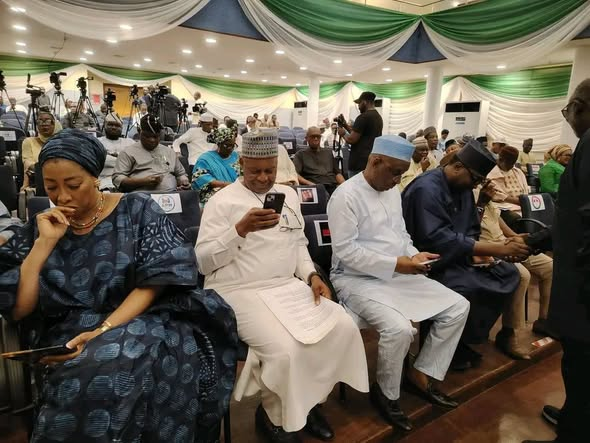
Salihu Lukman, the facilitator of the G100, underscored the profound lessons learned from the 2023 presidential election.
He highlighted that despite opposition parties collectively amassing approximately 13 million votes, a figure that surpassed the less than nine million votes secured by the eventual winner, President Bola Ahmed Tinubu, their combined strength failed to translate into victory due to fragmented votes distributed among multiple candidates.
This stark outcome, Lukman emphasized, necessitates urgent and unified action. He drew parallels to the successful opposition cooperation that preceded the 2015 presidential election, presenting it as a potent model for how parties can effectively agree on rules for collaboration prior to selecting a candidate.
Lukman clarified that the summit's primary aim was to establish a foundational process through which parties could negotiate their diverse interests and define the essential basis for cooperation, rather than to coerce parties into dissolution or demand immediate candidate withdrawals.
He articulated the ultimate objective as the formation of a "government of national competence and a four-year national reset programme," a vision that would be underpinned by an enforceable transition charter and would inevitably demand significant sacrifices from political leaders.
Adding his voice to the call for unity, Frederick Agbedi, the Minority Leader of the House of Representatives, passionately urged opposition leaders to set aside individual political ambitions for the greater collective good: defeating the ruling All Progressives Congress (APC) and, critically, "salvaging Nigeria."
He revealed that the Minority Caucus had actively partnered with the G100 to convene opposition parties, with the explicit goal of streamlining their ambitions and constructing a formidable collective platform capable of securing victory in the 2027 elections. Agbedi affirmed that the caucus maintained neutrality, having no preferred opposition candidate, and reiterated the powerful adage that "there is strength in unity."
He challenged the opposition to emulate the strategic cooperation that enabled them to triumph over the then-ruling Peoples Democratic Party (PDP) in the 2015 presidential election.
The lawmaker warned against the futility of dividing votes among numerous candidates, which would result in an "exercise in futility," and further linked the historical lack of unity among opposition leaders to a discernible weakening of parliamentary cooperation within the National Assembly.
While expressing support for the broader cooperation initiative, Usani Usani, the National Vice Chairman, South-South of the ADC, cautioned against the assumption that a single presidential candidate is the only viable route to electoral victory. Usani posited that even in scenarios where a consensus candidate proves elusive, strategic coordination among opposition parties could still yield success.
He also stressed the importance of preventing internal divisions and urged parties to refrain from engaging in internecine attacks, instead directing their focus towards the common political adversary.

The National Chairmen of the APM, Yusuf Dantalle, and the SDP, Shehu Musa Gabam, both robustly affirmed their parties' unwavering commitment to the cooperation process. Dantalle framed the summit as a pivotal opportunity to restore "Nigerian integrity" and return power to the populace, while Gabam characterized the initiative as a crucial "rescue mission" to offer Nigerians a meaningful alternative.
Babagida Aliyu, representing the PDP, commended the G100 for creating a vital platform that addresses the perennial issue of personal ambitions historically undermining the political process. He advocated for the unity process to be extended beyond the national level to encompass states and local government areas.
PRP National Chairman Hakeem Baba-Ahmed firmly asserted that no single opposition party possessed the inherent strength to defeat the APC in isolation, emphasizing that cooperation is an absolute imperative, particularly in light of the "existential threat" currently confronting many of these parties.
Furthermore, Donald Duke, former Governor of Cross River State and a PRP presidential candidate, publicly pledged his unwavering support for whichever opposition candidate ultimately emerges from the rigorous negotiations.
Further endorsements of the G100 agenda came from Cleopas Moses, the NDC National Chairman, and Mallam Bolaji Abdullahi, the ADC National Publicity Secretary.
Moses articulated the NDC's full commitment to the opposition unity initiative, deeming it an indispensable necessity to effectively address the country's pressing leadership challenges, and identifying the NDC as an integral participant in this endeavor.
Abdullahi, while describing the G100's objective as "noble," expanded on the scope of cooperation, suggesting it extends far beyond merely producing a common presidential candidate to encompass other crucial areas, such as safeguarding election integrity by preventing rigging.
He also prudently highlighted potential ideological differences among the parties, citing the ADC's specific stance on the return of fuel subsidies as an issue that could significantly influence the feasibility of forging a single presidential candidacy.
Political analysts have offered a spectrum of perspectives regarding the practicality of achieving a single opposition presidential candidate.
Professor Atah Pine, a political science expert from Benue State University, expressed a degree of skepticism, suggesting that parties might find it exceedingly difficult to persuade their candidates to withdraw due to the high stakes involved.
He envisioned a more probable outcome as a "quasi-alliance framework," wherein parties strategically support one another in areas where individual parties possess greater political strength.
In contrast, Professor Saleh Dauda of the University of Abuja deemed a single candidate feasible but acknowledged the presence of significant challenges, primarily the willingness of prominent individual politicians, such as Atiku Abubakar, Peter Obi, and Rabiu Musa Kwankwaso, to sacrifice their personal ambitions for the collective interest.
Professor Hassan Saliu of the University of Ilorin concurred on the potential significance of the proposed alliance but issued a cautionary note: personal ambitions and deeply rooted ideological differences could fundamentally undermine its prospects for success.
He advocated for a thorough examination of Nigeria's political history, particularly drawing lessons from the alliance that preceded the 2015 presidential election.
Despite the inherent complexities and the diverse viewpoints expressed, the unified resolve among the participating opposition parties signals a determined and concerted effort to forge a cohesive and formidable front for the 2027 general elections.
Their collective aim is to present the Nigerian electorate with a strong, credible, and genuinely alternative governmental option.