Nigerian Football Crisis Deepens: NFF Under Fire, Faces Senate Summons and Resignation Demands
Nigerian football is in a deep crisis following a series of national team failures, prompting strong calls for leadership reform and accountability. Veteran journalist Arabinrin Aderonke has appealed against the return of former NFF president Amaju Pinnick, while the current NFF board under Ibrahim Gusau reportedly faces a government ultimatum to resign. The Senate Committee on Sports has also intervened, urging collaboration and adherence to legal frameworks to revitalize the sport.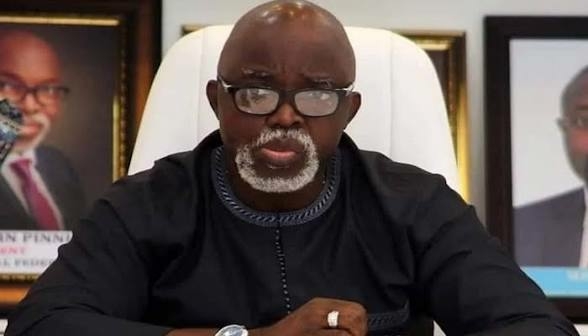
Nigerian football finds itself embroiled in a profound crisis, marked by widespread disappointment and a consistent string of failures across its national teams. This deteriorating state has ignited fervent calls for accountability, transparency, and a radical overhaul of its administrative structures.
Amidst this backdrop, award-winning veteran sports journalist Arabinrin Aderonke has issued a strong appeal to Chief of Staff to President Bola Ahmed Tinubu, Rt. Hon. Femi Gbajabiamila, to reject any proposals for the return of former Nigeria Football Federation (NFF) president Amaju Pinnick. Aderonke, in an open letter, argued that reappointing Pinnick to lead a proposed Normalisation Committee would severely undermine ongoing efforts to reform Nigerian football. She insisted that the country desperately requires a “fresh start” rather than a reversion to leadership associated with past challenges, specifically citing Nigeria’s failure to qualify for the 2022 FIFA World Cup and other qualification setbacks during his tenure.
Aderonke stressed that her objection was not rooted in personal animosity, but rather a profound concern for the integrity and future direction of Nigerian football. She called for rigorous scrutiny of all individuals considered for sensitive national football assignments, emphasizing the critical need for transparency, accountability, and robust institutional integrity. The journalist urged the Federal Government to conduct an independent assessment of Pinnick’s record and the performance of Nigerian football under his administration before making any decisions, asserting that the country needs reformers capable of rebuilding confidence, strengthening grassroots development, improving youth programs, and restoring international competitiveness.
The current NFF board, led by President Ibrahim Musa Gusau, is also under intense pressure. Reports from Arise News claim that the Federal Government has issued a 24-hour ultimatum for the Gusau-led NFF board to resign. This ultimatum reportedly followed the Super Falcons' disappointing performance in their 2026 Women's Africa Cup of Nations campaign and general dissatisfaction with a series of failures across all senior and youth national teams.
The Super Eagles, Nigeria's senior men's team, have experienced perhaps the most damaging setbacks. They failed to qualify for the 2026 FIFA World Cup, finishing second in Group C behind South Africa after dropping crucial points, including a 1-1 home draw with Zimbabwe. This follows their non-qualification for the 2022 FIFA World Cup, marking consecutive misses for the nation's premier football event.
The Super Falcons, ten-time African champions, also faced significant disappointment. They were eliminated from the 2026 WAFCON in the quarter-finals by Cameroon and subsequently lost a World Cup play-off to South Africa, resulting in their failure to secure direct qualification for the 2027 FIFA Women's World Cup in Brazil. This marks the first time since the tournament's inception in 1991 that Nigeria will miss the Women's World Cup. Following these failures, the NFF issued an apology to President Bola Tinubu and Nigerians, established a fact-finding committee, and dismissed Super Falcons head coach Justine Madugu and his assistants.
Even Nigeria’s historically dominant youth teams have struggled. The Golden Eaglets failed to qualify for the 2025 U17 AFCON after a 2-0 loss to Ghana in the WAFU B semi-final, which also cost them a place at the 2026 FIFA U17 World Cup. This represents the second consecutive U17 AFCON that the five-time world champions have missed, highlighting a stark decline in youth football development.
The growing crisis prompted the Senate Committee on Sports to hold an emergency meeting with the Chairman of the National Sports Commission (NSC), Shehu Dikko, and NFF President Ibrahim Musa Gusau. Presided over by Senator Abdul Ningi, the meeting was convened at the behest of Senate President Godswill Akpabio, who expressed profound concern over the state of sports, particularly football, in Nigeria.
Senator Ningi emphasized the urgent need for the NSC and NFF to strengthen their relationship and foster greater collaboration, noting that the two bodies appeared to be operating