Nigerian Artists Score Big: Unpacking Recent Football Stage Dominance!
Nigerian artists are making significant inroads into global football, performing on the sport's biggest stages worldwide. From Burna Boy's dual appearances at the 2026 FIFA World Cup opening and final ceremonies to Rema's historic Ballon d'Or performance and Davido's presence at the 2022 World Cup closing, Nigerian music is showcasing its universal appeal and the immense talent emerging from the country.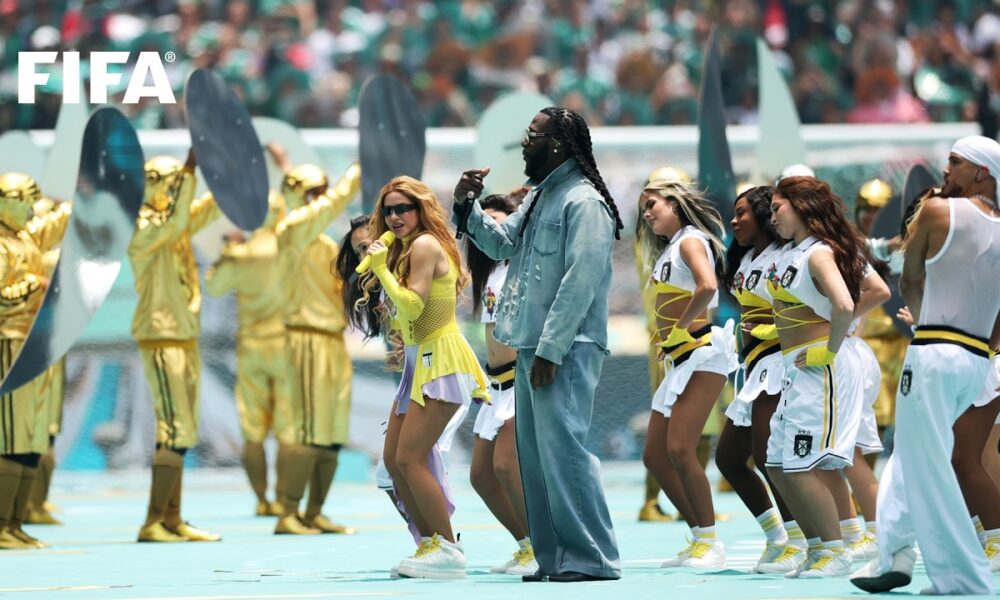
Nigerian music, defying the initial perception that it might not inherently relate to football, has demonstrated its universal appeal by infiltrating various global industries, including the world's most popular sport. In recent times, Nigerian artists have ascended to perform on football’s most prestigious stages, from FIFA World Cup events and the Ballon d’Or to UEFA Champions League finals and even inclusion in EA Sports games, showcasing the immense talent emerging from the country.
One of the most prominent figures in this global surge is Burna Boy. He made a significant impact at the 2026 FIFA World Cup, joining global superstar Shakira and the Ugandan Ghetto Kids for the opening ceremony in Mexico City. There, they performed “Dai Dai,” the official anthem of the tournament, captivating audiences worldwide. More than a month later, Burna Boy and Shakira reunited at MetLife Stadium in New Jersey for the World Cup’s inaugural final halftime show, performing “Dai Dai” once again. This dual appearance made Burna Boy the only Nigerian artist to perform at both the opening and final stages of the same World Cup, a testament to his rising international stature.
Burna Boy's influence extends beyond the World Cup. In 2023, he co-headlined the UEFA Champions League Final Kick Off Show with Brazilian star Anitta, bringing Afrobeats to one of European club football's biggest nights. Their performance took place at Istanbul’s Atatürk Olympic Stadium before Manchester City faced Inter Milan, with Manchester City ultimately winning the final.
Other Nigerian artists have also carved out their own monumental moments. Rema, for instance, delivered a memorable performance of his hit song “Calm Down” at the 2023 Ballon d’Or ceremony in Paris. Performing at the Théâtre du Châtelet in front of football’s elite, Rema’s appearance marked a significant milestone, as he became the first Afrobeats artist to grace the stage of the prestigious awards ceremony.
Davido also left his mark on a global stage, performing at the 2022 FIFA World Cup closing ceremony in Qatar. Ahead of the final match between Argentina and France, he joined Aisha to perform “(Hayya Hayya) Better Together),” one of the tournament’s official soundtrack songs, at Lusail Stadium, reaching a massive global television audience.
The rising tide of Nigerian talent continued with Tems, who in 2025, became the first African artist to perform at a FIFA Club World Cup Final halftime show. She shared the stage with J Balvin and Doja Cat for the inaugural halftime performance at MetLife Stadium in New Jersey, where she performed her Grammy-winning song “Love Me JeJe.” This performance was notably part of FIFA and Global Citizen’s collaborative effort to leverage the tournament in support of the FIFA Global Citizen Education Fund.
On the continental stage, Nigerian artists have equally shone. Yemi Alade performed at the opening ceremony of the 2023 Africa Cup of Nations in January 2024, held in Abidjan, Côte d’Ivoire. She sang “Akwaba,” the tournament’s official song, alongside the Ivorian group Magic System and Egyptian singer Mohamed Ramadan, at the 60,000-capacity Alassane Ouattara Olympic Stadium. Earlier, D’banj brought his energetic pop sound to the 2013 Africa Cup of Nations closing ceremony in Johannesburg, performing hits like “Oliver Twist” and “Top of the World,” the latter serving as the tournament’s theme song, celebrating Nigeria’s victory over Burkina Faso.
These highlights collectively underscore the undeniable and growing presence of Nigerian music and artists on the world’s biggest football stages, demonstrating the universal appeal and global reach of Afrobeats and Nigerian talent.