Nigeria’s Most Indebted State: How Did It Get Here, and Can It Escape the Debt Trap?
Lagos owes more than any Nigerian state—but is that debt building the future or creating a financial trap?

What happens when a state’s debt grows faster than its ability to generate enough revenue to repay it?
The recent data supports the relevance of the discussion, because BudgIT's 2026 analysis identified Lagos,Kaduna, Edo, Ogun, and Bauchi as the five most-indebted states in 2024, with the five collectively owing ₦5.32 trillion.
The Debt Management Office also continues to publish state-level domestic and external debt data, making it possible to build the article around verifiable figures.
However, the borrowing challenge extends beyond Lagos, with several other states also carrying significant debt burdens.
At the end of 2025, Nigeria had about ₦1.22 trillion in domestic debt, followed by Rivers State had ₦378.81 billion in domestic debt, followed by Delta with ₦248.83 billion and Ogun with ₦227.47 billion with Lagos State who currently sits at the top of Nigeria’s state debt ranking.
But looking only at the size of the debt misses the bigger story, because states borrow for roads, transport, water, infrastructure and other projects, but the important question is whether those loans are producing enough economic value and revenue to justify the burden.
That’s why these figures raise a broader question: why are Nigerian states increasingly turning to borrowing, where is the money going, and at what point does borrowing become a debt trap?
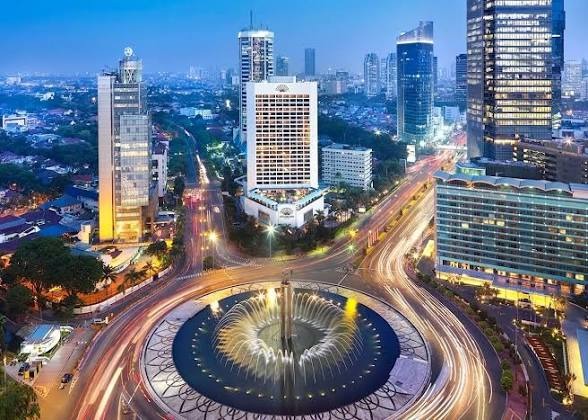
Lagos Carries Nigeria’s Biggest State Debt Burden
Lagos stands out by a wide margin. Its ₦1.22 trillion domestic debt was more than three times Rivers State’s ₦378.81 billion, according to the Q4 2025 figures.
The state also had the country's highest external debt at $1.17 billion.
That does not automatically mean Lagos is the state in the worst financial position. Lagos also has one of Nigeria's strongest revenue bases and a large economy, which gives it greater capacity to service debt than many smaller states.
This distinction matters. A large debt is not necessarily dangerous if a government has strong and predictable revenue to meet its obligations.
The real concern is what the borrowed money is being used for and whether future revenues can comfortably cover repayment.
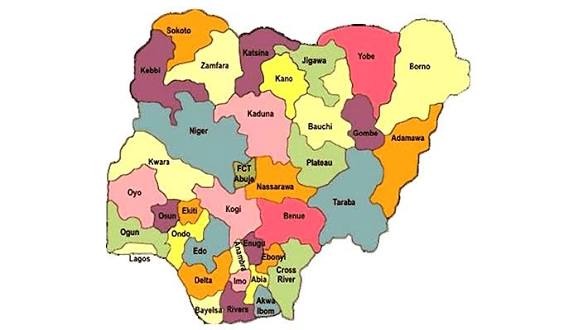
Rivers, Delta and Ogun Also Carry Heavy Debt
Lagos is not alone in relying heavily on borrowing as Rivers State had ₦378.81 billion in domestic debt, Delta had ₦248.83 billion, while Ogun had ₦227.47 billion at the end of 2025.
These states have different economic structures and reasons for borrowing. Rivers and Delta benefit from significant oil-related economic activity, while Ogun's proximity to Lagos and its growing industrial base give it a strong economic position.
The figures show why simply ranking states by debt can be misleading. What matters is the relationship between debt, internally generated revenue, federal allocations and the size of the state's economy.
For example, a state borrowing to complete a major road network that improves trade and increases economic activity is very different from a state borrowing mainly to finance recurring expenses.

So, Why Are States Borrowing So Much?

State governments have several competing financial pressures, and they have to fund salaries, pensions, infrastructure, healthcare, education and other public services, while their internally generated revenues are often insufficient to cover everything.
Borrowing therefore becomes an additional source of funding, particularly for large infrastructure projects that cannot easily be financed from annual revenue.
The problem begins when borrowing becomes a regular way of covering financial gaps rather than financing projects capable of generating long-term economic benefits.
Nigeria's debt figures also show that borrowing is not evenly distributed. Lagos alone accounted for about 26.1% of domestic subnational debt, more than twice Rivers' share, according to an analysis of the Q4 2025 figures.
Can Lagos and Other States Escape the Debt Trap?
The answer depends less on whether states borrow and more on what they do with the money and how they repay it.
Lagos' position illustrates the difference between having a large debt stock and having the capacity to manage it.
Its stronger revenue base provides more room to service its obligations, but the size of its debt still means that future governments will have to keep debt repayment in their financial plans.
For Rivers, Delta, Ogun and other highly indebted states, the same issue applies: borrowing can support development when it finances productive infrastructure, but it becomes a burden when debt repayment begins competing with essential public spending.
So the real question is not simply “Which Nigerian state owes the most?” It is whether the debt being accumulated today will leave future administrations with better infrastructure, stronger economies and higher revenues—or simply a larger bill to pay.