Nigeria's Debt Bomb Ticks Louder: Public Debt Soars to Trillions

Nigeria's public debt has seen a significant increase, climbing from N144.7 trillion ($94.2 billion) at the end of December to N149.4 trillion ($97.2 billion) in the first quarter of the year. This 3.2 percent rise was largely driven by local borrowing, which reached N78.8 trillion, increasing local debt's share to 52.7 percent of the total public debt, compared to external debt's 47.3 percent.
This upward trend in debt accumulation has intensified since President Bola Tinubu assumed office in May 2023. The nation's total debt stock in naira surged by 348.6 percent in less than two years, from N33.3 trillion in June 2023 to N149.4 trillion by March 2025. The debt service-to-revenue ratio, a critical indicator of the government's ability to repay its debt, stood at an alarming 156.8 percent as of early May, a stark contrast to 29.1 percent in 2014.
Further exacerbating concerns, President Tinubu recently sought parliamentary approval to raise an additional $2.3 billion in Eurobonds and issue $500 million in Sukuk bonds. The Sukuk issuance is intended to refinance maturing debt and finance infrastructural projects across the country. At the state level, Lagos recorded the highest domestic debt in Q1 2025 with N874.03 billion, followed by Rivers with N364.39 billion, while Jigawa recorded the lowest with N1.06 billion.
According to the latest data from the Debt Management Office (DMO), Nigeria's total public debt continued its ascent, reaching N152.40 trillion as of June 30, 2025, up from N149.39 trillion at the end of March. This represents a quarterly increase of N3.01 trillion (2.01%), or $99.66 billion from $97.24 billion (2.49%) in dollar terms.
The DMO report detailed the composition of this debt. External debt climbed to $46.98 billion (N71.85 trillion) by June. Multilateral lenders, primarily the World Bank through the International Development Association (IDA) with $18.04 billion outstanding, remain Nigeria's largest creditors, holding 49.4% of external obligations. Bilateral loans accounted for $6.20 billion, with the Export-Import Bank of China leading at $4.91 billion. Commercial borrowings, mostly Eurobonds, totaled $17.32 billion, representing 36.9% of the external portfolio.
Domestically, Nigeria's debt rose to N80.55 trillion by June. Federal Government bonds were dominant, making up N60.65 trillion (79.2% of total domestic debt). This included N36.52 trillion in naira-denominated bonds, N22.72 trillion in securitized Ways and Means advances, and N1.40 trillion in dollar bonds. Treasury bills accounted for N12.76 trillion, while Sukuk bonds stood at N1.29 trillion. The Federal Government alone was responsible for N141.08 trillion (92.6%) of the total N152.40 trillion public debt.
Experts and citizens have expressed growing concerns over the escalating public debt. President Tinubu's latest request to the Senate for approval of another $2.3 billion external borrowing aims to implement the 2025 Appropriation Act, refinance maturing Eurobonds, and diversify debt instruments to include Islamic finance products. A key part of this strategy involves refinancing Nigeria's $1.118 billion Eurobond, due in November 2025, to ensure debt sustainability and boost investor confidence.
Dr. Muda Yusuf, an economist and CEO of the Centre for the Promotion of Private Enterprises (CPPE), highlighted the significant impact of naira devaluation on Nigeria's debt profile. He noted that while the total debt in dollar terms might not have changed drastically, the depreciation of the naira from N450/$ to N1,540/$ has almost tripled the naira equivalent of the dollar component of the debt, making the exchange rate a major factor in its growth.
Addressing these concerns, Minister of Finance and Coordinating Minister of the Economy, Wale Edun, stated the government's plans to refinance high-cost debt and centralize all government funds under the Central Bank of Nigeria (CBN) to enhance transparency and reduce borrowing costs. He emphasized that ongoing fiscal and monetary reforms are already improving Nigeria’s debt sustainability outlook, with deliberate steps being taken to ease fiscal pressure, free resources for development, and strengthen the country's long-term fiscal position.
You may also like...
The 1896 Adwa War: How Ethiopia Defied Colonialism

Ethiopia with the exception of Liberia which was used as a settler place for freed slaves remains the only African Count...
Why We Need Sleep: Inside the Brain’s Night Shift

Even when you’re asleep, your brain is quietly up to something, sorting, cleaning, and working behind the scenes.
When Nollywood Meets Netflix: The Creative Tug Between Local Storytelling and Global Algorithms

Nollywood’s partnership with Netflix is rewriting the script for African cinema, offering global reach but raising quest...
Mozambique's LNG Megaproject: A Promise or Peril?
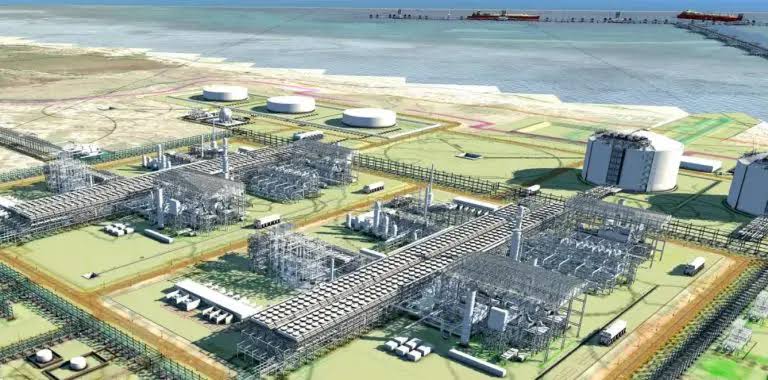
TotalEnergies is leading a consortium in Mozambique as it promises potential restructuring of the nation's energy se...
Aliko Dangote, Africa’s Wealth King: First African-Born Billionaire to Cross $30B
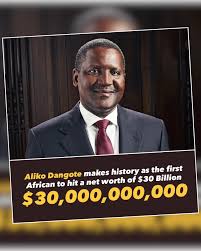
Aliko Dangote, the richest Black man in the world, has reached a new milestone, with a net worth of $30.3 billion, accor...
WAEC Conducts Trial Essay Test Ahead of Full Computer-Based WASSCE in 2026
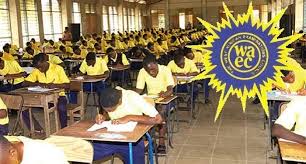
The trial Computer-Based Test (CBT) for the WAEC essay was held on Thursday, October 23, 2025. The exercise was conducte...
Can Long- Distance Love really work?

Can love really survive when touch becomes a memory and connection lives behind a screen? For many, distance isn’t the ...
Nigeria’s Rental Crisis: House of Representatives Moves to Cap Rent Hikes at 20%
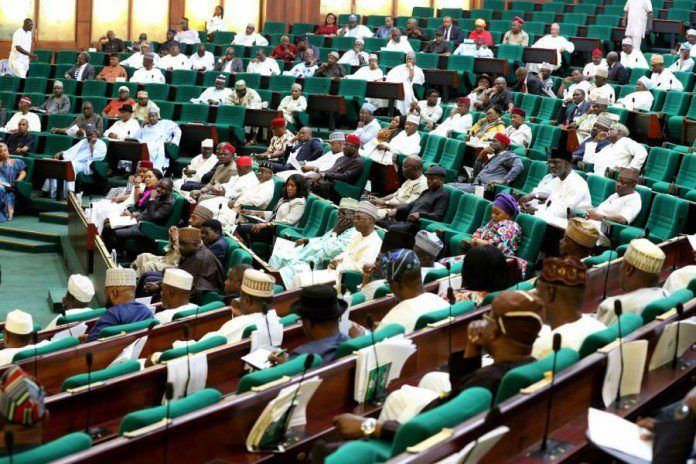
Nigeria's rental market has been under intense pressure, and now lawmakers are stepping in. The House of Rep. has called...