New Threat: Somali Piracy Resurges Amid Regional Instability
Somali piracy is experiencing a worrying resurgence, driven by Somalia's political instability, widespread poverty, and increased maritime opportunities due to shifting global shipping routes and reduced naval presence. Recent hijackings highlight the urgent need for comprehensive land-based development solutions, as traditional sea-based deterrents face new challenges.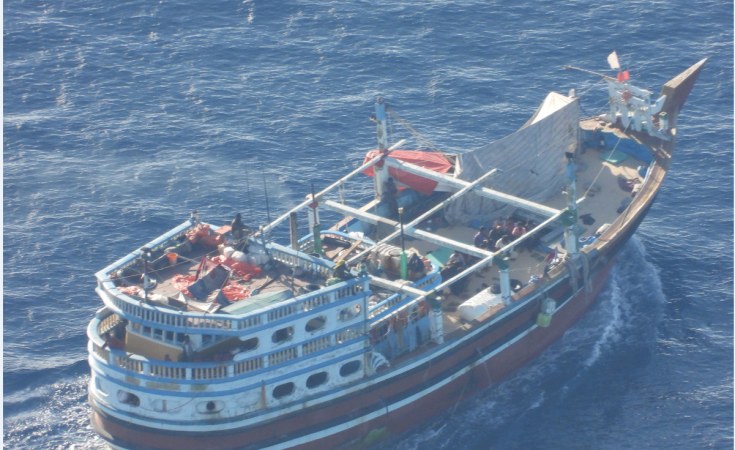
Recent weeks have witnessed a concerning resurgence of Somali piracy, sparking fears that the hijack-for-ransom business model, largely dormant since 2012, is being resurrected. On April 26, the Egyptian merchant vessel Sward was hijacked off the Somali coast near Garacad in Puntland. It remains under pirate control, with additional armed men and an interpreter brought on board to negotiate a ransom. Around the same time, two oil tankers, the Palau-flagged Honour 25 and the Togo-flagged Eureka, were also seized and redirected towards the Puntland coast. Furthermore, Somali pirate groups have increasingly used hijacked ocean-going dhows as 'motherships,' enabling them to extend their range and duration at sea, launching attacks far from the coast.
Between 2005 and 2012, Somali pirates conducted over 1,000 attacks, successfully hijacking 218 vessels and taking more than 3,700 sailors hostage. During this period, shipowners paid approximately US$50 million in ransoms annually, while the broader global economy incurred costs up to US$18 billion due to lost trade and heightened security measures. Following this intense period, Somali piracy was largely contained through a combination of private security guards, international naval patrols, and land-based development initiatives. However, the underlying supply and support networks of pirate kingpins were never fully dismantled, leading to the current concerns that these networks were merely dormant.
There are three primary reasons contributing to this potential resurgence. Firstly, piracy in Somalia has a significant political dimension. Research from 2014 indicated that peaks in local pirate activity historically coincided with periods of political turmoil and military contest. Somalia is currently grappling with a constitutional crisis, marked by the federal government's postponement of the 2026 general election without due process, the dissolution of the newly elected parliament in South West state, and its leadership being forcibly replaced. Additionally, Israel's recognition of Somaliland in December 2025 has led to new regional alliances, with Saudi Arabia, in particular, emphasizing Somalia's territorial integrity for Red Sea and Gulf of Aden security. Historically, distrust and skirmishes between Somalia's regions and its federal government led local elites in Puntland and South Central Somalia to resort to piracy to fund military and political campaigns between 2005 and 2012, a pattern that may be repeating.
Secondly, widespread poverty is a critical driver. Somalia is experiencing severe hardship due to rising food, fuel, and fertilizer costs. The abrupt dismantling of US-funded development programs by the Trump administration has exacerbated the situation, with US humanitarian assistance plummeting from US$467 million in 2024 to US$70 million a year later, and only US$3 million from the US government in the first three months of 2026. This desperation for income streams means that in Puntland and South Central's coastal areas, pirate groups are remembered as significant and generous employers who broadly shared their revenues, thereby cultivating necessary land-based support for their operations.
Thirdly, the current geopolitical landscape presents unprecedented opportunities for piracy. The closure of the Strait of Hormuz due to the Iran war and the high-risk environment in the Red Sea caused by Houthi attacks have forced many merchant ships bound for Europe to reroute around southern Africa, a route that passes directly along the Somali coast. Simultaneously, risks for pirates have significantly decreased. Many naval vessels that previously patrolled the area have been redeployed to the Red Sea and the Strait of Hormuz, leaving the Somali Basin less protected. This allows pirates to operate from hijacked dhows for extended periods without detection or challenge, waiting for suitable targets. Furthermore, faced with escalating operational costs, fewer shipowners are currently investing in expensive counter-piracy measures or maintaining sufficiently high speeds to deter potential hijackers. While armed private security teams have proven effective for those who can afford them, vessels unable to return fire are highly vulnerable to capture.
The immediate future depends on the resolution of the current hijackings. Pirates rely on ransom payments for reinvestment and to attract new recruits through 'no-win-no-fee' contracts. Swift and generous payments, such as the US$10 million demanded for the Eureka, might free the captive ships but will inevitably lead to an escalation of risks for all other shipping. Marine insurers could declare the Somali Basin a 'high-risk area' again, similar to 2008, which would further inflate costs for consumers. However, no state or alliance currently possesses the political will or operational capacity to mount a naval mission on the scale seen in 2011 and 2012, when global navies spent over US$1 billion annually on counter-piracy operations off Somalia. Ultimately, while piracy manifests at sea, its fundamental solutions lie on land. Investing in infrastructure that fosters regional trade and local development is a more effective long-term strategy than solely attempting to control piracy at sea, as the economic damages from increased trade costs and naval enforcement far outweigh any short-term benefits pirates offer to their communities.