NBA Cracks Down: New Guidelines Target Push-Offs on Court
The NBA is implementing new referee guidelines for the upcoming season, with a significant crackdown on offensive push-offs. Officials will now use a "Four F's" framework to differentiate between legal and illegal contact, alongside focusing on other forms of illegal offensive and defensive actions, to ensure fairer gameplay.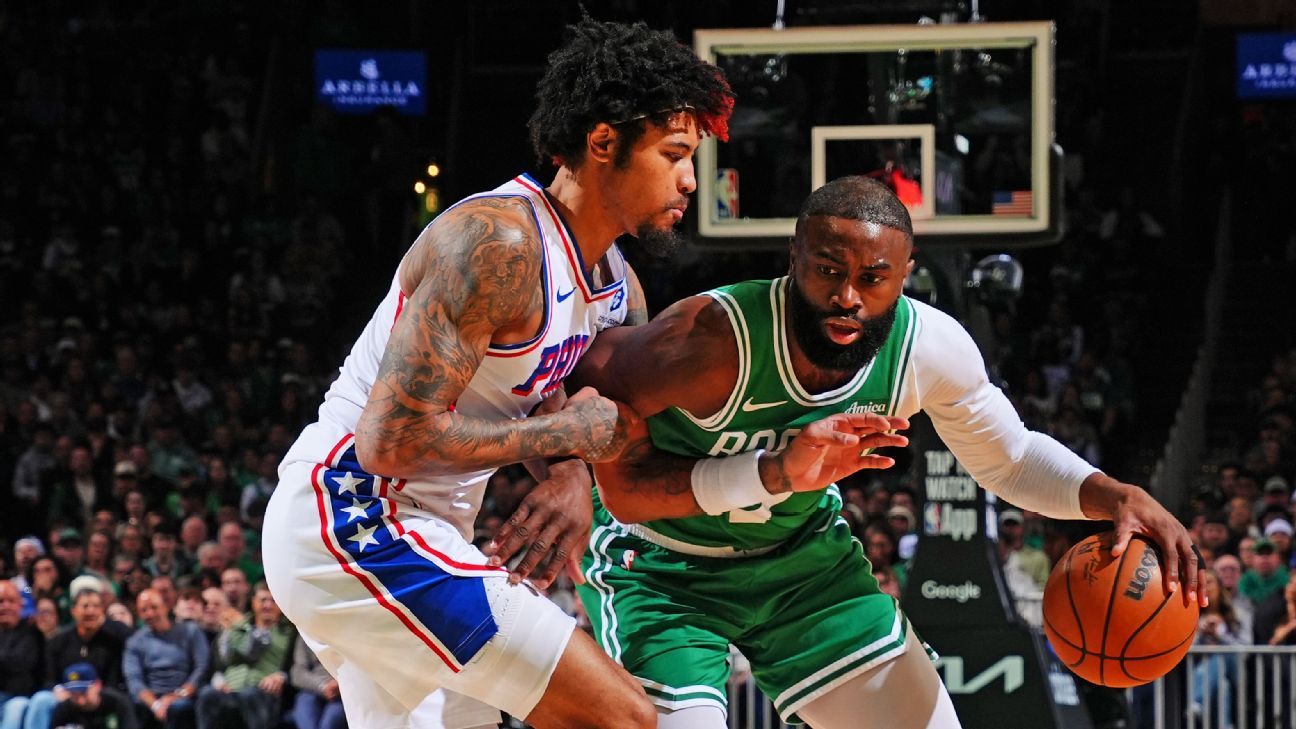
The National Basketball Association (NBA) has announced a significant shift in its officiating directives for the upcoming season, specifically instructing referees to more stringently penalize offensive players who use their arms to push off against defensive players. This initiative is part of a broader set of new points of emphasis for officials, as detailed by the league on a recent conference call. James Jones, the NBA's executive vice president of basketball operations, confirmed that new guidance has been issued on four types of "high-volume and highly impactful" calls, with push-offs being a primary focus. The overarching goal, according to Jones, is to ensure that "the way our game is played, and the way our game presents, continues to track favorably" for both players and fans.
A push-off typically occurs when an offensive player leverages their non-dribbling arm to make contact with a defensive player, thereby creating separation to facilitate a shot attempt, particularly from the perimeter. While a certain degree of physical interaction and jockeying is an inherent and legal aspect of basketball, the NBA's referees will now employ a precise "Four F's" framework to determine if an offensive foul should be called on such plays. This framework comprises: feeling, firming, force, and full extension. Officials are permitted to allow a ball handler to use their off arm to "feel" an opponent or to "firm up" by bracing themselves in front of a defender. However, an offensive foul will be assessed if the ball handler's off arm contacts the defender with clear "force" or is "fully extended" to gain an unfair advantage.
Monty McCutchen, the NBA's senior vice president of referee development and training, underscored the importance of these new guidelines, stating, "We've got to make sure the defensive side of the ball does not get penalized by allowing illegal acts by the offensive player." He expressed confidence that the league could achieve a better standard of officiating in this area. These updated instructions come at a time when the NBA is experiencing a notable scoring boom, with teams averaging 115.6 points last season, marking the highest average since the 1969-70 season. In previous years, the league has also worked to curb other illegal offensive maneuvers, such as abruptly stopping short to induce collisions, splaying legs during shot attempts, and intentionally jumping sideways into defenders to draw free throws.
A classic example of a play that has been re-evaluated under these new standards is Michael Jordan's iconic push-off against Utah Jazz guard Bryon Russell in the closing seconds of Game 6 of the 1998 NBA Finals. Jordan, who famously created space for a midrange jumper to secure the Bulls' sixth championship, was not called for an offensive foul at the time. However, under the NBA's new "Four F's" standard, Jordan's move would still not be deemed an offensive foul, as he did not contact Russell's body with noticeable "force" or fully extend his left arm, indicating a nuanced interpretation of the rule.
Conversely, the NBA has provided contemporary examples of plays that would now be classified as offensive fouls. In one video clip released by the league, then-Boston Celtics star Jaylen Brown was shown raising his right forearm and shoving into the chest of then-Philadelphia 76ers forward Kelly Oubre Jr. to set up a jumper near the free-throw line. Illegal push-offs are not confined to perimeter plays; another clip showcased Toronto Raptors wing RJ Barrett using his right arm to create distance from Cleveland Cavaliers forward Evan Mobley while driving in the paint. Because Barrett's action was deemed "forceful" enough to cause Mobley to stumble backward, it would constitute an offensive foul under the revised guidelines.
McCutchen acknowledged that the most significant challenge for officials will be accurately distinguishing between permissible "firm" contact and illegal "force." He anticipates some subjective calls and has indicated that the league will meet more frequently with the competition committee at the start of the season to gather feedback on plays that fall on this "demarcation line."
Beyond push-offs, NBA referees have also been instructed to pay closer attention to other forms of illegal contact. This includes monitoring illegal actions by offensive players when setting screens, such as shoving, and addressing illegal contact by defensive players, specifically grabbing and holding off the ball, which impedes movement. Furthermore, the NBA has highlighted "straight-line pathway plays," where both offensive and defensive players are simultaneously moving towards the basket. In these situations, both players possess the right to maintain a direct path, and either player risks incurring a foul if they deviate from their path to intentionally bump an opponent.