Navigating a Future Beyond the Barrel
The petroleum sector is at a crossroads, balancing global energy demands with the urgent need for climate action. We explore the paradox of its present and the challenges of its future.
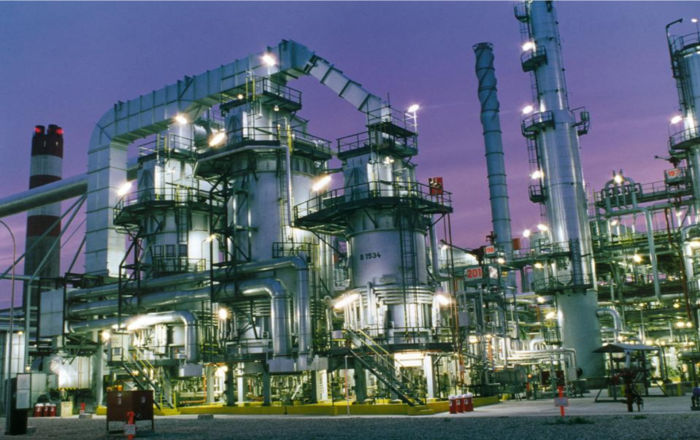
The global petroleum sector exists in a state of dynamic tension, caught between its historical role as the engine of the global economy and the increasing pressure to transition to a low-carbon future.
Major international oil companies are navigating a complex balancing act. On one hand, they remain focused on their core business of fossil fuel extraction to meet current global energy demand and generate the profits that satisfy shareholder expectations.

SOURCE: Google
On the other hand, they are making significant and growing investments in clean technologies and renewable energy to prepare for a low-carbon future.
This dual strategy is driven by both commercial foresight and mounting pressure from governments, investors, and the public.
Companies like BP, Shell, and TotalEnergies have established dedicated arms for renewable energy, with investments in offshore wind, solar power, and even electric vehicle (EV) charging networks.
These companies are leveraging their deep expertise in large-scale project management, complex engineering, and global logistics to build new green energy businesses.
They are also investing heavily in clean technologies like carbon capture, utilization, and storage (CCUS) and hydrogen production. CCUS aims to reduce emissions from existing industrial operations, while hydrogen is being developed as a clean fuel for hard-to-abate sectors.
This approach allows them to present themselves as key players in the energy transition, even as their primary business remains centered on fossil fuels.
However, recent reports from organizations like Reclaim Finance highlight that investments in renewables remain a minority share of overall capital expenditure, showing that fossil fuels are still very much at the core of their business models.
Geopolitics and Market Volatility
Geopolitical forces continue to be a dominant factor shaping the global oil market and driving significant volatility. Conflicts in key oil-producing regions can disrupt supply, leading to sharp price spikes.
The Russian invasion of Ukraine, for example, caused a major shock to global energy markets, as sanctions and trade re-alignments fundamentally altered energy flows and prices, according to analysis by the European Central Bank.

SOURCE: Google
Beyond active conflicts, shifting alliances and policy decisions among major producers, particularly within the OPEC+ cartel, directly influence supply levels and market stability.
Nations are increasingly using their energy resources as a geopolitical tool. This can be seen in the use of sanctions on oil exports from countries like Iran and Venezuela, which aim to exert political pressure but also impact global supply.
This volatility complicates investment decisions and long-term planning for both producers and consumers, making energy security a top priority for governments worldwide.
The push for a green energy transition is itself a geopolitical issue, as it creates a new race for critical minerals and technologies, creating new spheres of influence and potential sources of conflict.
Africa’s Paradoxical Position
African nations with significant oil and gas reserves face a unique set of challenges and opportunities in the energy transition.

SOURCE: Google
For many, these resources are the cornerstone of their economic development, providing crucial revenue for infrastructure, healthcare, and education.
The global push to abandon fossil fuels puts this development model at risk, raising concerns about "stranded assets", valuable oil and gas reserves that may never be produced.
This creates a paradoxical position where African nations are urged to stop producing the very resources that could lift their populations out of poverty.
However, the energy transition also presents immense opportunities. Africa is home to vast, untapped reserves of renewable energy, solar, wind, and geothermal, as well as critical minerals needed for clean technologies.
For example, the Democratic Republic of Congo is a major source of cobalt, a key component in EV batteries.
African nations can leverage their resources to attract international investment in green technologies, bypass traditional fossil fuel infrastructure, and build sustainable energy systems from the ground up.
The challenge is attracting the necessary funding and expertise, as perceived risks often result in higher financing costs for projects in Africa, as documented by the African Development Bank.
The Technological Transformation
Technology is fundamentally transforming the efficiency and environmental footprint of oil and gas operations.

SOURCE: Google
Companies are leveraging advanced drilling techniques like horizontal drilling and hydraulic fracturing to extract resources more efficiently, reducing the need for extensive surface disruption.
Even more impactful is the integration of artificial intelligence (AI) into operations. AI-powered algorithms analyze vast amounts of geological data to pinpoint the most effective drilling locations, reducing exploration risks and costs.
Beyond exploration, AI is being used for predictive maintenance on rigs and pipelines, using real-time sensor data to forecast equipment failure and prevent costly and environmentally damaging spills.
Digital twins, virtual replicas of physical assets, allow operators to simulate different scenarios and optimize performance without having to physically alter equipment.
These technological advances not only improve profitability but also aid in the decarbonization of operations, helping companies reduce their carbon footprint by optimizing energy consumption and identifying methane leaks with greater speed and accuracy.
A Just Transition for the Workforce and Communities
The transition away from fossil fuels poses an existential threat to the petroleum sector's workforce and the communities that are economically dependent on it.

SOURCE: Google
The industry employs millions of people worldwide, and a rapid decline could lead to mass job losses and economic hardship. This is why the concept of a "just transition" is so crucial.
A just transition is a framework that aims to ensure that the shift to a low-carbon economy is managed in a way that is fair and equitable for workers and communities.Strategies for a just transition involve proactive planning and investment. This includes retraining and upskilling programs for oil and gas workers, helping them transfer their specialized engineering, project management, and logistical skills to the burgeoning clean energy sector.
Governments and industry leaders also have a responsibility to support economic diversification in fossil fuel-dependent communities, attracting new industries and creating alternative job opportunities.
This ensures that the benefits of the new green economy are shared broadly, preventing communities from being left behind and fostering a more socially cohesive transition.
TheInternational Renewable Energy Agency has provided a roadmap for creating millions of jobs in the renewable energy sector, offering a clear pathway for a just transition.