Namibia’s Medical Interns Can’t Count on Public Jobs After Training
Namibia's Health Minister Esperance Luvindao has stated that medical interns cannot expect automatic absorption into the public health system due to limited funded posts and budgetary constraints. The ministry is also addressing overdue overtime payments for interns and resolving delays in scholarship disbursements, ensuring all issues are handled through inter-ministerial collaboration and adherence to legal frameworks.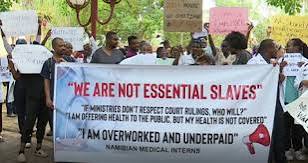
Medical interns finishing their training in Namibia cannot assume they will move straight into jobs in the public health system.
Health Minister Esperance Luvindaotold the National Assembly that the Ministry of Health and Social Services does not have enough funded vacant positions to automatically employ every medical officer, dentist and other health professional after their internships or contracts end.
Instead, available positions will be advertised, with qualified applicants going through a competitive recruitment process.
Training does not guarantee a job
Luvindao was responding to questions from Independent Patriots for Change MP Lilani Brinkman, who asked about the employment prospects of medical interns, overtime payments and delays affecting health scholarship recipients.
The minister said the number of people the ministry can employ depends on the positions approved within its establishment and the money available in the budget.
That leaves newly qualified health workers facing a gap between completing their training and finding a funded public-sector position.
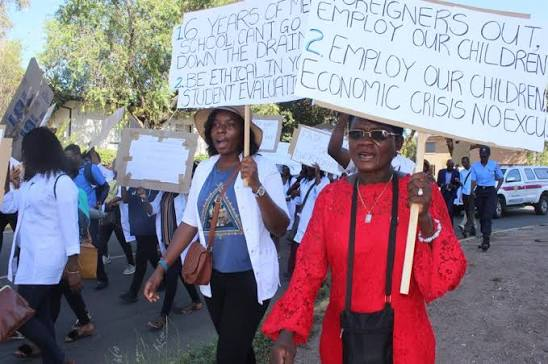
Luvindao said the government is looking at longer-term ways to increase funding and match the number of people entering health programmes with the country's need for health workers.
The issue is therefore not simply how many doctors, dentists or other professionals Namibia trains. The public system also has to have funded positions available when they finish.
Interns are also waiting on overtime pay
Brinkman's questions also raised an existing dispute over overtime worked by medical and dental interns.
Luvindao confirmed that interns have been working beyond the 40-hour week provided for under Namibia's Labour Act.
The ministry is working with the Office of the Prime Minister, the Ministry of Finance and the Office of the Government Attorney on a standard system for calculating and paying the overtime.
The minister said the process is at an advanced stage, but she did not give a date for when outstanding payments would be made. The issue had previously been raised in Parliament following an arbitration ruling on interns' overtime.
Scholarship delays affected 53 students
The minister also gave an update on Project 2025, a health scholarship programme.
The ministry awarded pre-service scholarships to 53 students studying fields including dental therapy, optometry, biomedical engineering, and orthotics and prosthetics science.
Of those students, 34 remain active. The others deferred their studies.
Luvindao said the 34 active students received their accommodation, transport and living allowances in October 2025. Earlier delays were linked to missing registration documents, banking details and the process of creating supplier codes for students in the government's financial management system.
She said those problems have now been resolved.
Namibia is trying to match training with demand
The employment issue points to a less visible part of health workforce planning.
A country can increase the number of people studying medicine and related fields, but that does not automatically increase the number of doctors available in public hospitals. Recruitment also depends on approved posts, salaries and the government's ability to fund them.

Namibia has previously announced efforts to expand its health workforce. In February, Luvindao said more than 2,000 additional health positions had been funded through the 2025/26 mid-year budget review, with 1,262 already filled by mid-January.
The latest parliamentary response shows why that expansion does not necessarily guarantee a job for every new graduate.
For medical interns finishing their training, the immediate reality is straightforward: completing the internship opens the door to applying for available public-sector jobs, but it does not guarantee one.