Minister Issues Stern Warning: River Pollution Endangers Public Health
The Nigerian federal government has called on citizens to stop polluting rivers and waterways, citing grave risks to public health and livelihoods. Minister Prof. Joseph Terlumun Utsev emphasized the need for responsible waste management and sanitation, highlighting ongoing efforts and urging collective action to protect the nation's vital water resources.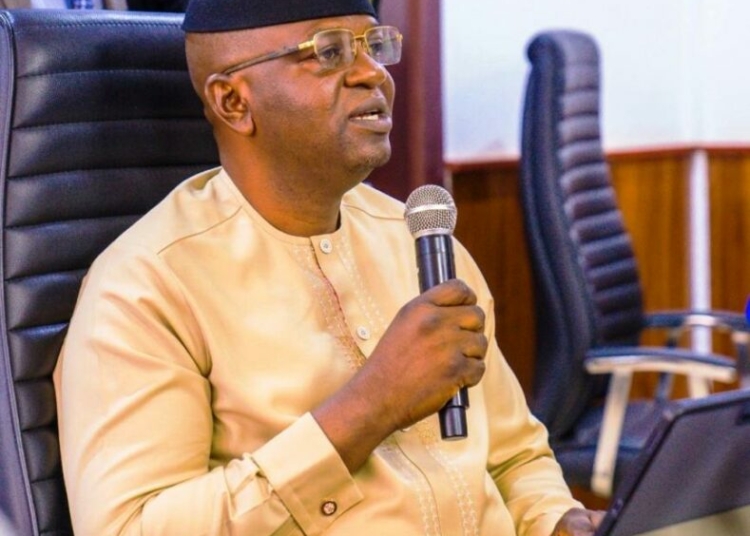
The federal government of Nigeria has issued a strong appeal to its citizens to cease the detrimental practice of dumping sewage, refuse, plastics, and other pollutants into the nation's rivers and waterways. This urgent call comes with a stern warning regarding the severe risks that contaminated water resources pose to public health and the livelihoods of millions.
Professor Joseph Terlumun Utsev, the Minister of Water Resources and Sanitation, delivered this crucial message during a media briefing in Abuja, commemorating the 2026 World Rivers Day. The event was themed, “No Forests, No Rivers, No Water, No Life,” highlighting the interconnectedness of natural resources and life itself. Minister Utsev emphasized that the discharge of untreated sewage and wastewater into rivers has far-reaching consequences beyond mere environmental degradation. Such practices directly threaten public health, compromise vital water supplies, affect numerous livelihoods, and impose significant burdens on local communities.
Recognizing the gravity of these issues, the Federal Government has adopted an integrated approach, addressing water resources management and sanitation concurrently. The Minister underscored that preventing plastics, refuse, and other pollutants from entering drains, streams, and rivers is not just an environmental obligation but a critical contribution to safeguarding public health and ensuring the future well-being of Nigerian communities.
In a positive development, Utsev revealed that through the Federal Government’s “Clean Nigeria Campaign,” 179 Local Government Areas across the country have been validated as Open Defecation Free. Additionally, over 5,238 public sanitation facilities have received support nationwide. These achievements, he stated, reflect concerted efforts to prevent human waste from contaminating waterways and to advance Nigeria’s sanitation and hygiene targets under the Sustainable Development Goals.
Despite these gains, the Minister urged Nigerians to maintain momentum by completely eradicating open defecation and adopting responsible wastewater and sanitation practices. He also called for an end to the indiscriminate disposal of refuse, effluents, and plastics into waterways, imploring communities to actively protect river catchments from pollution and degradation. Nigeria’s rivers, he noted, are currently under immense pressure from various factors, including rapid population growth, increasing urbanization, the discharge of untreated wastewater, indiscriminate waste disposal, agricultural runoff, erosion, and sand mining. These challenges are further exacerbated by the effects of climate change.
Professor Utsev stressed that the comprehensive protection of Nigeria’s rivers necessitates a collaborative effort involving governments at all levels, local communities, traditional institutions, the private sector, development partners, and civil society organizations. To this end, the Federal Ministry of Water Resources and Sanitation is actively strengthening Integrated Water Resources Management across the nation, improving water-quality monitoring systems, and providing support for the protection and restoration of watersheds and river catchments. Furthermore, efforts are underway to enhance the reliability of data concerning rainfall, river flows, groundwater, and water quality, which will provide crucial evidence for informed management of the country’s precious water resources.
In a forward-looking appeal, the Minister specifically urged young Nigerians to take a leading role in confronting critical environmental challenges such as plastic pollution, open defecation, and inadequate wastewater management. He also called upon them to participate actively in restoring degraded ecosystems and promoting water conservation practices across the country. Earlier, at the World Rivers Day celebration held at Wupa River along Kuje Road, Abuja, the Permanent Secretary of the ministry reiterated that pollution, deforestation, erosion, uncontrolled development, and climate change collectively pose increasing threats to Nigeria’s water resources, impacting water quality, public health, agriculture, biodiversity, and the livelihoods of millions.