Master the Squat: Unlock Serious Lower-Body Power and Ditch Common Mistakes!
Back squats are a fundamental compound lift, integral for lower-body strength, muscle growth, and overall functional fitness. This comprehensive guide details proper form, benefits, progression strategies, and common mistakes, ensuring a safe and effective workout for all fitness levels. Learn how to execute, progress, and integrate this powerful exercise into your routine to maximize your physical and mental gains.
Considered one of the “big three” lifts alongside deadlifts and chest presses, the back squat is a cornerstone of strength training. It engages multiple muscle groups and joints simultaneously, making it one of the most effective full-body movements in the gym.
Unlike bodyweight squats or other squat variations, barbell back squats allow lifters to move significantly heavier loads.
According to New York–based certified personal trainer MarcelDinkins, CPT, the use of a squat rack not only supports better upper-body posture but also removes the upper-body strength limitations that often come with dumbbells or kettlebells lifted from the floor.
Back squats primarily target the quadriceps, hamstrings, glutes, inner thighs, and calves, while also engaging the core, shoulders, and lower back for stability.
Sarah Pelc Graca, CPT, founder of Strong with Sarah Weight Loss Coaching, notes that most adults—from beginners to experienced lifters—can safely perform back squats, provided they are injury-free and use proper form. Mastering technique, Dinkins emphasizes, is essential to unlocking the full benefits of barbell training.
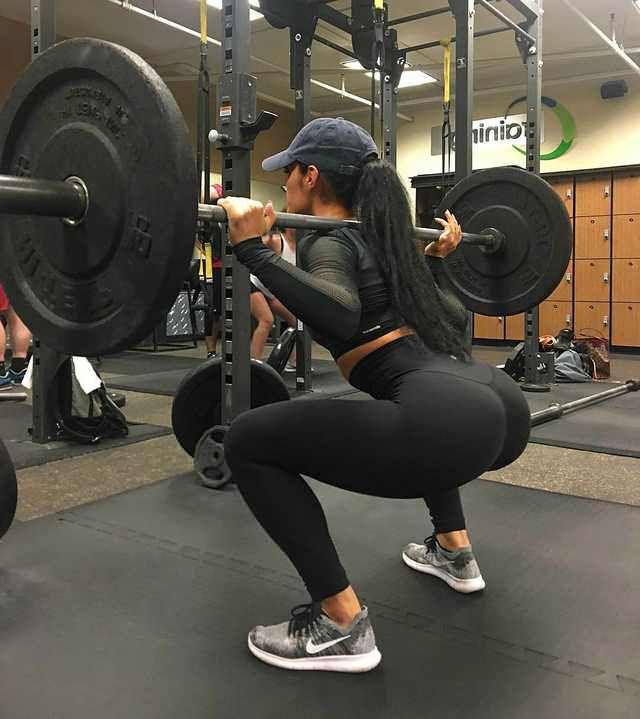
Key Benefits of Incorporating Back Squats
Lower-body strength: Back squats are highly effective for building strength and muscle in the quads, glutes, hamstrings, inner thighs, and calves. As a heavy, compound movement, they stimulate the release of growth hormones and testosterone, which support muscle growth, recovery, and overall strength.
Stability and coordination: Balancing a loaded barbell forces the body to recruit stabilizing muscles throughout the movement. This improves coordination and enhances core strength, which plays a crucial role in protecting the lower back during squats and other lifts.
Mobility: Performing back squats through a full range of motion can improve mobility in the hips, knees, ankles, and shoulders. Increased mobility not only enhances squat depth and performance but can also enable lifters to handle heavier loads safely.
Mental toughness: Beyond physical benefits, back squats build mental resilience. Pelc Graca explains that the focus and discipline required to lift heavy weight fosters confidence and grit, often carrying over into other aspects of life.
Bone density: Heavy resistance training, including back squats, helps improve bone density. This is especially important for women, who are at a higher risk of osteoporosis.
Functional movement: Back squats mimic everyday actions such as sitting down and standing up. As people age, maintaining these functional movement patterns becomes essential for independence and long-term mobility.
Pelc Graca advises anyone with existing back, knee, shoulder, or hip injuries—or those who are pregnant—to consult a healthcare professional before performing back squats.
How to Do a Back Squat Properly
Setup:Set up a squat rack at an appropriate height with your desired weight, or begin with just the barbell.
Stance: Stand with your feet about shoulder-width apart, toes pointing slightly forward or outward.
Barbell placement: Rest the barbell securely on your upper back across the traps and shoulders—not on the neck.
Grip: Hold the bar with your hands slightly wider than shoulder-width, keeping your wrists neutral and elbows pointing down and back for stability.