Mahama's Private Jet Sparks Fierce Debate: Is Brother's Jet Use Acceptable for Presidential Travel?
A heated public debate has emerged over President John Dramani Mahama's use of his brother's private jet for official state travels, sparking mixed reactions from political figures and analysts. While some defend the practice under conditions of transparency, others, like Kofi Bentil, condemn it citing significant ethical and security risks. The controversy, discussed on JoyNews' Newsfile, also highlights political accusations of hypocrisy and parallels with the President's recent ban on foreign travel for state institutions.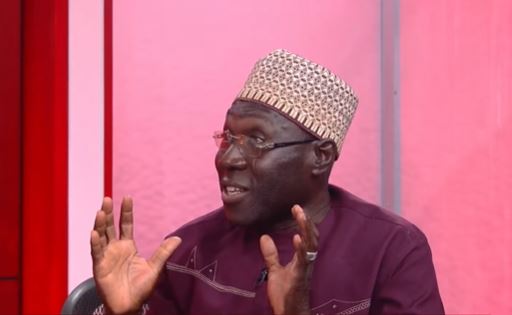
The use of a private jet belonging to President John Dramani Mahama's brother, businessman Ibrahim Mahama, for official state travels has ignited a significant public debate and drawn varying perspectives from political figures and analysts. The controversy intensified following reports and visual evidence, including a recent trip to South Korea where President Mahama and his delegation utilized the newly acquired private jet, branded "Dzata," to sign memoranda of understanding and launch a vessel.
Among those defending the practice is Inusah Fuseini, a former Tamale Central MP and ex-Minister for Lands and Natural Resources. Speaking on JoyNews' Newsfile programme, Mr. Fuseini asserted that there was "nothing inherently wrong" with the President using his brother's private aircraft for official engagements, dismissing the public backlash as unfounded.
Joe Jackson, the Chief Executive Officer of Dalex Finance Ghana, echoed this sentiment, stating that the arrangement itself should not be considered problematic. However, Mr. Jackson strongly emphasized the critical importance of transparency and adherence to due processes. He argued that while private resources can be leveraged for convenience, it is imperative for the presidency to ensure such arrangements are thoroughly documented and clearly communicated to the public. He elaborated, "If I am a CEO of Dalex, it doesn’t mean my brother cannot provide certain services, but that decision cannot be taken by me. It should be thoroughly transparent. By declaring: this is the value, this is how it costs to run the jet, this is the services provided," to prevent the appearance of a conflict of interest and maintain public trust.
Conversely, Kofi Bentil, a prominent lawyer and Senior Vice President of IMANI Africa, has vehemently condemned President Mahama’s reliance on his brother's private jet for international travel. On the same Newsfile programme, Bentil described the practice as “very wrong” and expressed profound concerns regarding its ethical and security implications. He stressed that state travel transcends mere comfort, fundamentally upholding the dignity of the presidency and the nation itself, and argued that using a privately-owned jet could negatively impact public morale.
Bentil further highlighted potential security vulnerabilities, warning that an aircraft not serviced or operated under strict state supervision could expose the president to risks such as sabotage or espionage, including the possibility of a listening device being planted. He unequivocally dismissed cost-saving as a legitimate justification for such a practice, suggesting that if state-owned jets are unavailable or unsuitable, the government should opt to charter an appropriate aircraft from an independent third party rather than relying on a family member's private asset. He concluded, “Saving money cannot come at the expense of state security and propriety. This practice is unacceptable and should not continue.”
The debate has also taken on a political dimension. Abdul Kabiru Tiah Mahama, the Member of Parliament for Walewale, accused President Mahama of breaching the Code of Conduct for government appointees through the repeated use of his brother's private jet. Similarly, John Ntim Fordjour, MP for Assin South, criticized the ruling National Democratic Congress (NDC) for what he termed “reckless politics.” Rev. Fordjour pointed out the perceived hypocrisy, noting that the NDC had previously criticized the travel arrangements of former President Nana Addo Dankwa Akufo-Addo while in opposition, only to seemingly adopt similar practices upon assuming power. He argued that the past criticisms were politically motivated rather than principled and underscored the President's responsibility to ensure the state’s presidential jet is functional and available for official duties, aligning with the NDC's own demands when they were in opposition.
Ironically, this controversy unfolds as President Mahama himself recently issued a directive banning international travel for heads of state institutions and board members, citing concerns over rising costs and potential conflicts of interest. This directive adds another layer of complexity to the ongoing discussion, prompting questions about consistency in adherence to principles of financial prudence and ethical conduct in official travel arrangements.