Madagascar Plunges into Crisis: President Ousted Amid Protests and Military Takeover
Madagascar is in political turmoil following weeks of anti-government protests that culminated in President Andry Rajoelina dissolving the National Assembly to prevent an impeachment vote. Minutes later, a mutinous military unit, led by Colonel Michael Randrianirina, announced it had seized power, plunging the Indian Ocean island nation into further uncertainty amidst international concern.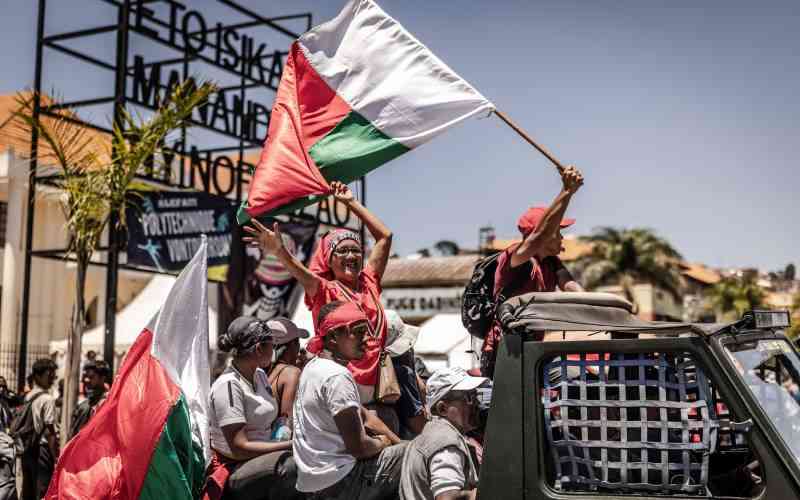
The Indian Ocean island nation of Madagascar has been plunged into a deep political crisis, marked by escalating civil unrest and demands for the resignation of President Andry Rajoelina. Protests, spearheaded by a youth movement known as Gen Z, began on September 25, initially fueled by anger over power and water shortages, but rapidly evolved into widespread demonstrations against the president and the ruling elite.
The situation reached a critical juncture when mutinous soldiers and security forces, including the elite CAPSAT unit that was instrumental in Rajoelina's 2009 military-backed coup, joined the demonstrators at the weekend. These forces publicly declared their refusal to obey orders to shoot at protesters and called for the resignation of Rajoelina and other government ministers, signaling a significant shift in the balance of power.
In an attempt to quell the unrest, President Rajoelina had previously sacked his entire government and replaced the president of the Senate last month, addressing some of the protesters' demands. However, these measures proved insufficient. From a "safe place" where he claimed to be protecting his life, Rajoelina, 51, addressed the nation late Monday, stating his intention not to bow to resignation demands and affirming he was "on a mission to find solutions" to the crisis, asserting he would not let the impoverished nation "destroy itself." Reports emerged from Radio France Internationale that he had left the country aboard a French military plane, though French officials refrained from confirming this.
The political turmoil intensified sharply on Tuesday. As parliamentarians were gathering for an extraordinary session to initiate a vote to strip Rajoelina of the presidency for "desertion of duty," the president issued a decree dissolving the National Assembly. This move was aimed at blocking the anticipated impeachment vote. However, the opposition-led National Assembly proceeded with the vote regardless, with 130 members – well over the two-thirds constitutional threshold in the 163-member chamber – voting to impeach Rajoelina, declaring an "absence of power" and a "power vacuum" in Madagascar.
Minutes after the impeachment vote, Colonel Michael Randrianirina, head of the CAPSAT military unit, announced on national radio that the military had taken charge of the country. He stated, "We have taken the power," and declared the dissolution of all institutions except the lower house of parliament. Colonel Randrianirina outlined plans to establish a committee comprising officers from the army, gendarmerie, and national police, which might later include senior civilian advisers, to carry out the work of the presidency. He also committed to setting up a civilian government "after a few days." The presidency, however, dismissed the impeachment session as "devoid of any legal basis," and the High Constitutional Court's validation was still pending.
The crisis has drawn significant international concern, with expressions of alarm from regional bodies such as the African Union and South Africa. The African Union's security council urged all armed forces "to return to uphold their constitutional mandate, and to refrain from meddling in the political affairs of the country." The United Nations reported at least 22 fatalities in the initial days of the protests, some at the hands of security forces, others due to criminal gangs and looters, a toll which Rajoelina disputed, claiming "12 confirmed deaths" among "looters and vandals." Air France, in response to the unrest, extended the suspension of its flights to Madagascar. This latest upheaval marks another chapter in Madagascar's turbulent political history since its independence from France in 1960.