Before Smartphones Took Over: 7 Things That Made Nigerian Childhood Holidays Different
Relive the nostalgic summer traditions of analog childhoods, from racing home at dusk when streetlights came on to the thrill of Blockbuster runs and catching fireflies. This article contrasts those simple pleasures with today's technology-driven world, emphasizing how these collective memories continue to define a cherished era.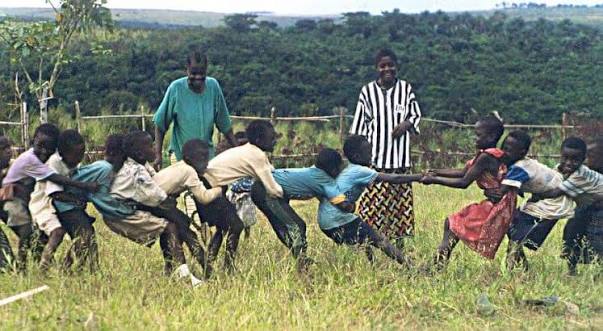
There was a time when the beginning of the long holiday meant something very different to a Nigerian child.
There were no WhatsApp groups asking who was outside. No location sharing. No multiplayer game waiting on a tablet. You simply walked out of the house and somehow found everybody.
For many Nigerians who grew up in the 1980s, 1990s and early 2000s, school holidays were built around neighbourhoods, cousins, improvised games and an extraordinary ability to create entertainment from almost nothing.
Children today have their own version of fun, of course. But some parts of that older Nigerian childhood are becoming increasingly difficult to find.
Here are seven that deserve remembering.
1. Playing Outside Until Someone's Mother Started Shouting Their Name
Before smartphones made children permanently reachable, there was another communication system.
Your mother called your name.
And if you were too far away to hear her, somebody else usually did.
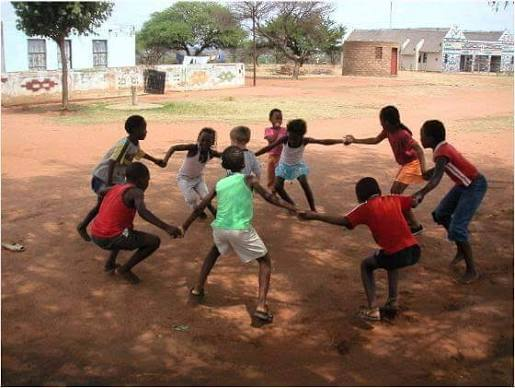
Afternoons disappeared into football, police-and-thief, hide-and-seek, ten-ten, suwe and whatever new game somebody had brought back from school.
There was rarely an organised playdate. Children simply found other children.
The neighbourhood itself was the playground, and the appearance of darkness — or an increasingly angry parent — usually meant it was time to go home.
2. Turning Almost Anything Into a Toy
An empty milk tin could become part of a game. Old tyres could be rolled down the street. Bottle tops suddenly had value.
Children constructed toy cars from wire, cartons, discarded plastic and whatever else they could find.
The finished product might have looked nothing like something bought from a shop, but that wasn't really the point.
Making the toy was often part of playing with it.
That kind of improvisation hasn't completely disappeared, particularly outside Nigeria's biggest cities, but cheap manufactured toys, smartphones and gaming devices have changed what many children now expect entertainment to look like.
3. Football With Slippers for Goalposts
You didn't need a proper pitch.
You needed a ball.
Sometimes you didn't even need that. A tightly bundled collection of plastic bags, old socks or whatever could survive being kicked around might do.

Two slippers marked one goal. Two more marked the other.
Then came the arguments.
Was it inside the imaginary post? Was that actually a foul? Who owned the ball? And, most importantly, what happened when the owner of the ball got angry and announced that he was going home?
There was no referee and rarely an adult nearby.
Yet somehow, after ten minutes of shouting, the match usually continued.
4. Going to Your Friend's House Without Calling First
Today, arriving at someone's home without sending a message can feel strange.
For children, it was once perfectly normal.
You walked to your friend's house, knocked and asked the question generations of Nigerian parents heard:
“Is Chinedu around?”
If Chinedu wasn't there, somebody usually knew where he was.
Try the football field. Check Emeka's house. They went to buy something. They are at the next street.
Finding your friends was occasionally an adventure of its own.
And when you eventually found them, nobody had spent the previous hour staring at a screen waiting for everyone else to come online.
5. Television That Made Everybody Watch the Same Thing
Entertainment wasn't always personal.
One household didn't have four people sitting in four rooms watching four different programmes on four different screens.
For many families, there was one television.
That meant siblings negotiating over programmes, children waiting for scheduled cartoons and an entire household occasionally watching the same show.
And if NEPA took the light at the crucial moment?
Everybody suffered together.
There was no rewind button. No streaming it tomorrow. No checking the missed scene on YouTube.
Sometimes the programme simply disappeared with the electricity.
The disappointment was communal too.
6. Travelling to the Village and Rediscovering Your Extended Family
For many Nigerian children, the long holiday wasn't complete without being sent somewhere.
Sometimes it was Grandma's house. Sometimes an aunt's home. Sometimes it meant travelling from Lagos, Abuja or Port Harcourt back to the family village.
Those trips could mean suddenly living with cousins you barely knew at the beginning of the holiday and not wanting to leave them by the end.
Children climbed trees, followed older cousins around, attended family gatherings and discovered relatives whose exact connection nobody could satisfactorily explain.
Your mother's cousin's husband's sister might still somehow be introduced as “your aunty.”
You accepted it.
The important thing was that there were more children to play with.
7. When Boredom Wasn't Immediately Solved With a Screen
Perhaps this is the biggest difference.
Children got bored.
And adults didn't necessarily rush to fix it.
There was no endless feed waiting in your pocket, no algorithm supplying another video every 20 seconds and no guarantee that entertainment would appear the moment you wanted it.
So children invented things.
They argued. Drew pictures. Told ridiculous stories. Chased insects. Played games whose rules changed halfway through. Sat outside doing absolutely nothing until somebody suggested something.
Boredom often forced imagination, negotiation and interaction.
That doesn't mean childhood was necessarily better then.
Today's Nigerian children have extraordinary access to information, educational resources, entertainment and people around the world. A curious child with an internet connection can learn things previous generations might never have encountered.
But something has changed.
As Nigerian cities have grown, traffic has worsened, security concerns have increased and digital entertainment has moved inside the home, the territory available for unsupervised childhood has become smaller for many families.
Perhaps that is why memories of old holiday afternoons carry so much weight.
It isn't really about slippers for goalposts or whether children still know how to roll a tyre.
It is about a kind of childhood in which entertainment wasn't constantly supplied to you.
You had to find it.
And very often, you found it outside, surrounded by other children who were looking for exactly the same thing.