Lagos Submerged: Government Appeals for Calm as Heavy Floods Wreak Havoc
Lagos experienced severe widespread flooding following torrential rainfall, impacting numerous areas and disrupting daily life. Commissioner Tokunbo Wahab addressed the crisis, citing natural vulnerability and human activities like blocked drains and illegal constructions as causes, while stressing government efforts and the need for public cooperation.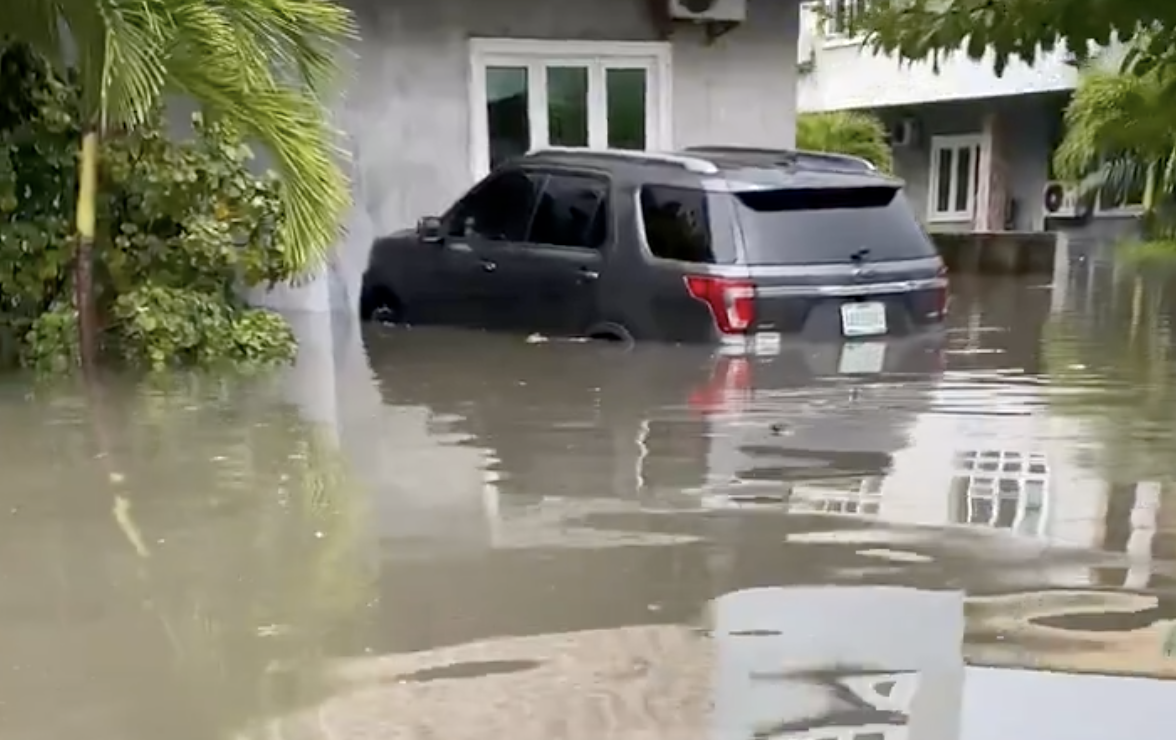
The Nigerian metropolis of Lagos experienced severe flooding across numerous areas following torrential rainfall on Tuesday and Wednesday, September 23 and 24, 2025. This intense downpour led to widespread disruption, submerging houses and businesses and forcing commuters to abandon their vehicles in waterlogged streets. Key areas impacted included Lagos Island, Mile 2, Lekki Phase 1, Lekki Expressway, the 3rd Mainland Bridge, Ago Palace Way, Ayobo-Ipaja, Fola Osibo, and Sangotedo. Videos shared on social media platforms depicted cars and motorcycles struggling through knee-deep floodwaters, with supermarkets also affected, highlighting the extensive reach of the deluge.
Residents, utilizing platforms like X, attributed the worsening flood situation primarily to blocked drainages, a recurring issue during the rainy season. An X user, @JustOzed, captured scenes in Ago Palace Way and Mile 2, commenting on the reality faced every rainy season in Lagos. Other visuals showcased the severe conditions in Lekki, including Meadow Hall Way and a Lekki horizon estate, where luxury cars were submerged and traffic was severely disrupted.
In response to the crisis, Tokunbo Wahab, Lagos Commissioner for Environment and Water Resources, issued a statement on Wednesday, sympathizing with affected residents. He acknowledged the discomfort and disruption caused by the flash floods. Commissioner Wahab explained that Lagos, being a coastal city, is inherently prone to flooding, particularly when heavy rainfall coincides with tidal effects, which can cause tidal lock. Despite this natural vulnerability, he affirmed that the state government has been actively investing in drainage infrastructure, conducting regular desilting operations, and enforcing environmental laws to mitigate flooding incidents and safeguard lives and property.
Wahab further detailed specific causes of flooding in certain locations. He noted that flooding in Kusenla was due to a technical challenge where the downstream elevation was about 1.2 meters higher than the drainage invert. A project, including a pumping station, has reportedly been awarded to rectify this issue. Conversely, around the House on the Rock Church, the commissioner attributed the intensified flooding to illegal constructions on floodplains and the irresponsible dumping of refuse into drains, stressing that such activities exacerbate the problem and must cease.
Beyond these immediate responses, the commissioner urged Lagosians to cooperate with the government by maintaining clean environments, refraining from blocking drains, and avoiding any construction on floodplains. He warned that illegal structures and unapproved reclamations would be removed. Wahab reassured the public that most of the recorded flash floods had receded but emphasized the Ministry's commitment to strengthening flood management systems, reiterating that such efforts demand the "support and responsible actions of all Lagosians."
However, the challenge of flooding in Lagos is not confined to recent heavy downpours. Reports confirm that parts of the Lagos Island Local Government Area, specifically Itafaji, have been grappling with persistent flooding even before the recent rains. Stagnant, foul-smelling water from gutters has continuously overflowed onto streets, submerging a bakery, the Mountain of Fire Ministry, and several shops in areas like Jankarra Market, St John Primary School, and Adeniji Market. Residents in Itafaji expressed frustration over the absence of proper drainage systems and the lack of concrete action from authorities despite repeated complaints and earlier media coverage, raising significant health and safety concerns as the wet season's peak brings more frequent rainfall.
Adding to the broader concern, the federal government has also issued flood alerts for numerous flood-prone states across Nigeria, including Lagos. This watchlist encompasses Adamawa, Akwa Ibom, Anambra, Bauchi, Bayelsa, Benue, Borno, Cross River, Delta, Ebonyi, Edo, the FCT, Gombe, Imo, Jigawa, Kebbi, Kogi, Kwara, Nasarawa, Niger, Ogun, Ondo, Plateau, Rivers, Sokoto, Taraba, and Yobe, underscoring the national scope of the flood risk.