Jonathan Slams Governors' 'Off-Cycle Election' Intrusion
Former President Goodluck Jonathan has expressed strong concerns over the escalating trend of high-ranking political office holders converging on states during off-cycle elections, warning it threatens Nigeria's democratic stability. He argues this practice creates intimidation and undue pressure, urging a national re-evaluation of political conduct to safeguard the future of electoral democracy.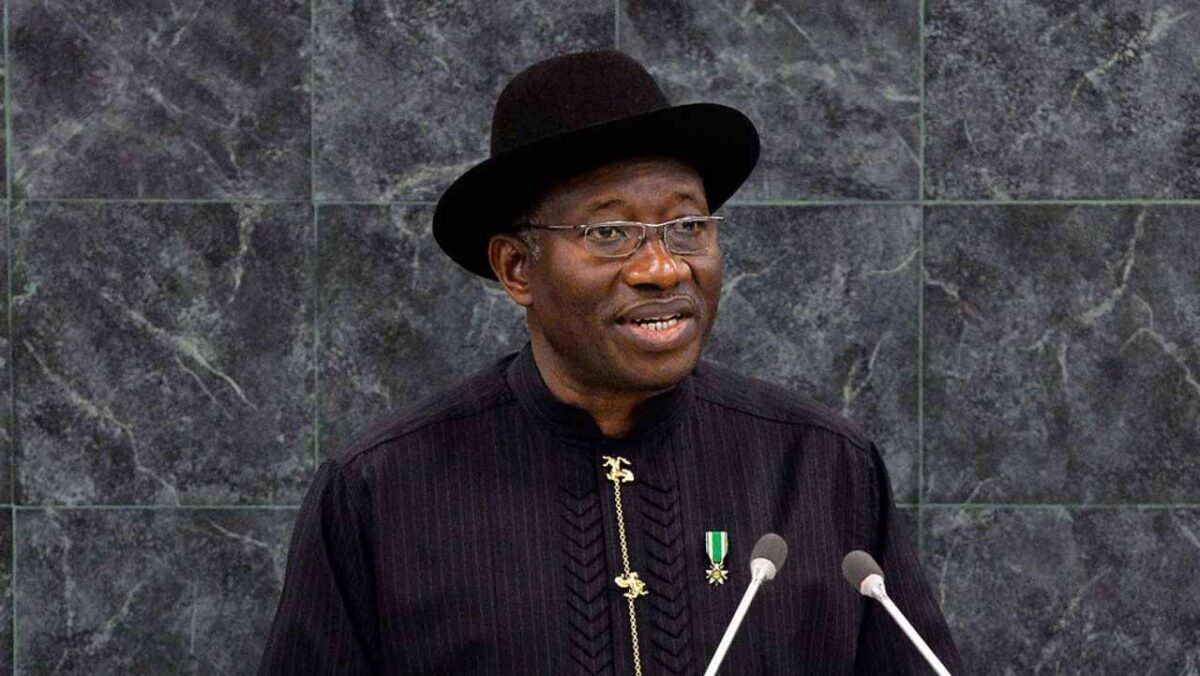
Former Nigerian President Goodluck Jonathan has issued a strong cautionary statement regarding an escalating trend in the nation's political landscape: the widespread convergence of serving governors, senior political office holders, and party leaders in states where off-cycle elections are being conducted. Jonathan warned that this practice, if left unchecked, poses a significant threat to Nigeria’s democratic stability and could have profound long-term implications for the country's electoral integrity.
The former president voiced his concerns in a statement released on his X handle, drawing particular attention to recent off-cycle governorship elections in Osun, Ekiti, and Ondo States. While commending the Independent National Electoral Commission (INEC), security agencies, political parties, and the citizens of Osun State for the peaceful conduct of their election, Jonathan highlighted what he described as an "unusual" and "unwholesome" emerging pattern. He noted that the presence of influential government functionaries from outside the election state, often accompanied by large numbers of aides and heavy security details, is not a practice that should become normal in a democratic society.
Jonathan recalled similar circumstances during his own presidency, specifically during the 2013 Anambra and 2014 Ekiti governorship elections. On those occasions, observing the mobilisation of senior political leaders into the states, he promptly directed all party leaders and senior government officials to leave the states immediately, underscoring his prior commitment to ensuring a level playing field.
The central thrust of Jonathan's warning is that the increasing presence of powerful political actors during off-cycle elections creates an atmosphere ripe for apprehension, intimidation, bullying, and undue pressure on voters and political opponents alike. He acknowledged the constitutional right of political parties to campaign, mobilise supporters, and deploy legitimate party structures, affirming these as essential components of democracy. However, he drew a clear distinction, asserting that "overwhelming political mobilisation" on election day, particularly involving numerous serving governors and senior public officials from across the country, crosses a line and undermines the spirit of free, fair, and peaceful democratic competition.
The former leader urged a national introspection, questioning whether such extensive deployment of political power and large-scale mobilisation by senior office holders on election day aligns with democratic principles. He pointed out that this phenomenon "hardly happens in other democratic countries," suggesting that Nigeria's unique political culture is developing an undesirable trait. Jonathan further cautioned against allowing political competition to devolve into a "contest in which victory is perceived as something that must be achieved at all costs," a mentality detrimental to healthy democracy.
Jonathan painted a grim scenario should this trend persist and escalate: what would happen if governors from opposing political parties began to converge on every competitive election state? Such a development, he warned, would inevitably lead to a dangerous escalation, where each party attempts to "match political power with political power, governmental influence with governmental influence, and mobilisation with counter-mobilisation." This tit-for-tat approach, he argued, would deepen political tensions and transform elections from peaceful efforts to secure voter mandates into cutthroat "contests for political survival."
Emphasizing the gravity of the situation, Jonathan urged all political actors to view this issue not as a partisan dispute related to the Osun election, but as a broader national concern vital to the future of Nigeria's electoral democracy. He also reminded former and serving public officials of their inherent greater responsibility, stressing that the power and influence associated with public office must be wielded to strengthen democratic institutions, rather than to foster apprehension among political opponents or the general citizenry. These crucial comments from Goodluck Jonathan were made in the wake of the Osun State governorship election, where Ademola Adeleke of the Accord Party was declared the winner over the All Progressives Congress (APC) candidate, Bola Oyebamiji.