Japan Launches Bold Initiative to Transform Africa's AI Talent Landscape!
Africa's AI market is set for significant growth, but a critical talent gap poses a challenge. Japan, through JICA, has pledged to train 30,000 AI professionals in Africa over three years, aiming to build a robust talent pool and foster innovation. This initiative highlights the crucial role of human expertise in realizing Africa's digital ambitions and emphasizes international collaboration.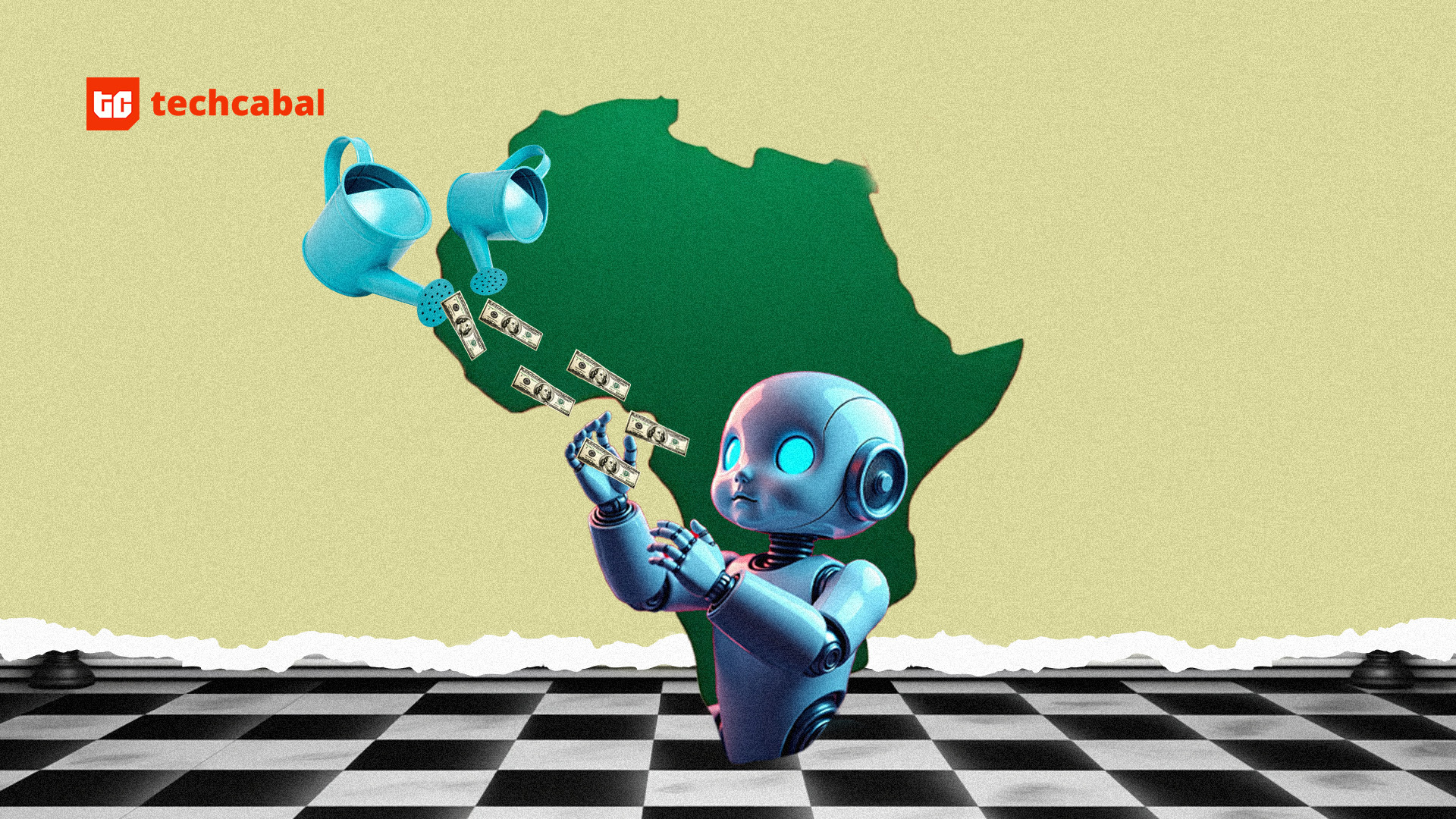
Africa's burgeoning artificial intelligence (AI) market is projected to reach $16 billion within five years, yet the continent currently accounts for only 1% of global AI talent. This creates a significant skills gap, as various industries, from agriculture to finance, rapidly adopt AI technologies. Recognizing this critical challenge, the Japanese Prime Minister,Ishiba Shigeru, announced a bold initiative at the Tokyo International Conference on African Development (TICAD)in August: Japan will commit to developing 30,000 AI industry personnel in Africa over the next three years. The Japan International Cooperation Agency (JICA), Japan’s primary overseas development arm, is tasked with the monumental responsibility of realizing this goal.
The core of Africa’s AI dilemma lies in two interconnected issues: inadequate infrastructure and a severe shortage of skilled professionals. While infrastructure — encompassing data centers, computational resources, and reliable connectivity — appears to be an immediate concern, with Africa possessing less than 1% of global data center capacity, experts argue that talent is equally, if not more, crucial.
)
Photo Credit: Google
As Dr. Bosun Tijani, Nigeria’s Minister of Communications, Digital Economy, and Innovation, noted, “We may not have the compute and infrastructure, but we do have the talent.” This sentiment is echoed by JICA officials, with Ryosuke Myashita, Deputy Director for Digital Transformation at JICA, stating, “Without talent, we can’t create infrastructure, we can’t create a strategy.” The initiative aims to cultivate the human expertise necessary to power Africa’s expanding AI ecosystem, ensuring that even advanced computational facilities do not lie idle.
JICA’s strategy, as outlined in an August report, is to move beyond mere support for Africa’s AI journey and instead build foundational systems for scaling it. This involves two broad objectives: firstly, to build a deep AI talent pool by bolstering African universities and regional research networks; and secondly, to expand bilateral cooperation with Japanese firms through internships, exchanges, and joint academic programs. Training will extend beyond traditional computer science students to include policymakers and non-STEM faculty, thereby embedding AI literacy across diverse sectors.
Collaborative projects will address pressing challenges in health, manufacturing, agriculture, and education, while hackathons will offer practical avenues for applying learned skills. This program also serves Japan’s self-interest, as it faces a projected shortfall of 450,000 IT professionals by 2030, making fostering business and academic interactions with African talent a pathway for meaningful “co-creation and co-innovation.”
Despite these ambitious plans, challenges remain, particularly regarding research partnerships and the risk of brain drain. JICA acknowledges that Africa’s AI research agenda must evolve beyond merely applied solutions to local challenges, to contribute to global breakthroughs in foundational AI research. Sub-Saharan Africa currently produces a mere 0.02% of the world’s granted AI patents. JICA intends to partner with leading African academic institutions and research centers, such as the African Institute of Mathematical Sciences (AIMS), the University of Nairobi, Stellenbosch University, and Mohammed VI Polytechnic, to establish ‘centers of excellence.’
These centers will develop AI-training curricula, conduct impactful research, and nurture the next generation of AI professionals. However, without robust local industries and research labs to absorb trained talent, there is a significant risk that Africa could inadvertently become a training ground for foreign employers.
The field of AI development in Africa is increasingly crowded, with numerous global players like Germany, Canada, the United Kingdom, Sweden, and international NGOs like the Gates Foundation, alongside tech giants such as Google, contributing through various initiatives. JICA recognizes the need for better coordination among these actors.
Photo Credit: JICA
As Miyashita pointed out, a lack of a comprehensive understanding of ongoing efforts has often led to duplication and inefficient use of limited resources. This realization has spurred a call for greater collaboration, not only among development partners but also among African nations themselves, to address structural gaps and accelerate AI progress.
Ultimately, JICA’s efforts aim to foster stronger exchange and innovation opportunities between Africa and Japan, while also supporting a more robust startup ecosystem on the continent, potentially through venture capital funding. Japan seeks to differentiate its approach by aligning African demand-driven innovation with Japanese technical expertise, viewing Africa’s social and economic needs not as deficits, but as fertile ground for innovation that can generate shared value. As Miyashita articulates, “Needs drive innovation. And Africa has no shortage of needs.”