How Did the Yoruba Count Before English Arrived? The Number System Hiding in Plain Sight.
The Yorùbá numbering system combines base-20, base-10, and base-5 elements, using addition, multiplication, and subtraction to construct numbers.
If you ask someone to count from one to twenty in English, the numbers follow a familiar rhythm. Eleven comes after ten, twelve follows eleven, and the counting continues until twenty arrives. Nothing seems particularly complicated about it.
But in Yoruba, reaching fifteen can mean thinking about twenty first. Instead of simply moving forward, the language can describe a number by calculating how far it is from another. This small detail opens a much bigger story about how language carries knowledge.
Yoruba, spoken across southwestern Nigeria and beyond, has a distinctive numbering system that combines base-20, base-10, and base-5 elements. Linguists have studied how it uses addition, multiplication, and subtraction to construct numbers.
Its foundation includes ogún, meaning twenty, but the system does not stop at counting in groups of twenty. It builds relationships between numbers, sometimes reaching a value by moving backwards from a larger one.
When Twenty Becomes the Answer
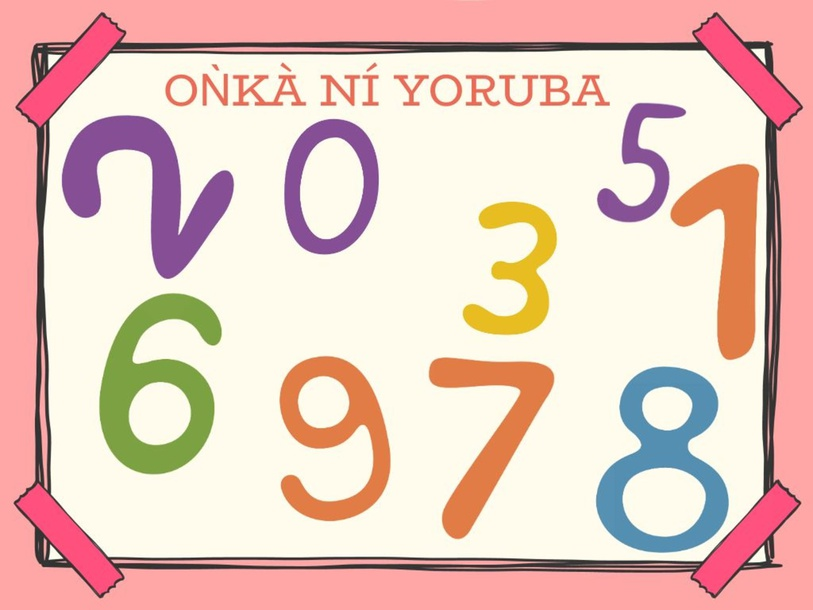
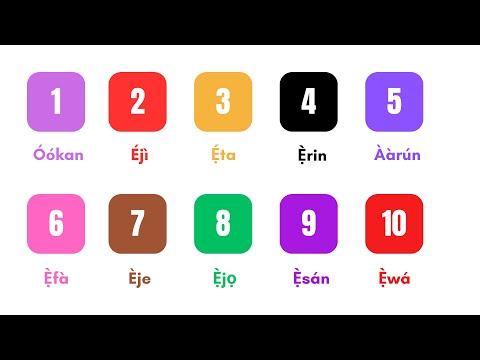
Take fourteen, ẹ́rìnlá, which expresses four added to ten. The pattern works for eleven through fourteen, but fifteen introduces a different approach. Fifteen is ẹ̀ẹ́dógún(contraction of àrúndínlógún), meaning twenty minus five. Sixteen is twenty minus four, seventeen is twenty minus three, eighteen is twenty minus two, and nineteen is twenty minus one. The number is understood by looking ahead to the next major unit and calculating the difference.
The same logic appears in other numbers. Forty, ogójì, represents two twenties, while sixty, ọgọ́ta, represents three twenties. Fifty, àádọ́ta, is sixty minus ten, and seventy, àádọ́rin, is eighty minus ten. Multiplication establishes the larger number; subtraction brings the calculation to the intended value.
This is where the system becomes particularly interesting. In English, we generally say fifty without hearing the arithmetic behind the word. In Yoruba, the construction can preserve that arithmetic within the number itself.
Linguists describe this as a subtractive mechanism, one of the features that distinguishes Yoruba numerals from systems that rely mainly on addition and multiplication. The language does not merely name a quantity; it can reveal how that quantity relates to another.
The pattern continues into larger numbers, where the calculations become more involved. For example, some traditional formations for hundreds combine multiples of two hundred with subtraction. Understanding them requires more than memorising a list of number words: learners must recognise the relationships between the parts.
This is one reason the system can be challenging to people encountering it for the first time, particularly when spelling, pronunciation and tone marks differ across sources or dialects.
The Thinking Hidden Inside the Language
Why twenty? One popular explanation points to the fingers and toes: ten on the hands and ten on the feet. It offers an intuitive way to imagine how counting in twenties might have developed, but the origin should not be treated as conclusively established.
What researchers can demonstrate more confidently is that the system combines several numerical bases and uses consistent linguistic patterns to form numbers.
Yoruba is not alone in using groups of twenty. French retains a trace of this approach in quatre-vingts, meaning eighty, or four twenties. The Maya also used a vigesimal system, but theirs was a positional numeral system, unlike the word-based constructions of Yoruba. Similar numerical foundations do not mean the systems developed or operate in the same way.
It would also be misleading to assume that every Yoruba speaker uses traditional numerals in every setting today. English numerals and decimal arithmetic are common in contemporary schooling and daily transactions, and speakers may move between systems depending on context. There is no reliable basis for claiming that most speakers routinely use traditional forms without thinking about them.
Culture
Read Between the Lines of African Society
Your Gateway to Africa's Untold Cultural Narratives.
Still, the system deserves attention beyond the classroom. It reminds us that indigenous languages are not simply collections of names for things. They contain structures for organising information, expressing relationships and reasoning about the world. When a language can build a number through addition, multiplication or subtraction, it offers a glimpse into how mathematical thinking can be embedded in ordinary speech.
Maybe that is the most interesting part of the story. A number we might treat as a fixed value can, in another language, carry the steps used to reach it. And when we look closely at the words we have inherited, we sometimes discover that what sounds unfamiliar is not illogical at all. It is simply another way of arriving at the same answer.