How Did Ademola Adeleke Go From a Controversial Political Comeback to Winning Osun Again?
From 2018 controversies to a 2022 victory, an EFCC account freeze, Tinubu’s intervention, Davido’s Trump appeal, and a dramatic 2026 election win—how did Ademola Adeleke survive it all and win Osun again?
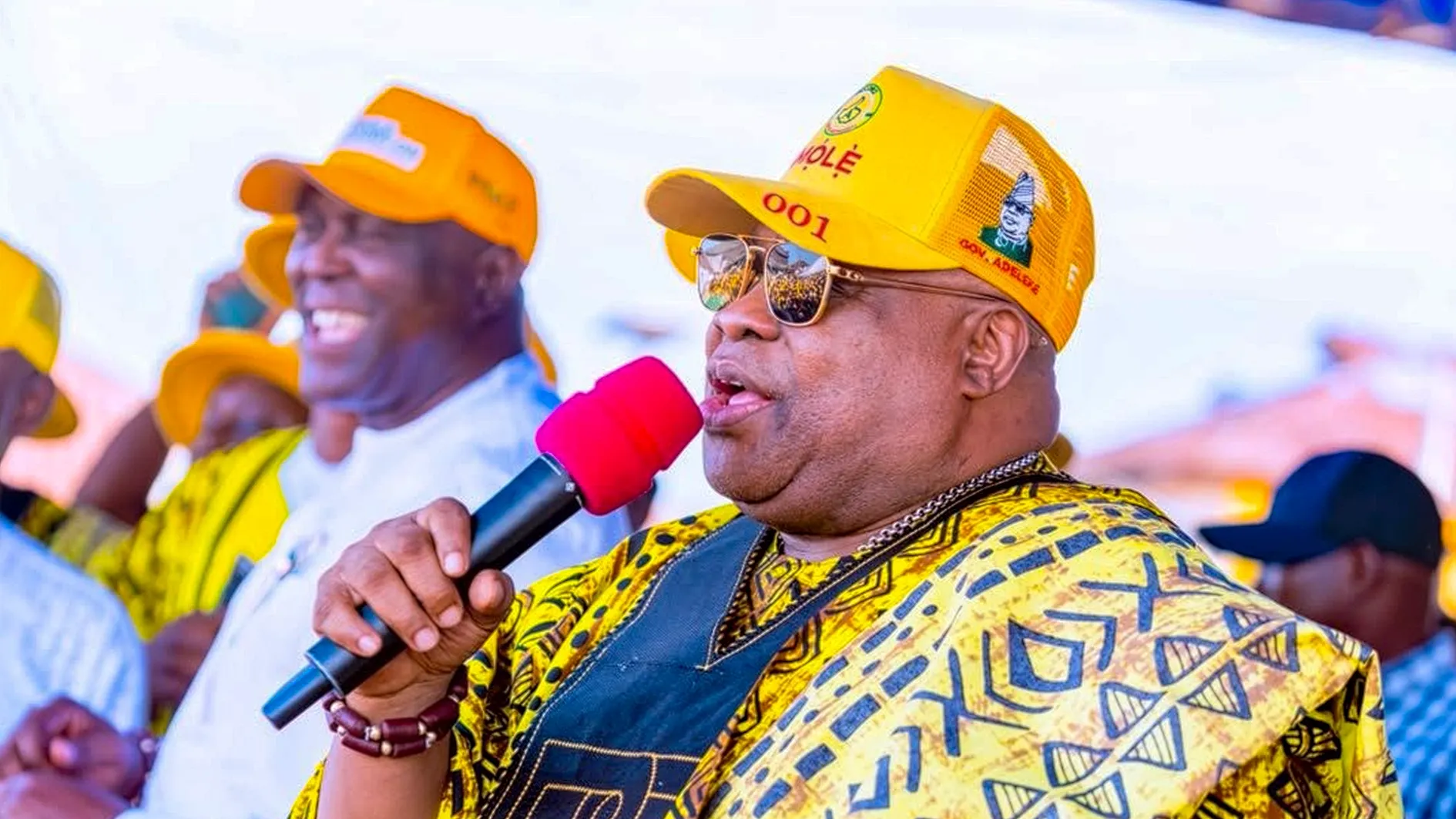
There is something almost cinematic about Ademola Adeleke’s political journey in Osun State. He went from being mocked for his dancing and dragged into a certificate controversy, to losing one governorship race, winning another, surviving a court battle, switching political platforms, facing fresh accusations during another heated campaign, watching the EFCC freeze a state government account days before an election, and eventually returning to office for another four years.
But the 2026 Osun election was not simply another election. By the final week, the contest had become a much bigger argument about political power, the use of federal institutions, the independence of anti-corruption agencies and whether an election could remain credible when one of the contestants was simultaneously fighting a financial battle with a federal agency.
And then there was Davido.
The Afrobeats superstar, who is Adeleke’s nephew, did not stay on the sidelines. He campaigned for his uncle, defended him publicly and, at the most dramatic point, appealed directly to United States President Donald Trump to pay attention to the Osun election.
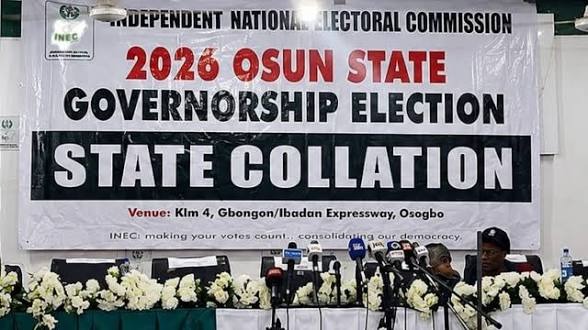
Adeleke eventually won the August 15, 2026 election, defeating APC candidate Bola Oyebamiji. INEC declared him the winner after he secured 511,067 votes and won 19 of Osun’s 30 local government areas.
So how did the story get here?
From the 2018 controversy to Adeleke’s 2022 breakthrough
Adeleke’s political journey did not begin with his 2022 victory, but began in 2018, when he contested the Osun governorship election under the PDP but faced allegations over his educational qualifications, including claims involving his WAEC results and secondary-school testimonial.
He lost the election to Gboyega Oyetola.
The rematch came in 2022, when Adeleke defeated Oyetola and became governor. Davido played a visible role in the campaign, helping boost Adeleke’s appeal among younger voters and on social media.
After taking office, Adeleke became involved in disputes over Osun’s finances and the debt inherited from previous administrations.
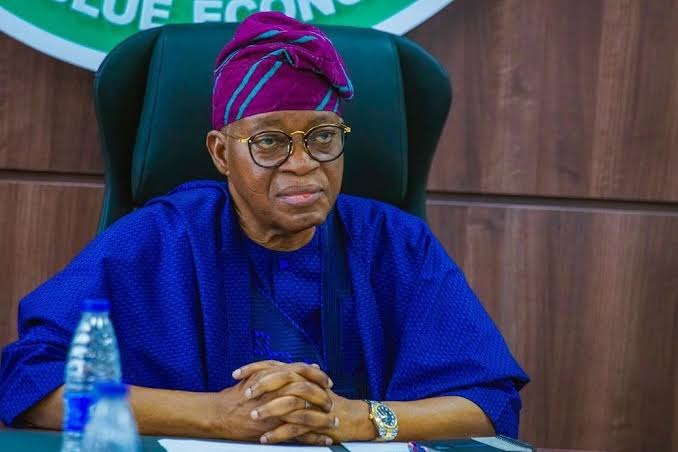
His criticisms of Oyetola kept their political rivalry alive, even after Oyetola became Minister of Marine and Blue Economyunder President Bola Tinubu.
By 2026, Adeleke was therefore not simply seeking re-election; he was entering another chapter of a political rivalry that had already shaped Osun politics for years.
The 2026 campaign: accusations, violence and a growing political battle
The 2026 campaign became increasingly hostile as the August 15 election approached.
The accusations came from both directions.
The APC accused Adeleke's administration of using state security structures for purposes unrelated to their official duties.
In June, the APC campaign council accused the governor of deploying Amotekun operatives to protect a family-owned business belonging to his elder brother, Deji Adeleke. Adeleke's campaign rejected the allegation as political propaganda.
There were also accusations surrounding political violence.

Adeleke accused political opponents and their supporters of encouraging violence, while the APC rejected several of his allegations. In one June incident in Ile-Ife, a political mobilisation walk connected to the APC degenerated into violence, with reports of shootings and injuries. Both camps traded blame.
The governor also alleged that his opponents were trying to disenfranchise voters by purchasing PVCs and collecting voters' card PINs. Again, these were allegations from the Adeleke camp, not findings established by an election tribunal.
Then came the allegations against the governor's own administration that were much more consequential.
The EFCC said it had been investigating Osun State since March 2026 over alleged financial irregularities involving Ecology Funds, Intervention Funds and FAAC funds, involving about ₦11 billion. According to the commission, investigators had interviewed some state officials, including the Accountant-General.
The EFCC later said it noticed large transfers from the account into different corporate entities beginning around August 2 and concluded that it needed to stop the movement of money.
This is where the story became politically explosive.
Why did the EFCC freeze the Osun account — and where did Tinubu come in?
On August 5, the EFCC obtained a court order freezing an Osun State Government account domiciled with First Bank.
There is an important distinction here: reports described the account as a state government account, including an account used for salary payments, rather than Ademola Adeleke's personal bank account.
The EFCC described the move as a preventive action designed to protect public money. Its explanation was that about ₦11 billion was under investigation and that unusual transfers had raised concerns about possible diversion of public funds.
The commission said it had a responsibility to act even though the governorship election was only days away.
Adeleke saw the situation very differently.
He argued that freezing a state government's account immediately before an election could cripple government operations and create an unfair political advantage against an incumbent candidate.
He demanded that EFCC Chairman Ola Olukoyede explain why the account had been frozen and provide evidence for the action.
The EFCC's leadership therefore became central to the controversy. Ola Olukoyede, as chairman, was the senior official publicly challenged by Adeleke.
The EFCC's Head of Media and Publicity, Dele Oyewale, signed the commission's public explanation of the freeze.
An EFCC official identified as ACE Adenike Babalola also signed a letter requesting the bank to place the account on Post-No-Debit status on behalf of the Director of Investigation.
But there was another problem: timing. The election was scheduled for August 15.
That made it difficult for Nigerians to look at the freeze as purely an ordinary financial investigation.
Even if the EFCC had legitimate reasons to investigate suspicious transactions, why did the decisive action come only days before voters were due to choose Adeleke's successor — or return him to office?
That question became unavoidable.
President Bola Tinubu eventually intervened.
On August 6, Tinubu said he was "deeply embarrassed" not by the EFCC's mandate or the fact that it had obtained a court order, but by the timing of the action. He directed the EFCC to return to court, vacate the order and discontinue the action against the Osun State Government in that matter.
Tinubu also spoke directly with Adeleke by telephone and informed him of the directive.
There is an important nuance here. It would be inaccurate to say that Tinubu simply cancelled an EFCC investigation because he wanted to help Adeleke.
His public explanation was that federal institutions should operate independently, but that nothing should happen so close to the election that it created the impression that federal agencies were being used to interfere with the democratic process.
That distinction matters.
The EFCC maintained that it was investigating alleged financial misconduct. Adeleke and his supporters saw the freeze as political intimidation. Tinubu's intervention was presented as an attempt to prevent the anti-corruption action from contaminating the credibility of the election.
Both interpretations became part of the political argument.
Davido, Trump and the final test at the ballot box
If the EFCC account-freezing controversy brought the federal government into the centre of the Osun election, Davido took the matter international.
He had supported his uncle, Ademola Adeleke, throughout his political journey, but his involvement became more visible in 2026.
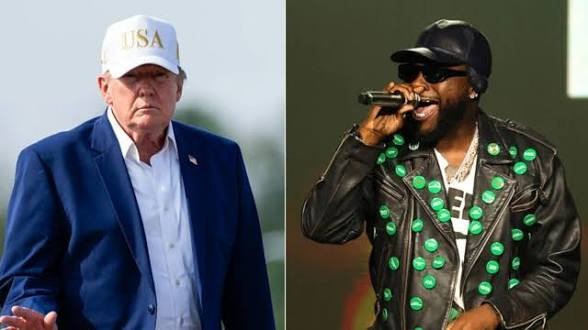
On August 11, Davido appealed to US President Donald Trump to pay attention to the Osun election, warning about possible violence and urging the protection of voters and their votes.
He defended the appeal by pointing to his Nigerian-American citizenship, saying Trump was also his president.
The election eventually came on August 15, and across Osun's 30 local government areas, Adeleke defeated APC candidate Bola Oyebamiji, winning 19 LGAs to Oyebamiji's 11. Adeleke polled 511,067 votes against Oyebamiji's 445,815.
After weeks of accusations, the EFCC controversy, Tinubu's intervention and international attention, the final decision was left to Osun voters.
He won, and Davido celebrated his uncle's victory, bringing another dramatic chapter in the Adeleke family's political story to a close.