HBO Hit 'Industry' Creators Spill on Season 5's Grand Finale Vision
Discover the intricate dynamics of <i>Industry</i> Season 4, as creators Mickey Down and Konrad Kay discuss the show's evolution from a 'slice of life' drama to a mature financial thriller centered on complex relationships. Delve into the arcs of Harper and Yasmin, the class struggle of Whitney and Henry, and the future of the HBO series.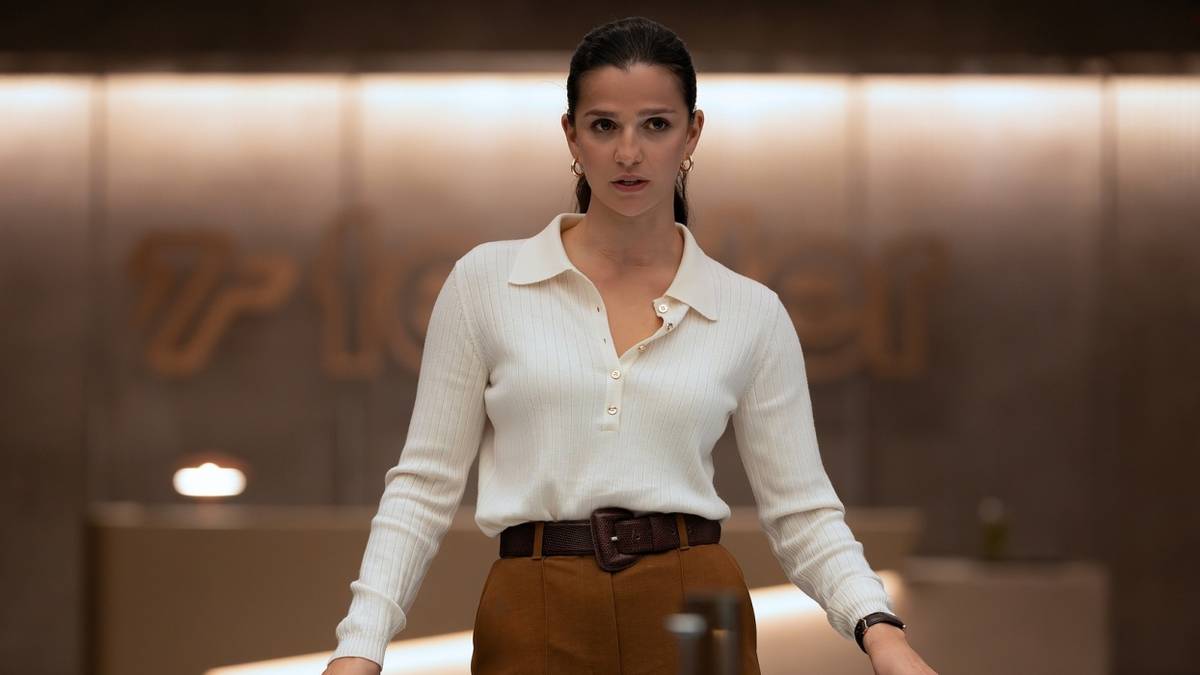
Season 4 of HBO's financial drama, Industry, delves deeper into the complex and often adversarial relationship between former Pierpoint & Co. co-workers Harper Stern (Myha’la) and Yasmin Kara-Hanani (Marisa Abela). Throughout the season, their individual ambitions and understanding of each other are pushed to their limits, all while the fraudulent activities of Tender founder Whitney Halberstram (Max Minghella) begin to unravel, ensnaring Yasmin and her husband, Sir Henry Muck (Kit Harington), in a desperate struggle for survival. Show creators Mickey Down and Konrad Kay discuss the series' evolution, the intertwining character arcs, and their approach to writing.
Originally conceived a decade ago as a 'young person’s slice of life drama' based on their own experiences in investment banking, Industry has matured significantly. Down explains that the show has evolved with their own concerns, growing with the actors and characters. While the questions it poses have become 'bigger and grander,' incorporating elements of suspense, conspiracy, and geopolitics, its core remains 'the intimacy of the relationships.' The central driving force has consistently been the dynamic between Harper and Yasmin, exploring how two women accrue power and value in a cutthroat world, with their contrasting backgrounds of privilege, trauma, and lack thereof defining their interactions.
The creators intentionally crafted complex and demanding arcs for characters like Whitney Halberstram and Sir Henry Muck this season. Konrad Kay highlights how their story is fundamentally about identity and class. Whitney, who saw himself reflected in Henry, allowed Henry to be 'puffed up' by him, while Henry, in turn, always perceived himself as beneath Whitney. A pivotal moment, according to Kay, is in the plane when Henry, faced with the option of fleeing under a false identity, refuses to abandon his title and identity. This refusal to relinquish the markers of his class and power, despite facing the British justice system, crystallizes the show’s themes of identity. Max Minghella’s performance as Whitney, with significantly more dialogue than his previous roles, was a 'big swing' that seamlessly integrated into the series' world.
By the end of Season 4, Harper and Yasmin arrive at a profound, albeit often dark, understanding of each other. Kay describes them as 'mirrors of each other,' possessing oppositional qualities yet coveting aspects of the other's personality. The creators intentionally challenged viewer perceptions: Harper, initially seen as a 'dead-eyed sociopath,' embarks on a journey of 'warming up' and learning from collegiate partnerships, while Yasmin, once perceived as a 'wallflower,' undergoes a 'chilling' transformation that, while surprising, remains true to her core principles, traumas, and desires. Down emphasizes that their relationship evolves to a point where each can understand the other's rationalizations for survival, even after committing 'ridiculously awful stuff.' Harper recognizes Yasmin as a survivor, and Yasmin grasps Harper's source of value, even if it means taking down those closest to her, maintaining a glimmer of humanity that keeps their story alive.
Another compelling aspect of Season 4 is the trio of Harper, Sweetpea (Miriam Petche), and Kwabena (Toheeb Jimoh). Viewers often find themselves rooting for this unlikely alliance, even with their questionable actions. Kay suggests this is because they are presented as 'the lesser of two evils,' functioning as a 'force for truth in a universe of lies.' The creators describe their dynamic as akin to a 'cop show,' with the team acting as 'police hedge fund managers' engaged in investigative work, making them a unique and engaging element within the conspiracy thriller framework of the series.
Looking ahead, Down and Kay confirm they have an idea for a potential Season 5, though its realization depends on the reception of Season 4 and network appetite. Importantly, they have a clear vision for the series' ending, asserting that 'you can’t write four seasons and not think about the ending.' This forward-thinking approach suggests a deliberate trajectory for the characters and overarching narrative, culminating in a planned resolution for the high-stakes world of Industry.