Greenhouse Gas Levels 2024-25: What It Means for Climate Action
CO₂, methane and nitrous oxide are at record highs, accelerating warming and weakening natural sinks. Here is an up-to-date breakdown of causes, implications and responses.
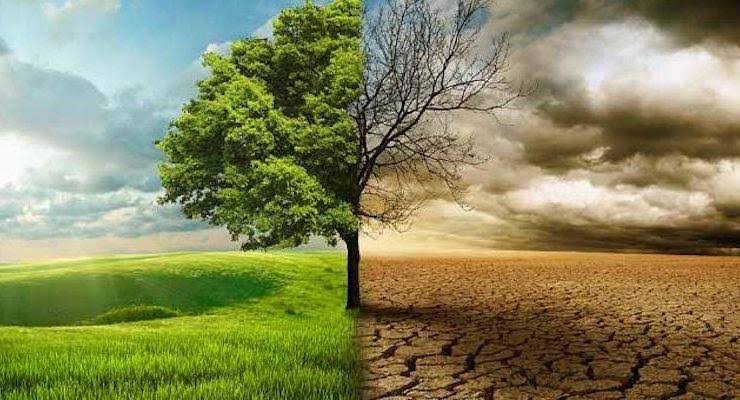
According to the World Meteorological Organization (WMO) Greenhouse Gas Bulletin, the globally averaged surface concentration of carbon dioxide (CO₂) reached about 420.0 ± 0.1 parts per million (ppm) in 2023.From 2023 to 2024, the increase was about 3.5 ppm; the largest one-year jump since modern measurements started in 1957. Methane (CH₄) and nitrous oxide (N₂O) are also at record levels: methane at around 1 934 ppb (parts per billion) in 2023, about 265 % of pre-industrial levels.
The WMO’s “State of the Global Climate 2024” report states that CO₂ levels are the highest in the last 800,000 years. One key insight is that the growth in greenhouse gas concentrations is not just linear, it is accelerating. From ~0.8 ppm per year (1960s) to 2.4 ppm per year (2011-2020) to ~3.5 ppm in 2023-24.
The mechanism
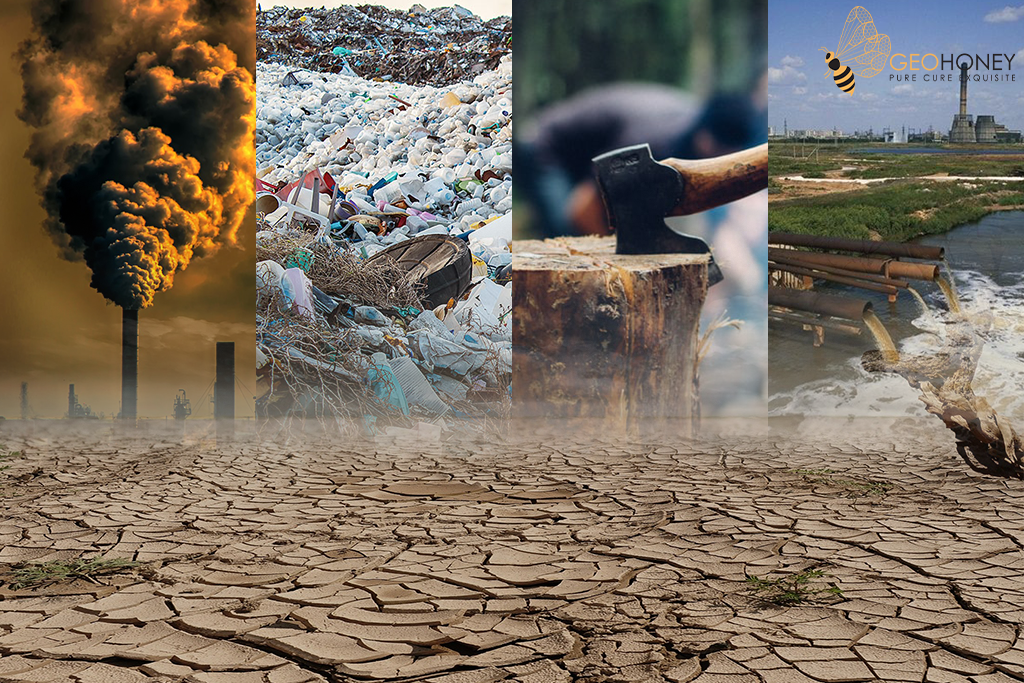
Greenhouse gases trap infrared radiation emitted from Earth’s surface, warming the planet’s surface and lower atmosphere (the greenhouse effect). While some greenhouse gases are natural and essential for life, the enhanced greenhouse effect (additional warming caused by human-released GHGs) is driving climate change. CO₂ and other long-lived greenhouse gases accumulate and remain in the atmosphere for decades to centuries; their effects are cumulative. For example, CO₂ emitted today will continue to cause warming for many years.
The consequences
Higher temperature baseline: With more GHGs, global average temperatures climb. WMO reports that the global surface temperature has been around 1.5 °C (±0.13 °C) above pre-industrial levels in 2024.
Extreme weather intensification: More GHGs mean more energy in the climate system which intensifies heatwaves, droughts, heavy rainfall and wildfires. The WMO notes that the “heat trapped by CO₂ and other greenhouse gases is turbo-charging our climate.”
Weakened natural sinks: Forests, oceans and soils absorb roughly half of human-emitted CO₂, but with repeated stress (heat, drought, wildfires) their capacity is reducing. Some regions, like parts of the Amazon, may shift from being a net carbon sink to a net source.
Feedback loops and tipping risks: As sinks weaken, more GHG stays in the atmosphere, causing faster warming, which in turn weakens sinks further (a feedback loop). This raises risk of crossing climate “tipping points” (e.g., permafrost thaw, major rainforest die-back).
Long-term commitment: Because GHGs stay in the atmosphere long-term, today’s emissions lock in warming for decades—even if emissions drop thereafter. That means delayed action increases future risks.
What is driving the new highs and acceleration?
Human activities
Fossil-fuel burning (coal, oil, gas) remains the main source of CO₂ growth.
Cement production, deforestation, land-use change contribute significantly.
Methane increases reflect agriculture (rice, livestock), waste, fossil-fuel extraction.
Natural/compound factors making it worse
The 2023–24 El Niño event and associated droughts reduced vegetation growth and increased wildfire emissions, accelerating CO₂ growth. WMO notes vegetation fires and possible reduction in carbon uptake led to the 2023 surge, and the weakening carbon sinks: The land carbon sink in 2023 was estimated to be at its weakest in many years.
Regional examples
Amazon rainforest: Drought, heat stress impair its capacity to absorb carbon; tree mortality increases and fires emit CO₂.
Oceans: Warming seas absorb less CO₂ and distribute heat more widely, affecting marine ecosystems and climate regulation.
Key organisations and stakeholders
WMO: Tracks greenhouse gas concentrations globally through monitoring networks and issues annual bulletins.
National and regional monitoring networks: For example, the National Oceanic and Atmospheric Administration (NOAA) via Mauna Loa Observatory, the Scripps Institution of Oceanography showing monthly averages (May 2024 at ~427 ppm).

National governments and policy-makers: Countries whose emissions, land-use practices and climate policies influence the global totals.
Scientific community: Climate scientists, modelers, measurement networks providing data and analysis of sinks, feedbacks, and risk.
Civil society & adaptation/mitigation practitioners: They work to translate the implications of the GHG data into action on the ground (renewables, forest protection, etc.).
Impacts relevant for Africa and developing countries
Faster warming: heat-stress, crop failure, water scarcity.
Intensified droughts, wildfires, desertification risk.
Weaker forest and vegetation sinks in tropical regions undermines both global carbon balance and local livelihoods.
Economic and human security implications: More frequent climate-driven shocks, increased adaptation costs.
Global emission high-levels mean that limiting warming to 1.5 °C becomes less likely, increasing the burden on developing nations to adapt and bear climate risks.
Source: Google Images
What this means for climate goals and actions?
For the Paris Agreement (limiting warming to 1.5 °C)
The record high GHG concentrations and acceleration make the 1.5 °C target harder to achieve. Science indicates that to have a good chance of staying below 1.5 °C, emissions must peak soon and drop rapidly; increasing concentrations make the carbon budget smaller and time-shorter.
For mitigation, it means : Immediate reductions in CO₂, methane and nitrous oxide are critical, Protect and restore carbon sinks (forests, peatlands, oceans) to maintain absorption capacity, and Move away from fossil fuel infrastructure; avoid locking in high emissions.
For adaptation and resilience
Policy must expect more extreme, frequent and compound climate events (heat+fire, flood+storm) and developing countries need support for adaptation financing, early-warning systems and infrastructure resilience.
For monitoring and transparency
Continual measurement of greenhouse gas levels, sink behaviour and feedbacks is crucial to track progress.
Data must inform policy, national reviews and international negotiations (e.g., at COPs).
What individuals and organisations can do
Individuals should:
Support carbon-neutral lifestyles (renewables, efficiency, sustainable transport), push for local forest protection, tree-planting, and nature-based solutions, and engage in public advocacy around climate policy and finance.
Organisations and governments should:
Increase investment in carbon-sink protection (forests, peatlands, ocean ecosystems), develop national methane action plans and leak-detection systems in fossil-fuel sector, and align infrastructure, energy and land-use planning with low-carbon pathways.
In conclusion, the data are clear: we are at record levels of greenhouse gases, the rates of increase are accelerating, and natural systems are under stress. This isn’t some distant theoretical risk: it signifies that the climate system is responding now, and future risk is magnified. What happens next matters. The persistently high CO₂, methane and other gases mean that warming is locked-in, but further escalation can still be avoided. The world has less time, and fewer “easy” pathways. Every year of delay reduces options. The action now, both on emissions and on protecting the systems that keep carbon out of the air is critical. For citizens, governments and the private sector alike, the long-term climate trajectory is being shaped by what we do today.
Key terms and glossary
ppm (parts per million): Unit measuring gas concentration (e.g., CO₂ molecules per million air molecules).
Sink: Natural system (forest, ocean) that absorbs more CO₂ than it emits.
Feedback loop: A process where warming causes effects that amplify further warming (e.g., thawing permafrost releasing methane).
Tipping point: Threshold after which significant and often irreversible changes occur (e.g., Amazon collapse).