GOP Fears Bitcoin Weakness Empowers China Against US

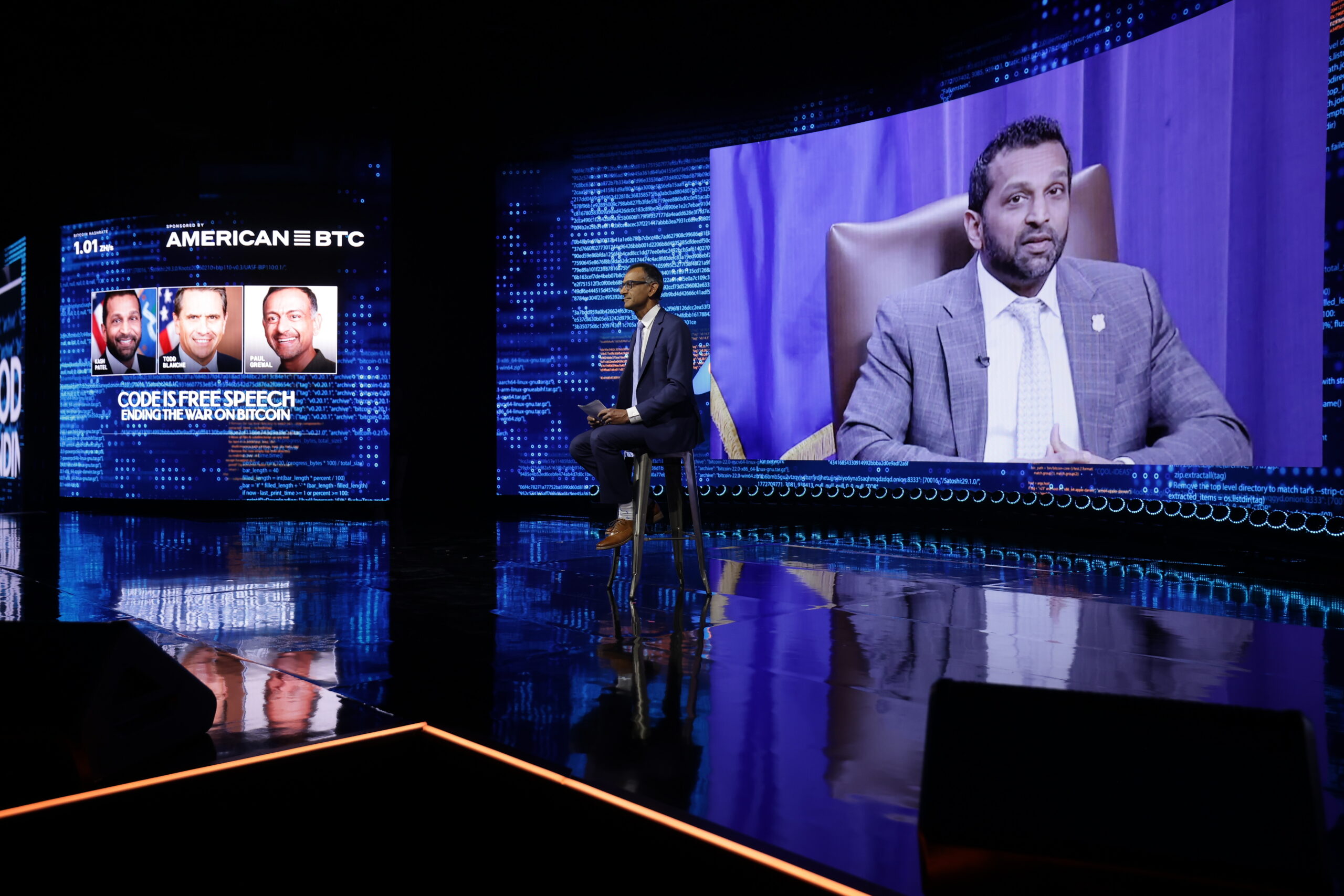
At The Bitcoin 2026 Conference in Las Vegas, three members of Congress—Reps. Mariannette Miller-Meeks (R-Iowa), Zach Nunn (R-Iowa), and Mike Lawler (R-N.Y.)—underscored the critical intersection of digital asset regulation, national security, and economic competition. During a panel titled “The Bitcoin Bloc: A New Force in American Politics,” moderated by Faryar Shirzad, Chief Policy Officer at Coinbase, these lawmakers articulated a vision where robust U.S. digital asset policy is paramount for the nation's future.
Rep. Miller-Meeks framed Bitcoin as a form of “financial democracy” and connected the adoption of cryptocurrencies to America’s upcoming 250th anniversary, presenting support for digital assets as a patriotic endeavor. She identified the Chinese Communist Party as a significant threat and directly linked crypto policy to national security concerns. Drawing from her background, Miller-Meeks highlighted Bitcoin's potential to empower women facing domestic abuse or violence by providing them with financial resources beyond governmental reach, citing the Canadian trucker protest as an example of government intervention in financial accounts. However, she also acknowledged that older Americans frequently express apprehensions regarding the safety of digital assets.
Both Miller-Meeks and Nunn emphasized that competition with China is a primary catalyst for accelerating U.S. crypto policy. Miller-Meeks asserted that while China continues to strive for leadership in the digital asset sector, the United States offers the most conducive environment for innovation. Nunn issued a stark warning, stating that any failure to advance American leadership in Bitcoin and digital assets would inevitably create national security vulnerabilities. He called for holding China accountable and cautioned that a loss in the upcoming November midterm elections could jeopardize 18 months of legislative progress, thereby allowing adversaries to gain a strategic advantage while the U.S. lags. Nunn underscored the profound implications of elections, pointing to specific anti-crypto Democrats to illustrate the high stakes of the midterms.
Nunn also highlighted recent progress within Congress and the crypto sector. He criticized the U.S. Securities and Exchange Commission (SEC) under former Chair Gary Gensler, noting that Gensler, who was fired earlier in the Trump administration, imposed millions of dollars in fines for violations related to concepts he purportedly did not understand. Rep. Lawler, on his part, lauded the GENIUS Act as a positive step but stressed the urgent need for Congress to establish a comprehensive federal regulatory framework. He referenced Treasury Secretary Scott Bessent’s op-ed in The Wall Street Journal, arguing that clear regulatory clarity would position America at the forefront of the global digital asset landscape. Lawler maintained that SEC regulations should genuinely serve the best interests of the crypto industry, and as a New Yorker, expressed his desire for the crypto industry to remain and feel secure operating within the state.
A critical point of contention raised by Nunn was the
You may also like...
Michael Jackson's Biopic Just Made $217 Million in One Weekend. The King of Pop Is Still Undefeated

People showed up to cinemas in red leather jackets and white gloves. The film opened to $217 million globally, became th...
Gary Neville Drops Bombshell: Arsenal's Shocking Path to Premier League Glory Over Champions League!

Gary Neville believes Arsenal has a better chance of winning the Premier League title than the Champions League this sea...
Michael Carrick's Bold Warning: Man Utd Must Resist Over-Celebrating Champions League Spot!

Manchester United is close to returning to the Champions League after a 2-1 win against Brentford. Michael Carrick advis...
Olivia Rodrigo Dominates Global Charts as 'Drop Dead' Soars to No. 1 Debut!

Olivia Rodrigo's new single "Drop Dead" debuts at No. 1 on the Billboard Global 200, making it her fourth chart-topper. ...
Chris Brown's Family Expands! Star Welcomes Fourth Child With Jada Wallace

Chris Brown has welcomed his fourth child, a baby boy, with influencer Jada Wallace, making him a father of four. The ne...
Sky's the Limit! Air Seychelles Relaunches Key Routes to Tel Aviv and Abu Dhabi as Region Stabilizes

Air Seychelles is gradually resuming its crucial Middle Eastern routes to Tel Aviv and Abu Dhabi, following a period of ...
Namibia Soars: Ambitious New Terminal Project Set for 2030 Launch at Hosea Kutako Airport

Namibia is set to embark on a major expansion of Hosea Kutako International Airport, including a new third terminal, pos...
Urgent AI Security Alert: Google Warns of Malicious Web Pages Poisoning AI Agents

Google researchers warn of a new threat where public web pages hijack enterprise AI agents via indirect prompt injection...