Google Unleashes Nano Banana 2 as AI Image Generation Gets Faster
Google has launched Nano Banana 2, an advanced image generation model, now the default in Gemini app modes and various Google platforms. This model offers enhanced realism, speed, and detailed creative control, while integrating transparent AI-generated content watermarks. Developers can also access Nano Banana 2 via multiple APIs and tools.
Google has officially unveiled Nano Banana 2, the latest version of its image generation model, technically called Gemini 3.1 Flash Image.
The upgrade promises significantly more realistic visuals and will now serve as the default image generator across the Gemini app’s Fast, Thinking, and Pro modes.
The original Nano Banana model, launched in August 2025, quickly gained traction with millions of images generated globally, especially in India, followed by Nano Banana Pro in November, which introduced higher fidelity output.
Nano Banana 2 builds on those gains by combining Pro-level visual quality with faster generation speeds and flexible resolution options ranging from 512px to full 4K across multiple aspect ratios.
The new model introduces major improvements in creative consistency and complexity.
Nano Banana 2 can maintain character consistency for up to five characters and preserve fidelity for up to 14 distinct objects within a single workflow, making it especially useful for storytelling and detailed visual sequences.
Google says the model can also interpret highly complex prompts with greater accuracy, producing images with richer textures, sharper detail, and more realistic lighting.
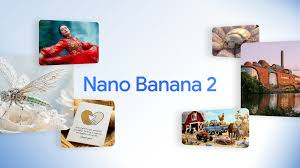
Its integration will extend beyond the Gemini app, becoming the default image generator in Google’s Flow video editing tool and powering visual results in Google Lens and AI Mode across 141 countries on both mobile and desktop platforms.
Premium users on Google AI Pro and Ultra plans will still retain access to Nano Banana Pro for specialized image refinement tasks.
For developers, Nano Banana 2 will be available in preview through the Gemini API, Vertex API, Gemini CLI, and Google’s AI Studio and Antigravity development platforms.
To ensure transparency, all generated images will include Google’s SynthID watermark, allowing users to identify AI-generated content.
These images will also support C2PA Content Credentials, an industry verification standard backed by companies including Adobe, Microsoft, OpenAI, and Meta.
Since SynthID verification launched in the Gemini app in November, it has already been used more than 20 million times, reflecting growing adoption of authenticated AI-generated media.