Ghanaian Exodus: Hundreds Fleeing Xenophobia in South Africa Arrive Home
Ghana is actively evacuating its citizens from South Africa due to escalating xenophobic attacks, with hundreds already returned and more planned. The government is offering psychosocial support and reintegration aid, even as diplomatic tensions rise over claims of irregular immigration status and a South African political leader criticizes Ghana's response.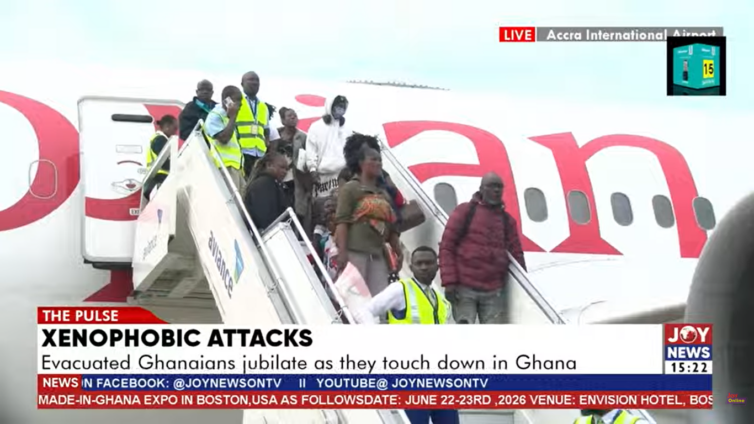
Ghana is actively responding to escalating xenophobic tensions in South Africa by evacuating its citizens, with the first batch of 300 individuals having successfully arrived in Accra on Wednesday, May 27, 2026. The exercise is set to continue, as Ghana’s High Commissioner to South Africa, Benjamin Quashie, confirmed plans to evacuate a second group of 410 Ghanaians over the upcoming weekend, either Sunday or Tuesday. This follows the registration of over 1,000 Ghanaians expressing a desire to return home due to fears of the attacks.
Upon the arrival of the initial group, Ghana’s Foreign Affairs Minister, Samuel Okudzeto Ablakwa, addressed the returnees at the Accra International Airport, offering words of encouragement and reassurance. He urged them not to lose hope, stating, "We don't want any of you to feel brokenhearted, don't be downhearted, don't be depressed, have confidence that the almighty has better plans for you." Minister Ablakwa affirmed the government's commitment to supporting their reintegration into society, emphasizing optimism despite their challenging experiences abroad.
Further bolstering support for the returnees, Dr. Eugene K. Dordoye, Chief Executive of the Mental Health Authority, assured them of comprehensive psychosocial support and compassionate reintegration. Speaking at a reception for the returning citizens on May 27, Dr. Dordoye framed their homecoming not as an end to dignity but as a "beginning of healing, hope, and restoration," calling Ghana a place of "healing, hope, and renewed belonging." He acknowledged the significant emotional and psychological toll endured by many, citing experiences of rejection, exploitation, discrimination, uncertainty, fear, and violence, which often leave "invisible injuries and scars on the mind."
Dr. Dordoye underscored the importance of mental health as a fundamental human need, not a luxury, asserting that the pain, experiences, and recovery of returnees matter to the nation. He drew upon traditional wisdom, stating, “No matter how far the bird flies over strange lands, it still remembers the tree where its wings first learned the wind,” and proverbially declared, “Today, Ghana stands as that tree.” He also warned of potential reintegration challenges such as anxiety, financial insecurity, stigma, and loneliness, urging societal compassion. Reaffirming the government’s commitment, he quoted Psalm 30:5, "Weeping may endure for a night, but joy comes in the morning," and assured returnees, "You are valued. You are respected. And you are not alone." The Mental Health Authority, in collaboration with partners, is strengthening psychosocial support systems, counselling services, and community-based care to aid this process.
However, the evacuation efforts have been met with controversy regarding the legal status of the evacuees. Stephen van Neel, Head of Immigration and Law Enforcement at South Africa’s Department of Home Affairs, claimed that only 10 out of the 300 individuals in the first batch were legally in the country, with the rest being undocumented or non-compliant. Ghana’s High Commissioner Benjamin Quashie vehemently rejected these assertions, labelling them "inaccurate and misleading." Mr. Quashie insisted that approximately 80 percent of the 300 evacuees were lawful migrants engaged in legitimate employment and residency, and he formally demanded a retraction from South African authorities, stating, "It is either he retracts the statement or I put out the fact." He also highlighted that the official had been involved in the documentation process and should have known the facts, later being informed the statement was not made in an official capacity.
The rising xenophobic tensions have also prompted senior Ghanaian professionals working in South Africa’s mining sector to seek inclusion in the evacuation exercise. High Commissioner Quashie revealed that these individuals, many in strategic roles and with long service, felt vulnerable after warnings from their employers that protection could not be guaranteed ahead of a planned demonstration on June 30, which could pose heightened risks to foreign nationals. These professionals expressed a desire to return and contribute their expertise in Ghana, feeling their contributions in South Africa have not been adequately recognized or protected.
Adding another layer to the diplomatic discourse, Economic Freedom Fighters (EFF) leader Julius Malema questioned the timing and approach of Ghana’s response, arguing it was "not necessary at that moment" and risked escalating an already sensitive situation. Malema cautioned that Ghana's reaction could create negative perceptions, unfairly stigmatise sections of society, and complicate law enforcement efforts. He advocated for a more diplomatic handling to allow South African authorities space to manage internal developments, suggesting Ghana's approach did not reinforce dialogue. While acknowledging the emotional weight for affected individuals, Malema insisted that Ghana’s response should have been delayed to prevent further escalation.
Despite these complexities, Ghana remains committed to ensuring the safety and well-being of its citizens. High Commissioner Quashie confirmed that over 400 more evacuees are expected over the weekend or in the coming week, continuing the government's pledge to facilitate the voluntary return of Ghanaians amidst ongoing anti-immigrant demonstrations and xenophobic violence in South Africa. The combined efforts of diplomatic missions, government ministries, and mental health authorities aim to provide a safe passage and a supportive environment for those returning home.