Ghana's Urgent Fight Against Sickle Cell: Leaders Demand Widespread Genotype Testing
Ghana renewed calls for intensified public education, expanded screening, and stronger health system support for sickle cell disease (SCD) on World Sickle Cell Awareness Day at KNUST. The event highlighted the theme “Know your genotype, smart choice today, healthy Ghana tomorrow” and urged collective action to combat the high burden of SCD in the nation. Leaders from GHS, KNUST, and FoSCel underscored the importance of early diagnosis, awareness, and addressing treatment challenges.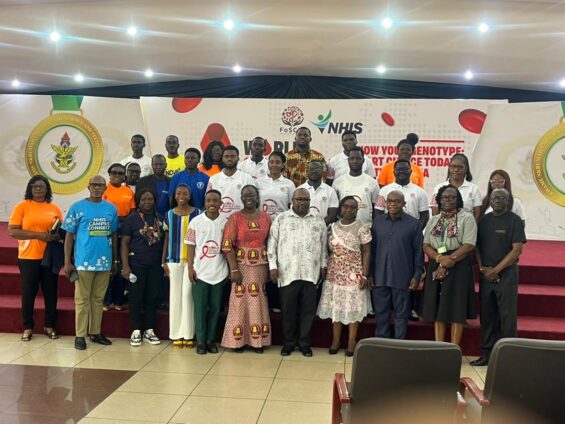
Ghana commemorated World Sickle Cell Awareness Day on June 19, 2026, with a national climax event held at the Great Hall of the Kwame Nkrumah University of Science and Technology (KNUST), led by the Focus on Sickle-Cell Foundation (FoSCel). This significant observance brought together policymakers, health professionals, researchers, students, and development partners to renew urgent calls for intensified public education, expanded screening, and stronger health system support in the fight against sickle cell disease (SCD) in Ghana. The overarching theme, “Know your genotype, smart choice today, healthy Ghana tomorrow,” underscored the critical importance of informed health decisions for the nation's future.
Dr. Akosua Gyimah Omari-Sasu, Deputy Director of Public Health, speaking on behalf of the Director-General of the Ghana Health Service (GHS), reiterated that improving awareness of SCD is central to the Service’s public health strategy. She highlighted that Ghana carries the highest global burden of the condition, making public understanding and early intervention paramount. Similarly, Professor Christian Agyare, the Vice-Chancellor designate of KNUST, emphasised the significant impact of SCD, describing it as a condition that affects individuals and families far beyond hospital settings, disrupting education, limiting economic opportunities, straining family relationships, and eroding the quality of life for many affected households. Annually, between 18,000 and 20,000 babies are born with SCD in Ghana, with approximately 2% of all newborns having sickle cell traits, underscoring the urgency for preventive action and universal screening.
A core message from both the GHS and KNUST leadership was the imperative for genotype awareness as a preventive health measure. Dr. Omari-Sasu urged all Ghanaians to know their sickling status—whether SS, SC, or other variants—stressing that informed choices are essential for building a healthier population. She explained that individuals who test positive for sickling status must undergo full genotype testing for proper diagnosis and clinical follow-up. Professor Agyare particularly focused on young people, urging students from senior and junior high schools, who attended the event, to become advocates by knowing their genotype and seeking credible health information before making life decisions, especially concerning relationships and marriage. Both leaders warned that ignorance about genotype compatibility continues to contribute to preventable cases of the disease.
To address accessibility, Professor Agyare called for urgent reforms to expand genotype testing across the country, proposing a decentralised system that includes biomedical laboratories, diagnostic centres, and community pharmacies. This expansion aims to reduce barriers to testing and enable more informed decision-making among young people. The GHS also highlighted its ongoing newborn screening programme, which is essential for reducing childhood mortality and preventing irreversible organ damage, noting that symptoms typically do not appear until around five months of age. Early diagnosis enables health professionals to intervene before complications arise, significantly improving quality of life and life expectancy through interventions such as penicillin prophylaxis, hydroxyurea treatment, organ protection strategies, and structured parental education.
Combating persistent myths surrounding SCD is another critical area. Dr. Omari-Sasu pointed out that misconceptions, such as the belief that the disease is a curse or contagious, fuel stigma and social exclusion, preventing families from seeking timely medical care and support. Increased public education, she asserted, would help communities understand the condition better, enabling affected individuals to live openly and without discrimination. The Founder of FoSCel, Mr. Amos Andoh, whose lived experience as an SCD patient adds profound credibility to the foundation’s mission, advocated a “Catch Them Young” approach. He called for structured education in schools and communities to ensure that genotype knowledge becomes a routine part of foundational learning, aiming to significantly reduce new cases by 2030.
Strengthening healthcare delivery for SCD patients remains a firm commitment of the GHS, through improved infrastructure, training, and access to care. This includes investing in local testing facilities, specialist training, and accessible treatment centres. The GHS acknowledged the crucial role of public-private partnerships and international collaborations, citing initiatives like the Novartis Ghana Public-Private Partnership, which has reduced treatment costs and established specialised centres of excellence. International partners such as the Clinton Health Access Initiative have expanded newborn screening, and the SickKids Centre for Global Child Health has contributed to sustainable screening systems.
Addressing the financial burden of SCD treatment was also a key discussion point. Dr. Mark Kurt Nawaane, Health Committee Chairman of Parliament, expressed optimism that Ghana is moving towards fully free treatment under the emerging “Mahama Care” programme and NHIA policy expansions. He noted the important milestone of adding hydroxyurea, a key medication, to the NHIA medicines list and proposed establishing designated, fully subsidised sickle cell treatment centres. However, Mr. Andoh highlighted the complex medical challenges and substantial financial demands of lifelong treatment and complications like kidney failure, stroke, and avascular necrosis, with procedures such as hip replacement surgery potentially costing as much as GH₵125,000 per hip. These costs often exceed family capacity and are difficult to fully accommodate under current NHIS coverage, necessitating continued collaboration between the Ministry of Health, NHIA, and GHS to explore sustainable support mechanisms.
Both the GHS and KNUST commended FoSCel for its tireless advocacy and its transformation from a personal commitment into a respected national platform uniting diverse stakeholders. Professor Agyare affirmed KNUST's commitment to delivering practical solutions through research, innovation, and community engagement, stressing that universities are central to training future healthcare professionals and leaders. In conclusion, the Ghana Health Service cautioned that despite progress, more work is needed. Dr. Omari-Sasu urged continued public education, elimination of stigma and discrimination, high-quality care from health workers, and adequate support for students living with SCD. The day was envisioned as a catalyst for collective action across government, health professionals, communities, and development partners to improve the quality of life for patients and reduce the national burden of sickle cell disease.