Ghana Rocked by Massive Audit Scandal as Billions in Fraudulent Claims and Missing Supplies Uncovered
Ghana's Auditor-General has exposed a staggering GH¢8.1 billion in financial irregularities, including fictitious claims, recycled invoices, and outright fraud, across various government ministries and agencies. Deputy Finance Minister Thomas Nyarko Ampem outlined the findings in Parliament, detailing systemic plunder and announcing strict new accountability measures and criminal referrals. The report highlights severe mismanagement in critical areas like dry spell relief, the 1D1F program, and healthcare infrastructure.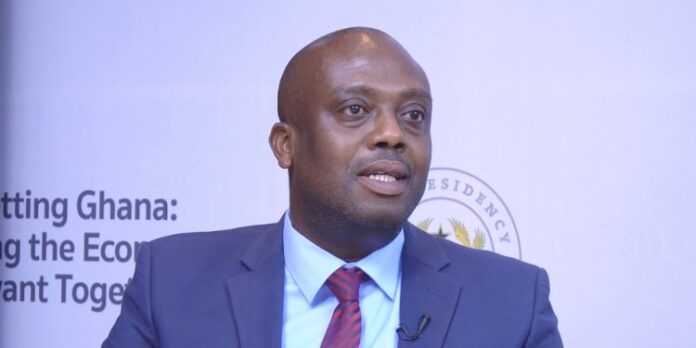
Ghana’s Ministry of Finance has declared an end to what it described as the “systemic plunder of the public purse” following a damning Auditor-General’s report on government arrears and payables as of the end of 2024.
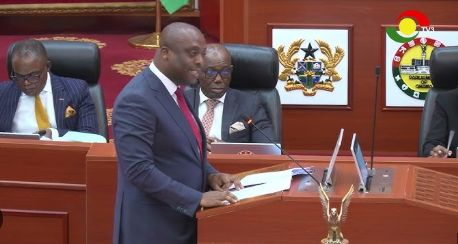
Addressing Parliament on March 10, 2026, Deputy Finance Minister Thomas Nyarko Ampem, speaking on behalf of Finance Minister Dr. Cassiel Ato Forson, revealed that GH¢8.1 billion in public claims had been rejected after auditors uncovered widespread irregularities.
The audit, conducted by the Ghana Audit Service with support from international firms EY and PwC, reviewed GH¢68.7 billion in submitted claims but approved only GH¢45.4 billion for payment.
The rejected claims were linked to unsupported documentation, duplicated invoices, inflated figures, forged receipts, and cases where no work had been carried out.
Auditors identified several major schemes used to siphon state funds, including fictitious claims for nonexistent goods or services, recycled invoices where already-paid bills were resubmitted, forged Stores Receipt Advice (SRA) documents, and collusion between contractors and officials.
A striking example involved GH¢4.4 billion in claims that had already been paid between 2020 and 2024 but were fraudulently resubmitted for payment, with the Ministry of Roads and Highways alone accounting for GH¢3.6 billion.
Additional fraudulent documentation included GH¢9.4 million in forged SRAs for goods never delivered, such as a GH¢4.8 million defence contract for border surveillance vehicles that were never supplied and a Judicial Service claim involving seven Toyota saloon cars that the supplier admitted it could not deliver.
The report also exposed major irregularities across government programmes and ministries.
Ghana’s One District One Factory (1D1F) initiative was linked to a fictitious GH¢89.4 million debt after commercial banks denied being owed the interest payments requested by the Ministry of Trade and Industry.
Auditors also flagged GH¢1.4 billion in duplicated and overstated claims across several ministries and uncovered GH¢293 million in bank transfers that lacked contracts or supporting documentation.
Additional findings included GH¢160 million in teacher trainee allowance claims that the Ghana Tertiary Education Commission confirmed did not exist, while dry spell relief interventions revealed massive discrepancies, including 10,000 metric tonnes of missing rice and a maize procurement scheme where only 11,900MT was delivered out of the 100,000MT billed to government.
Further financial irregularities were discovered under the Farmer Food Relief and Recovery Programme and the Agenda 111 hospital initiative.
A transport company contracted to move 134,000MT of grain was paid GH¢61.7 million despite transporting only a fraction of the goods, while US$7.9 million in mobilization payments went to 35 contractors who either failed to start work or delivered little progress.
In response, the government announced a strict “Triple-Lock” accountability policy: no payments without full verification, no financial commitments without budget allocation, and no protection for officials implicated in corruption.
The Ministry of Finance has referred the Auditor-General’s findings to the Attorney-General for possible criminal prosecution, describing the move as a decisive break from past practices and a reset in how Ghana safeguards public finances.