Geopolitical Gambit: Iran's Strategic Play for Bitcoin in the Strait of Hormuz!
Iran is reportedly moving to impose a Bitcoin toll for ships passing through the Strait of Hormuz, a move that leverages the cryptocurrency's sanction-resistant properties. This strategic decision highlights Bitcoin's growing role in geopolitics, offering Iran a financial mechanism outside traditional systems and creating complex diplomatic and economic challenges for global powers.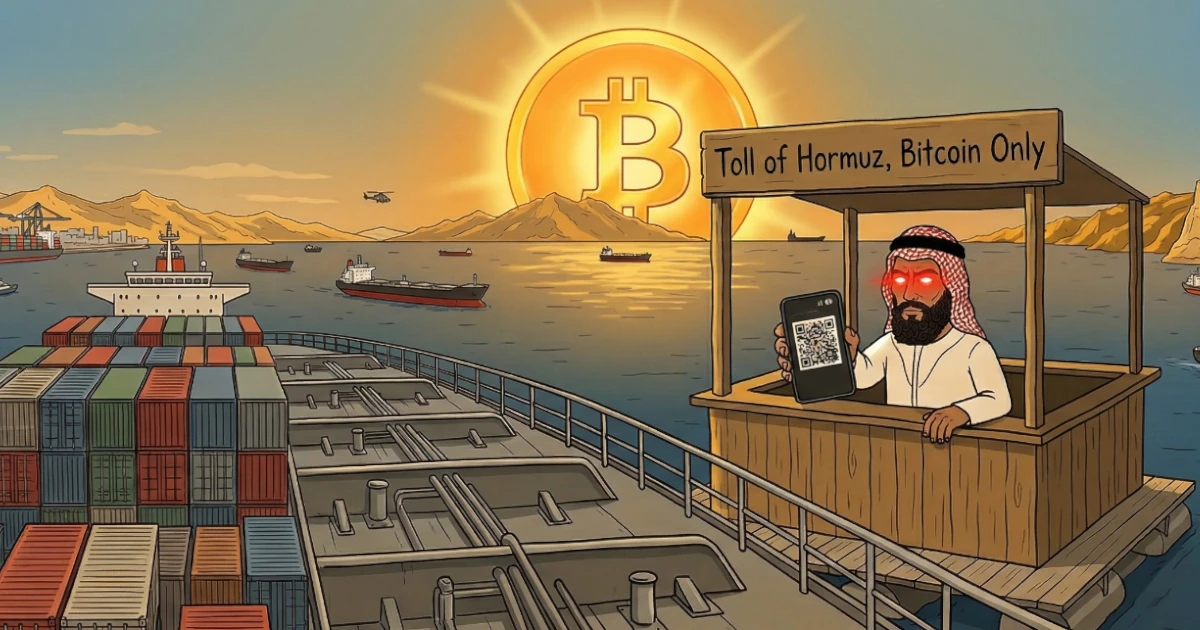
The Strait of Hormuz, a critical maritime transit choke point for global oil supplies, remains firmly under Iran's influence. Recent reports from the Financial Times indicated a significant development: Iran's intention to charge a toll for passage through the strait, with Bitcoin designated as the currency of choice. This move has garnered international attention and validated long-held theories within the Bitcoin community regarding its potential as a neutral, sanction-resistant global currency.
During a two-week ceasefire in the ongoing conflict involving the United States, Israel, and Iran, the FT reported on April 8, 2026, that Iran was demanding "crypto fees" for ships traversing Hormuz. Clarifying the report, it was specifically Bitcoin that Iran intended to accept. The Strait of Hormuz, which historically facilitated 20% of global oil flow, is strategically vital for supplying energy to Europe, Asia, and other parts of the world. Iran asserts tight control over this geographical choke point through a combination of long-range missiles, underwater mines, and drone technologies.
An interview with Hamid Hosseini, a spokesperson for Iran’s Oil, Gas and Petrochemical Products Exporters’ Union, revealed the specifics of the proposed toll. Oil vessels would be required to share inventory data with Iran and pay a $1 fee per barrel of oil in Bitcoin to ensure safe passage. Hosseini emphasized Bitcoin's utility in bypassing sanctions: "Once the email arrives and Iran completes its assessment, vessels are given a few seconds to pay in Bitcoin, ensuring they can’t be traced or confiscated due to sanctions." This announcement caused the Bitcoin price to rise to $73,000 and became major international news.
Iran's decision to demand Bitcoin instead of traditional currencies like the U.S. dollar or Chinese yuan, or even gold, highlights Bitcoin's perceived superiority as a form of money in the current geopolitical landscape. The U.S. has imposed extensive sanctions on Iran, effectively isolating it from Western payment systems. Relying on the Chinese yuan would create dependency on another major power, compromising Iran's sovereignty. Physical gold transport would be logistically complex and susceptible to the same sanction risks if settled through the banking system. Even 'Tether Gold' presents issues, as it relies on a trusted third party vulnerable to sanctions. Bitcoin, in contrast, operates on an international network of interconnected nodes designed to resist censorship and sanctions, enabling swift and secure digital settlements. Iran, with its extensive experience in Bitcoin mining—reportedly holding up to 10% of total mining capacity at various times—is well-versed in securing and utilizing the asset. Acquired Bitcoin could be stored in multi-signature cold storage, offering high security and distributed access keys to prevent confiscation.
The announcement triggered varied international reactions. Earlier on the day of the FT report, former President Trump had reportedly discussed a potential joint venture with Iranian leadership to secure the Strait of Hormuz, suggesting a diplomatic compromise. However, shortly after the FT report, Trump publicly shunned the idea of a toll, stating, "There are reports that Iran is charging fees to tankers going through the Hormuz Strait — They better not be and, if they are, they better stop now!" Saudi Arabia also voiced strong opposition, with commentator Ali Shihabi, close to the Saudi royal court, declaring, "Allowing Iran any form of control over the strait would be a red line."
Despite the international pressure, Iran's regime has demonstrated remarkable resilience amidst military strikes and leadership assassinations. Their ability to demonstrate long-range weapon capabilities allows them to effectively block passage through Hormuz. Crucially, the economics of this situation favor Iran: the cost of using such weapons to disrupt passage is significantly lower than the cost for other nations to deploy missile interceptors and protect oil tankers. Trump himself acknowledged this imbalance, noting that even a single individual with basic weaponry could render the strait unsafe. Military intervention by the U.S., while theoretically capable of winning a war, would come at an immense cost, potentially including widespread civilian casualties or a full-scale invasion, with severe political repercussions internationally and domestically. Diplomacy, therefore, emerges as the most viable long-term solution, and Bitcoin's sanction-resistant nature provides Iran with considerable leverage in any negotiations.
If the Bitcoin toll at Hormuz is implemented and not resolved through diplomacy or total war, it will have significant implications for global shipping and the cryptocurrency market. Oil tankers will need to acquire millions of dollars in Bitcoin per ship. Given that most Western Bitcoin exchanges are sanctioned from dealing with Iran, shipping companies would likely turn to exchanges in Eastern jurisdictions like China or Russia. This increased demand in the East would drive up Bitcoin's price and profitability for miners, potentially rebalancing the global hashrate distribution, which has recently concentrated in the United States. Nations heavily reliant on oil passing through Hormuz, such as China, Japan, and European countries, would gain an incentive not only to facilitate Bitcoin trade at corporate and national levels but also to invest in mining hardware to guarantee their transactions. While the U.S. might attempt to coerce large Bitcoin miners into censoring Iranian toll transactions, such efforts are likely to fail as long as sufficient hash rate exists in the East, driven by strong economic incentives.