Gen Z and African Politics: Are They Really Changing the Game?
Africa’s Gen Z is done waiting. From #EndSARS to Senegal’s protests, this generation is leading bold movements—but can they turn digital rage into real power?
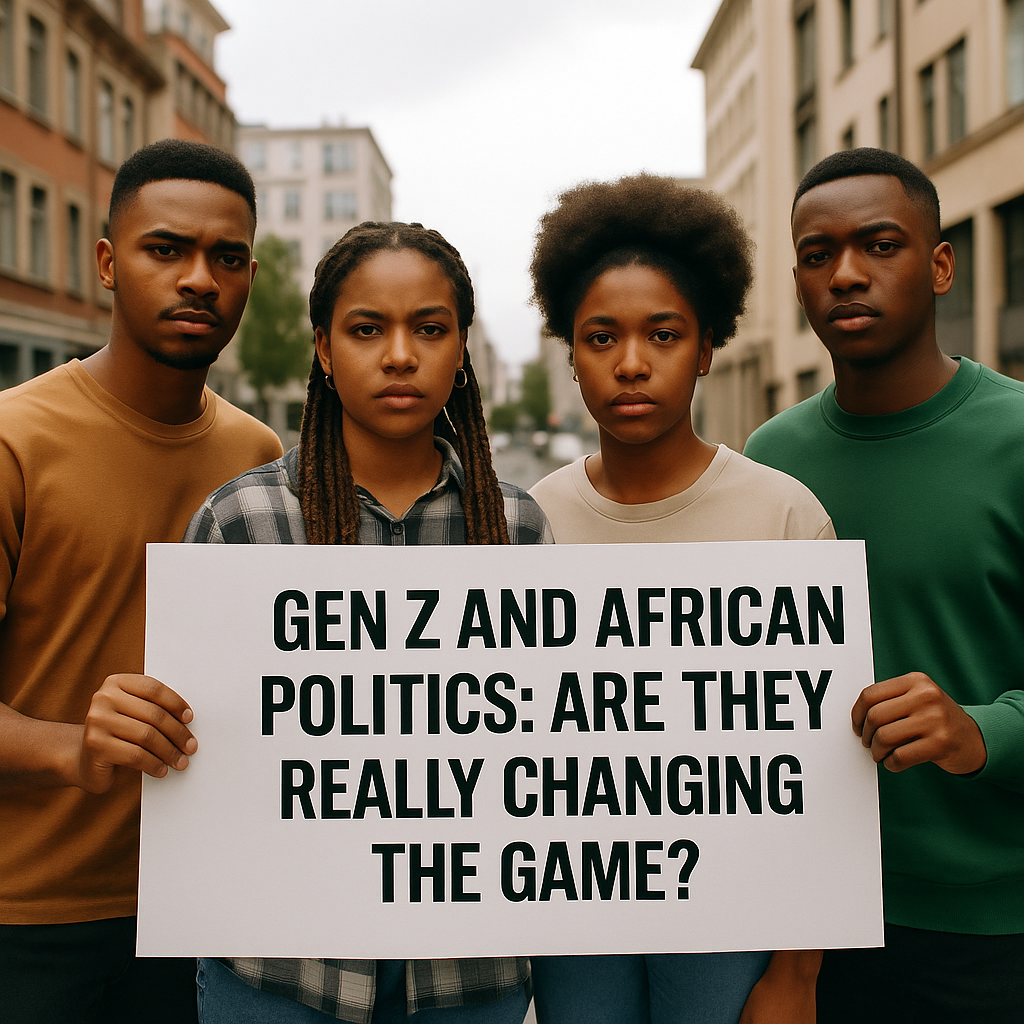
You can call them the Hashtag Hustlers, the Digital Rebels, or just the most politically frustrated generation Africa has ever raised. Born with smartphones in hand and raised in systems rigged by old men in oversized agbadas and power suits, Africa’s Gen Z is asking bold questions—and they’re not whispering.
But are they changing the game? Or are they just making digital noise in democracies that still don’t listen?
Let’s zoom in.
The Generation That Grew Up in Crisis
Gen Z Africans—born between 1997 and 2012—were raised in the shadow of promises unfulfilled.
In Nigeria, they watched ASUU strikes disrupt their education year after year. Some spent up to 13 months at home waiting for lectures to resume.
In Zimbabwe, they saw their parents’ life savings disappear overnight as inflation peaked at 89.7 sextillion percent in November 2008.
In South Africa, they grew up hearing that apartheid was over, but still lived in communities where racial inequality and unemployment remained sky-high. In 2023, the youth unemployment rate was 61%.
Across the continent, many grew up more familiar with protest than policy. And by the time they hit voting age, many were already exhausted.
The Hashtag Generation: They Don’t Wait for Change—They Demand It
When police brutality in Nigeria reached a boiling point in October 2020, it wasn’t a politician who mobilized the country. It was 22-year-old Rinu Oduala and a few others, tweeting from various houses in different locations. Within hours, #EndSARS was trending worldwide. Celebrities like Beyoncé, John Boyega, and Rihanna amplified the message, but the movement’s heart was unmistakably Gen Z.

Rinu, alongside Aisha Yesufu and other young voices, helped organize protests that shut down major roads, generated over ₦147 million in donations (in less than a week), and even forced the disbandment of the SARS police unit—on paper, at least.
In Senegal, when President Macky Sall attempted to extend his term, it wasn’t the parliament that stood up first. It was 19-year-old students and neighborhood mobilizers. In March 2021, protests erupted in Dakar, Saint-Louis, and Ziguinchor. “We have nothing to lose anymore,” said one protester, Omar Diouf, a 20-year-old university dropout. “We’ve been hungry since we were born.”
Stats Don’t Lie—Young People Are The Majority, But…
Africa is the youngest continent in the world. Over 60% of the population is under 25. In Nigeria alone, 42.5 million voters were aged 18–35 in the 2023 elections, according to INEC. That’s more than the total population of Ghana.
But here's the plot twist: they don’t vote.
In the same 2023 elections, despite massive youth turnout at rallies and online, the final voter turnout was just 27%. In Kenya's 2022 general election, the IEBC reported a 5.27% drop in youth voter registration compared to 2017.
Why?

Because voting in many African nations is a marathon in the sun. Because their votes don’t always count. Because when they ask for electricity, they get slogans. When they demand jobs, they get Jollof. When they demand reforms, they get rubber bullets.
When They Run for Office…
…The establishment laughs.
In Uganda, Bobi Wine—a pop star turned political opposition leader—was 38 years old when he ran against Museveni in 2021. His rallies were raided, supporters beaten, and social media blocked.
But even so, some are breaking through:
Denge Lugonzo (Kenya): At 24, he was elected MCA for Kisa East Ward in Kakamega in 2022.
Emma Theofelus (Namibia): Appointed deputy minister of information at just 23 years old during the pandemic. She helped craft public health messaging that targeted young people via TikTok and WhatsApp.

Stella Nyanzi (Uganda): A scholar and activist, she turned social media advocacy into political pressure, despite repeated arrests.
The lesson? It’s hard, but not impossible.
Digital Rage, Real-World Risks
Governments have noticed the power of Gen Z—and they’re scared.
Uganda introduced a “social media tax” in 2018 to stifle online dissent. You had to pay 200 Ugandan shillings (about 5 cents) daily just to use WhatsApp or Twitter.
Nigeria banned Twitter in 2021 after President Buhari’s tweet was deleted. The ban lasted seven months.
DR Congo regularly shuts down the internet during elections or civil unrest.

Gen Z isn’t just fighting politicians. They’re fighting algorithms, firewalls, and digital warfare.
So Are They Really Changing the Game?
Let’s be brutally honest.
Yes, because:
They're reshaping civic space. No movement today succeeds without digital youth behind it.
They're rejecting tribal politics, religious manipulation, and "stomach infrastructure" bribes.
They speak the language of the global stage. They know how to trend a hashtag in Nairobi and get it covered in New York.
But not yet, because:
Their activism often dies in the streets, not in parliament.
The same elders who protest against still own the political parties, the police, and the courts.
Protest doesn’t always equal policy. And vibes don’t always equal votes.
What Next? From Protest to Policy
Gen Z has already done something revolutionary: They've made politics cool again.
Now, the hard part begins:
Show up. If 56% of Nigerian youth voted in 2027, the game would flip overnight.
Join parties or build new ones. Power won’t hand itself over. It must be taken—legally and strategically.
Create local impact. Start with LGAs, councils, and school boards. That’s where real change lives.
Support youth candidates. Vote with your thumbs and your wallets.
Stay informed, not just outraged. Use the internet not just to rant, but to read policies, study budgets, attend town halls, and hold leaders accountable.
Final Thoughts
Gen Z Africans are not lazy. They are not apathetic. They are not entitled.
They are simply tired of waiting.
They’ve danced through dictatorships, studied through strikes, survived police brutality, and built entire movements with nothing but Wi-Fi and frustration.
They may not have changed the game yet, but they’ve definitely changed the rules.
And once they decide to move beyond protest and fully take power?
Let’s just say... Africa won’t be ready.