France's Ex-President Sarkozy Imprisoned: Shockwaves as Legal Saga Concludes
Former French president Nicolas Sarkozy has been sentenced to five years in jail for criminal conspiracy related to illicit campaign funding from late Libyan leader Muammar Gaddafi. This marks a historic downfall, as Sarkozy becomes the first postwar French leader ordered to prison, despite his strong claims of innocence and intention to appeal. The verdict highlights a pattern of legal challenges for the former president, who previously faced convictions for corruption and campaign overspending.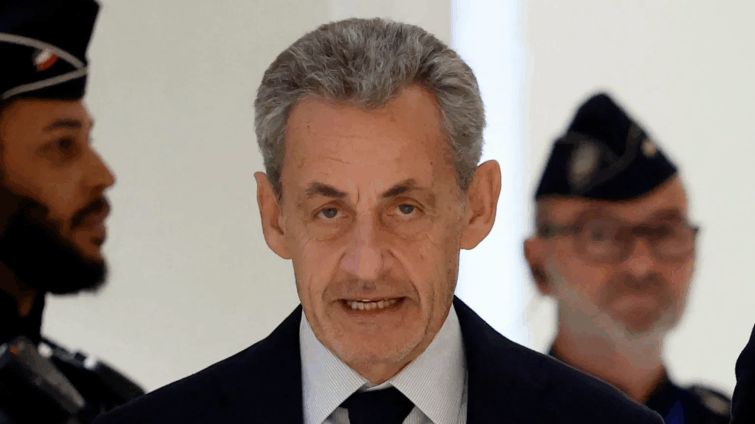
Former French president Nicolas Sarkozy, who led France from 2007 to 2012, has been sentenced to five years in jail after being found guilty of criminal conspiracy in a case linked to millions of euros of illicit funds from the late Libyan leader Col Muammar Gaddafi. This verdict, delivered by a Paris criminal court on Thursday, September 25, 2025, marks a spectacular downfall for the 70-year-old statesman. The ruling means Sarkozy will spend time in jail even if he appeals, a measure that will remain in force. Prosecutors have one month to inform him when he must report to prison, making him France's first postwar leader to be ordered to jail since Philippe Petain.
While convicted of criminal conspiracy, Sarkozy was acquitted of all other charges including passive corruption, illegal campaign financing, and embezzlement of Libyan public funds. The court ruled there was not enough evidence to find Sarkozy was the direct beneficiary of the illegal campaign financing, nor proof that money from Gaddafi was ultimately used in his campaign. However, Judge Nathalie Gavarino stated that Sarkozy had allowed close aides to contact Libyan officials with a view to obtaining financial support for his 2007 election campaign. The judge described the offences as being of “exceptional gravity” and “likely to undermine the confidence of citizens.” In addition to the jail term, Sarkozy was ordered to pay a fine of 100,000 euros ($117,000) and banned from holding public office.
Speaking to reporters after the hearing, Sarkozy vehemently protested his innocence, calling the verdict “extremely serious for rule of law” and a “scandalous injustice.” He vowed to appeal the ruling, declaring, “If they absolutely want me to sleep in jail, I will sleep in jail, but with my head held high.” His defiant stance, typical of his political career, underlines his belief that the case is politically motivated and that hatred towards him “definitely has no limits.” He was accompanied in court by his wife, Italian-born former supermodel and singer Carla Bruni-Sarkozy.
The investigation into the alleged Libyan funding was opened in 2013, two years after Saif al-Islam, son of the then-Libyan leader, first accused Sarkozy of taking millions of his father's money for campaign funding in 2011. The following year, Lebanese businessman Ziad Takieddine claimed to have written proof that Sarkozy's campaign bid was “abundantly” financed by Tripoli, alleging €50 million (£43 million) worth of payments continued after he became president. The prosecution alleged that in exchange for the funds, Sarkozy promised to help Gaddafi combat his reputation as a pariah with Western countries.
Several other individuals were accused in the trial alongside Sarkozy. His right-hand-man and former interior minister, Claude Gueant, was found guilty of corruption and criminal conspiracy, among other charges, and sentenced to six years. However, Gueant, 80, will not go to prison due to his health. Ex-minister Brice Hortefeux was found guilty of criminal conspiracy and ordered to serve two years, eligible for an electronic tag. Alexandre Djouhri, accused of being an intermediary in the scheme, received a six-year sentence and was ordered to be placed immediately under arrest. Eric Woerth, Sarkozy's 2007 campaign treasurer, was acquitted. Separately, Carla Bruni-Sarkozy was charged last year with hiding evidence linked to the Gaddafi case and associating with wrongdoers to commit fraud, charges which she denies.
This is not Sarkozy's first brush with the law. Since losing his re-election bid in 2012, he has been the target of several criminal investigations. He had already been convicted in two separate cases but previously managed to avoid jail. In 2021, he was found guilty of trying to bribe a judge in 2014, becoming the first former French president to receive a custodial sentence, which he served at home with an electronic tag before being granted conditional release. He also appealed against a February 2024 ruling that found him guilty of overspending on his 2012 re-election campaign and hiring a PR firm to cover it up, receiving a one-year sentence with six months suspended. He has also faced repercussions beyond the courtroom, including losing his Legion of Honour, France's highest distinction, following a graft conviction.
Sarkozy's political career was marked by his hyperactive energy and a vision to transform France. He entered the Elysee Palace in 2007, making a splash on the international scene and taking a hard line on immigration and security. However, his presidency was overshadowed by the 2008 financial crisis, and he left office in 2012 with the lowest popularity ratings of any postwar French leader up to that point, after a bruising defeat to Socialist Francois Hollande. Despite his promise after the 2012 defeat that “You won’t hear about me anymore,” a prediction that proved untrue given his continued public profile and marriage to Carla Bruni, his return to frontline politics ended in 2017 when he failed to win his party’s nomination for another presidential bid. Born on January 28, 1955, the law degree holder is an atypical French politician, the son of a Hungarian immigrant father, and a noted football fanatic and cycling enthusiast. Even with his legal woes, Sarkozy has retained considerable influence on the right of French politics and is known to meet President Emmanuel Macron.