Fierce Debate Rages: Civil Societies & Experts Demand Electronic Transmission of 2027 Election Results
Legal experts, civil society groups, and lawmakers are pressuring Nigeria's National Assembly to mandate electronic transmission of election results in the Electoral Act ahead of the 2027 polls. They argue this is crucial to prevent disputed outcomes and enhance electoral credibility, despite concerns over infrastructure and the need for broader reforms.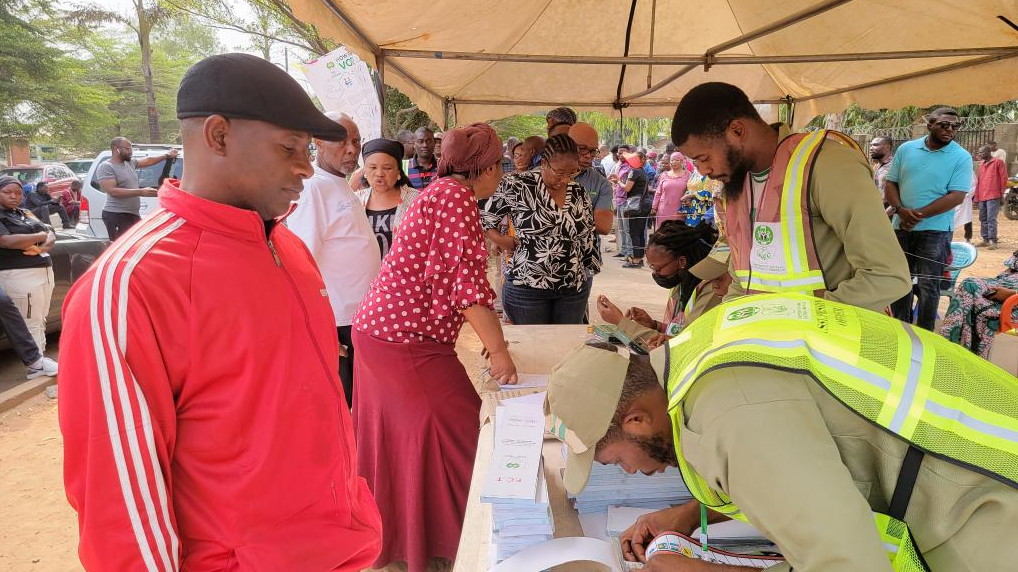
Nigeria faces a critical juncture regarding its electoral integrity, with prominent legal experts, civil society organizations, and concerned lawmakers unanimously calling on the National Assembly to make the electronic transmission of election results mandatory in the ongoing amendment of the Electoral Act. This urgent plea comes ahead of the 2027 general elections, with warnings that failure to act decisively could plunge the nation into another cycle of disputed outcomes and prolonged litigation.

Dr. Olisa Agbakoba (SAN), a constitutional lawyer and former NBA President, has been a vocal proponent of this change. He emphasized that Nigeria's electoral process remains ensnared in legal ambiguity due to the lack of clear statutory backing for modern voting innovations. Agbakoba pointed out that despite repeated amendments, structural weaknesses persist, forcing courts to determine election winners long after votes are cast.
The 2023 general election starkly exposed this flaw when the Supreme Court ruled that the Independent National Electoral Commission's (INEC) Result Viewing Portal (IReV), though deployed for transparency, lacked legal force because it was not explicitly provided for in the Electoral Act 2022. This ruling effectively rendered IReV a mere transparency tool without evidentiary value, creating an almost impossible evidentiary burden for election petitioners.
Recalling Justice Pat Acholonu's observation in Buhari v. Obasanjo (2005) about the impracticality of challenging a presidential election, Agbakoba noted that no presidential election petition has succeeded since 1999, primarily due to the impossibility of verifying results from over 176,000 polling units within constitutional timelines.
He drew parallels to the acclaimed June 12, 1993election, which achieved credibility through transparent manual verification, arguing that real-time electronic transmission would offer transformative impact by combining immediate verification with tamper-proof digital records, ensuring greater efficiency, security, and verifiability.
While advocating for electronic transmission, Ezenwa Nwagwu, Executive Director of the Peering Advocacy and Advancement Center in Africa (PAACA), called for a broader approach to electoral reform. Nwagwu argued that discussions should extend beyond just electronic transmission to include electronic collation of results. He highlighted that merely uploading results at the polling-unit level without safeguarding the collation process still leaves room for manipulation at higher aggregation points.

According to him, the integrity of elections is often compromised not at the polling units but during collation at ward, local government, and state levels, where human discretion and opaque procedures can distort outcomes. He maintained that a legally backed system of electronic collation, integrated with transmission, would close these loopholes and significantly reduce post-election disputes.
Civil society groups echoed this position, warning that half-measures could undermine public trust. They stressed that Nigerians’ confidence in elections has steadily declined due to recurring inconsistencies between votes cast and final results declared. For these groups, making electronic transmission mandatory in law rather than discretionary under INEC guidelines would provide a clear legal standard against which compliance can be measured and violations sanctioned.
Concerned lawmakers within the National Assembly have also lent their voices to the call, noting that the ongoing amendment process represents a narrow but decisive window to future-proof Nigeria’s elections.
Some legislators argued that leaving electronic transmission optional risks repeating the 2023 scenario, where technological tools existed but lacked enforceable legal authority. Others cautioned that failure to act would not only deepen voter apathy but also continue to burden the judiciary with politically charged election petitions.
Addressing concerns about infrastructure and connectivity, proponents dismissed these arguments as increasingly outdated. They pointed out that Nigeria already relies heavily on digital platforms for banking, national identity management, and telecommunications, even in remote areas.
Where connectivity challenges persist, they argued, the law can accommodate hybrid solutions such as offline data capture with delayed synchronization without abandoning the core principle of electronic transmission.
As the 2027 general elections draw closer, the consensus among legal experts, civil society, and reform-minded lawmakers is clear: the credibility of Nigeria’s electoral system hinges on decisive legislative action.
Without explicit provisions mandating electronic transmission and collation of results, the country risks another election cycle defined by controversy, litigation, and public distrust. The National Assembly’s response to this call, many warn, will not only shape the next elections but also signal Nigeria’s commitment or reluctance to genuine democratic reform.