Federal Shutdown Fallout: Trump's Pay Threat, IRS Closures, and Travel Chaos
The ongoing federal government shutdown is creating widespread uncertainty, impacting air travel, federal services like the IRS, and the financial well-being of furloughed workers. Political leaders remain at odds over critical issues, including the extension of Obamacare health tax credits and the guarantee of back pay for federal employees.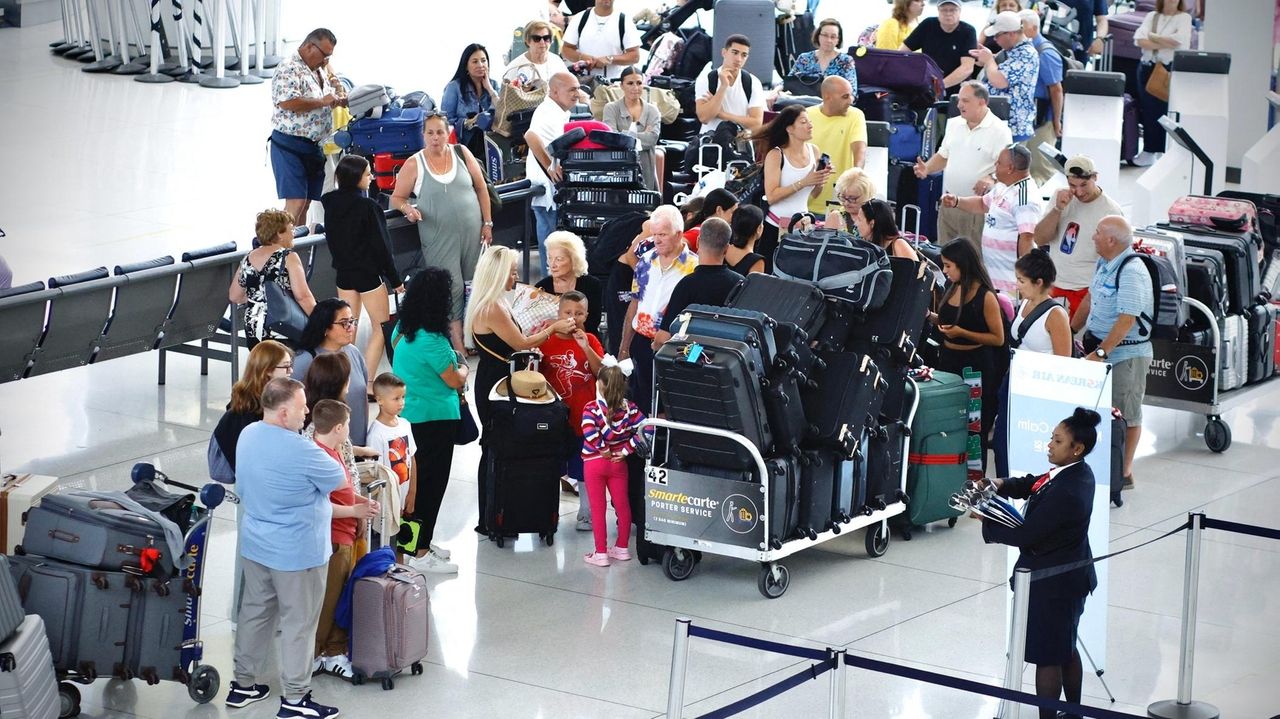
As the federal government shutdown extends, its multifaceted impacts are beginning to be felt across various sectors, from air travel to federal services and the livelihoods of government employees. While immediate disruptions to air travel have been minimal, with Long Island airports such as MacArthur, Kennedy, LaGuardia, and Newark operating on schedule, experts caution that a prolonged shutdown could lead to significant delays due to potential staffing issues. Travelers, particularly those preparing for busy periods like the upcoming Columbus Day weekend, are advised to arrive earlier than usual to account for potentially slower security checks, despite most TSA officials and air traffic controllers being deemed essential workers.
However, past shutdowns have demonstrated a tendency for increased absenteeism among unpaid essential staff, which could cause considerable backups and operating challenges at airports. The Port Authority, in collaboration with the broader airport community, has developed strategies to mitigate these impacts, including continuous monitoring of staffing levels and providing additional customer care resources. For those concerned about flying, considering alternative transportation methods like trains, buses, or driving for shorter trips is recommended. Flexibility in travel plans, such as booking refundable tickets or obtaining travel insurance, is also advised, alongside diligently monitoring airport websites, airline notifications, and federal agency advisories for real-time updates. A crucial tip for travelers remains to build a time buffer into itineraries and to pack essential changes of clothes in carry-ons in case of baggage delays.
Beyond travel, the shutdown has directly impacted federal services, including the Internal Revenue Service (IRS). Long Island’s Taxpayer Assistance Centers in Holtsville and Bethpage, after a brief five-day contingency period, have temporarily closed their doors. Despite these closures, the IRS has explicitly stated that federal tax filing, depositing, and payment deadlines remain in effect, urging individuals and businesses to continue fulfilling their obligations as usual. The closures have caused inconvenience for some taxpayers, such as Manuel Pilco, who traveled a long distance only to find uncertainty, and Tareyton Williams, who faced long wait times to secure an appointment amidst the shutdown.
The underlying political stalemate driving the shutdown centers significantly on the extension of expiring Obamacare health tax credits. A bipartisan bill, H.R. 5145, co-sponsored by Long Island Rep. Tom Suozzi and supported by other Democrats and Republicans, proposes a one-year extension of these credits. However, this proposal has drawn sharp criticism from House Minority Leader Hakeem Jeffries, who labeled it “laughable” and “unacceptable.” Jeffries argues that Democrats should not settle for a temporary extension when Republicans previously granted permanent tax breaks to wealthy donors, advocating instead for a permanent renewal of the subsidies to prevent massive health insurance premium hikes for millions of Americans, including veterans and farmers.
Suozzi, while acknowledging imperfections in the bill, emphasizes the urgent need to prevent imminent premium hikes and break the legislative impasse. The extension of these COVID-era tax breaks, originally intended to be temporary, has become a central point of contention, with congressional budget analysts projecting that continuing them would add approximately $40 billion annually to the deficit. This fiscal concern is a primary reason for Republican and conservative opposition to the extensions.
Adding to the uncertainty, a memo from the White House Office of Management and Budget (OMB) has questioned whether furloughed federal workers are guaranteed back pay once the shutdown concludes. The memo suggests that the 2019 Government Employee Fair Treatment Act (GEFTA), signed by President Donald Trump, does not automatically guarantee back pay for all furloughed employees, arguing that Congress might need to explicitly appropriate funds for those told not to report to work. President Trump himself indicated that not all employees might deserve back pay, suggesting a selective approach. However, this stance has met with strong opposition.
House Minority Leader Hakeem Jeffries, along with Long Island Reps. Andrew Garbarino and Laura Gillen, have vehemently asserted that the law is clear: every furloughed federal employee is entitled to full back pay. Garbarino stressed the obligation to uphold this law, while Gillen criticized the administration for potentially using the threat of withheld pay as a bargaining tactic. The Congressional Budget Office estimates that if the shutdown continues, 750,000 federal employees could be furloughed, accruing an estimated $400 million per day in unpaid compensation, affecting thousands of civilian federal workers residing on Long Island. This contentious issue further highlights the human cost and political discord surrounding the ongoing government shutdown.