Duffer Brothers Unravel Stranger Things Finale Mysteries in Exclusive Interview!
The Duffer Brothers delve into the Stranger Things Season 5 finale, discussing creative inspirations, the decision against deleted scenes, and addressing fan theories like 'Byler.' They reveal the nuanced choices behind Eleven's ambiguous fate, the absence of major character deaths, and the crucial role of Kali, offering a detailed look at the series' emotional conclusion.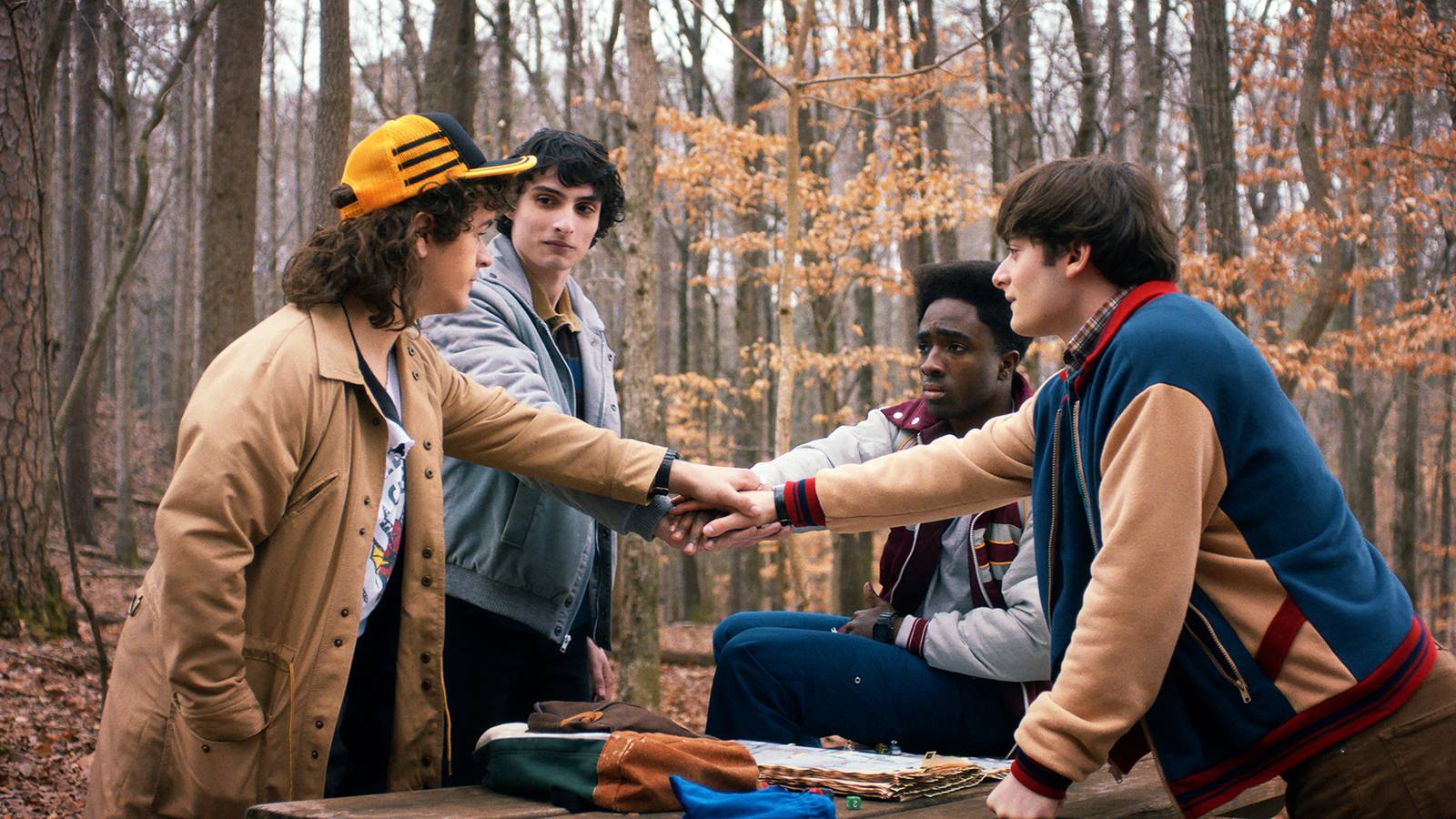
The Duffer Brothers, creators of Netflix’s immensely popular series Stranger Things, recently sat down with Collider’s Steve Weintraub to dissect the highly anticipated and emotional finale of Season 5, Episode 8, “The Rightside Up.” After nearly a decade since its 2016 debut, which captured ‘80s nostalgia by blending sci-fi, horror, and Goonies-esque comedy, the series brought its epic adventure to a bittersweet conclusion, bidding farewell to its beloved characters and millions of fans worldwide.
When crafting the finale, Matt and Ross Duffer drew inspiration from acclaimed series finales like Friday Night Lights, Breaking Bad, and Six Feet Under. Their key takeaway was the importance of remaining true to the show's core and heart, a principle that guided their decisions for Stranger Things' conclusion. Contrary to widespread fan theories, Matt Duffer confirmed that there were no deleted scenes from Season 5, beyond a five-minute trim to the teens on the rooftop scene due to improvisation. In fact, only one scene has ever been deleted throughout the entire run of Stranger Things, dating back to Season 1.
Addressing the fervent online community behind “Byler” theories, which advocated for a romantic relationship between Will Byers and Mike Wheeler, Matt Duffer acknowledged the “noise” but emphasized their commitment to the story they had always intended to tell. Will’s narrative arc, leading to this moment, had been meticulously planned for eight years, underscoring the creators’ dedication to their original vision.
A significant decision early in the writers’ room, within the first three weeks, was to leave Eleven’s (El) ultimate fate open to viewer interpretation. The creators debated her conclusion extensively, ultimately deciding it never felt right for her to simply remain in the basement. They presented various viewpoints through characters like Hopper, Kali (who offered a pragmatic, darker perspective), and Mike, allowing the audience to determine whether El’s sacrifice involved her death or her having to leave her friends behind. Regardless, El’s act is portrayed as a courageous and selfless endeavor to prevent further suffering, both for herself and for other children. Mike’s belief in El’s survival is also left ambiguous, potentially serving as a coping mechanism, though the characters within the show ultimately choose to believe.
The possibility of killing off main characters, especially Steve, was discussed annually, with particular consideration for Season 5. However, the Duffer Brothers concluded that such deaths wouldn’t align with the show’s essence as an adventure, coming-of-age story, and an homage to Spielberg and ‘80s cinema. While Eleven’s sacrifice felt inevitable and true to the spirit of the show, additional major character deaths were not pursued for long. Matt Duffer confirmed that Season 5 marks the last time these characters will be seen in live-action, as the creators are keen to explore entirely new characters and mythologies for future projects.
Regarding Vecna’s identity, Matt Duffer surmised that Joyce, Hopper, and Karen likely realized Vecna was Henry Creel between Seasons 4 and 5, with subtle Easter eggs in the stage play hinting at these connections. Kali’s character, introduced in Season 2, was always intended to return and proved integral to Season 5’s plot, particularly in forcing Eleven to confront harsh realities about her future. Ross Duffer stressed that the entire season “does not work without her.” The military, after the destruction of the Upside Down, is presumed to have slowly dismantled its operations. Dr. Kay, a new antagonist, was conceived not as a relation to Dr. Brenner but as a representation of a recurring government threat, highlighting that eliminating one such figure would only lead to another.
The creators also clarified why Will didn’t feel pain when Vecna was attacked in the finale: the Mind Flayer, which connected him to Vecna, was already dead by that point, severing their link. The Montauk reference in the finale was a “cute” nod and not an indication of a future spinoff. Among favorite fan theories, Ross Duffer found the idea of Mike inventing the entire story to cope with Will’s death interesting (though undesirable as an ending), while Matt appreciated a clever D20 rolling theory, despite its logical inconsistencies. The finale also featured numerous Easter eggs, including callbacks to the stage play, references to Stacey (who turned down Dustin), the Montauk mention, and full-circle moments like Dustin’s actions mirroring Eddie’s earlier remarks.
A key structural decision for the finale was to conclude Vecna’s storyline halfway through, dedicating the remaining 40 minutes to an epilogue. This allowed for a deep breath and extended time with the characters, which Matt Duffer cited as his favorite part of the episode. The exact reason for Vecna needing 12 children was thematic, tied to clock symbolism and the power he exerted from Will. As for Murray’s future, Brett Gelman, the actor, had envisioned his character becoming a private eye in New York, a detail the Duffers discussed with him during production.
The poignant D&D basement scene, where the core group puts away their books and leaves their childhood behind, had been planned for eight years. Filmed over two days, the emotional second day captured the genuine feelings of the actors as they concluded their journey with the show. Noah Schnapp’s suggestion for a final group shot further amplified the scene’s emotional weight. The series closes with a powerful “passing of the torch” moment, introducing Holly and her friends playing D&D, symbolizing the new generation’s beginnings as Mike leaves his childhood. This ending, with Mike smiling, reflects not sadness but happiness in the enduring magic of shared memories.