Downton Abbey's Dramatic Close: Unraveling the Grand Finale's Secrets
The grand finale of "Downton Abbey" sees the Crawley family facing new scandals and financial threats, ultimately finding resolution and modernization. Mary and Edith's relationship evolves, Mary overcomes personal disgrace, and the downstairs staff enjoy happy endings amidst significant transitions of power, ensuring Downton Abbey's legacy continues into the future.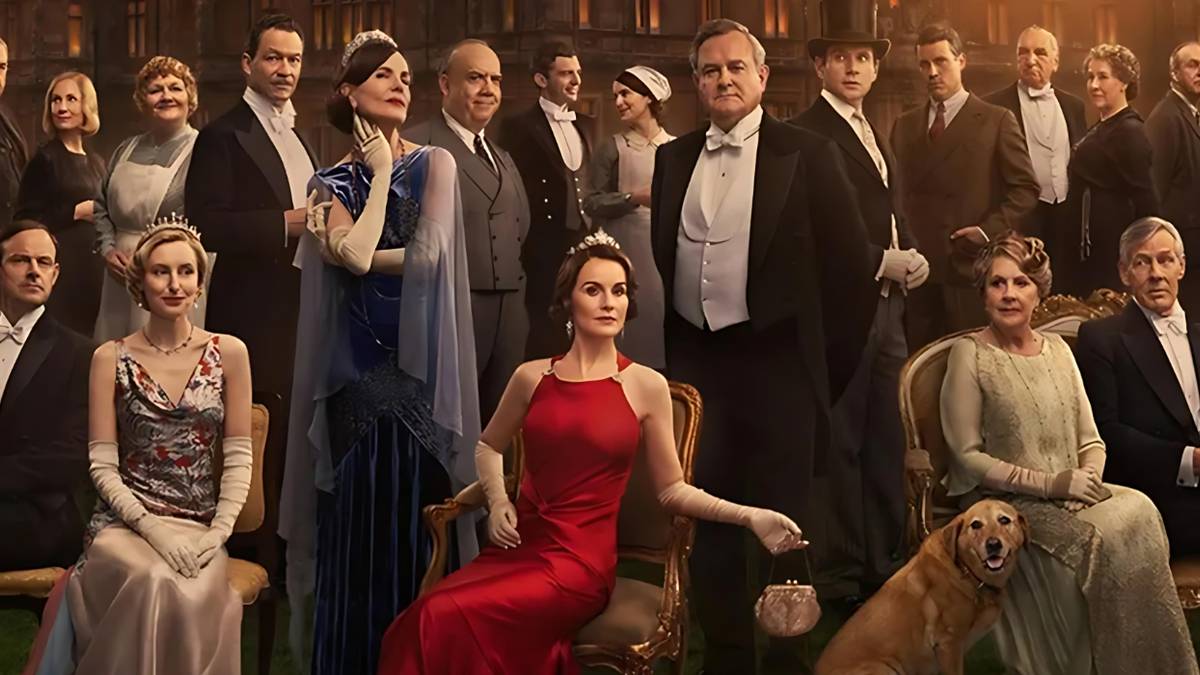
"Downton Abbey: The Grand Finale" brings a poignant and comprehensive close to the beloved franchise, culminating six seasons of the popular TV series and two preceding films. After chronicling nearly two decades of the Crawley family's journey through various tumultuous historical events, fans witness the family once again confronting scandal, impending financial ruin, and the inexorable march of modernization, all while striving to protect their ancestral home and enduring legacy. Despite the bittersweet farewell, marked by the absence of the indomitable Violet Crawley (Maggie Smith), this final cinematic installment skillfully ties up loose ends, offering each character a satisfying conclusion, while adhering to its characteristic "life goes on" philosophy as Downton Abbey gracefully navigates its way into the future.
A significant highlight of "Downton Abbey: The Grand Finale" is the evolved relationship between sisters Mary (Michelle Dockery) and Edith (Laura Carmichael). Once entangled in a bitter rivalry, the final film portrays them in a place of healthy mutual support as they both play crucial roles in saving the family. Their bond is tested when Cora's (Elizabeth McGovern) brother, Harold (Paul Giamatti), arrives from America, accompanied by Sambrook (Alessandro Nivola), who is mistakenly believed to have salvaged the Levinson fortune. However, Tom (Allen Leech) uncovers Sambrook as a con man who pilfered the funds and, worse, attempted to blackmail Mary after an affair. Edith, leveraging her newfound influence as a marchioness, intervenes decisively, preventing further financial and social damage to her family and Mary's reputation. This act of conscious rescue by Edith underscores their remarkable growth, a stark contrast to her past behavior in similar situations, such as with Mr. Pamuk (Theo James). Not to be outdone, Mary also contributes significantly by selling their London residence and downsizing to a flat, a pragmatic decision that safeguards the family's finances and propels the Crawleys further into the modern age.
No chapter of Downton Abbey would be complete without a social scandal, and "The Grand Finale" delivers this through Mary's divorce from Henry Talbot (Matthew Goode). After five years of marriage, their separation is confirmed, with the film revealing Henry's infidelity as the cause. Despite her innocence, Mary faces social ostracism, with the village initially rejecting her participation in a local event. However, Isobel (Penelope Wilton), stepping into a leadership role after Violet's passing, orchestrates a surprise presentation for Mary. Mr. Mason (Paul Copley), a long-time family friend and farmer, wins the award and uses the moment to publicly express his appreciation for Mary, leading to applause from the majority of the villagers and indicating her standing is not as diminished as it seemed. Further bolstering Mary's social recovery, Cora and Edith plan a grand party. When initial invitations are declined, Edith ingeniously invites actor Guy Dexter (Dominic West), whom they met in "Downton Abbey: A New Era," and the celebrated playwright Noël Coward (Arty Froushan) to stay, successfully enticing the local Lords and Ladies. This triumphant gathering is subtly implied to inspire Noël Coward's iconic play, *Private Lives*, signaling Mary's ultimate triumph over a scandal that would have ruined many.
The downstairs staff, the heart of Downton, largely experience happy endings. Carson (Jim Carter) and Mrs. Hughes (Phyllis Logan) remain happily married, as do Daisy (Sophie McShera) and Andy (Michael Fox), Mrs. Patmore (Lesley Nicol) and Mr. Mason, and Miss Baxter (Raquel Cassidy) and Mr. Molesley (Kevin Doyle). Building on previous narratives, it is suggested that Molesley has found success as a screenwriter, while Barrow (Robert James-Collier) discovers happiness working for his lover, Guy Dexter. Bates (Brendan Coyle) and Anna (Joanne Froggatt) are joyfully expecting their second child. Yet, even in happiness, change is inevitable. Carson officially retires, having meticulously trained Andy as his successor, and Mrs. Patmore follows suit, promoting Daisy to take the reins. Mrs. Patmore, confessing that Daisy is the daughter she never had, ensures a smooth transition. This era of change in the servants' hall signifies a graceful evolution, embracing the future without sacrificing the characters' contentment.
Concurrent with Mary's personal challenges, the Crawley family undergoes a significant transition of power. Robert (Hugh Bonneville) makes the difficult but necessary decision to step back, ceding control to Mary and acknowledging her indispensable ability to adapt to modern demands, positioning her as the undeniable future of Downton Abbey. He and Cora relocate to the dowager house, while Mary assumes the mantle of Lady of Downton in truth. Robert promotes Bates to the dual role of butler and valet, and in a move to keep Bates and Anna together, Mary and Cora swap maids. Mary promises to maintain close contact with Anna and agrees to be the godmother of her unborn child. As the film concludes, "Downton Abbey: The Grand Finale" offers a tender homage to beloved characters no longer present, as Mary surveys her home, fondly remembering Matthew (Dan Stevens), Sybil (Jessica Brown Findlay), and Violet. This poignant reflection honors the past while affirming the estate's secure legacy, despite the numerous struggles endured. The film, directed by Simon Curtis and written by Julian Fellowes, delivers an emotional yet gratifying send-off for characters who have been a cherished part of audiences' lives for 15 years, released on September 12, 2025, with a runtime of 123 minutes.