Controversial WWII Film 'Rays and Shadows' Ignites National Fury in France!

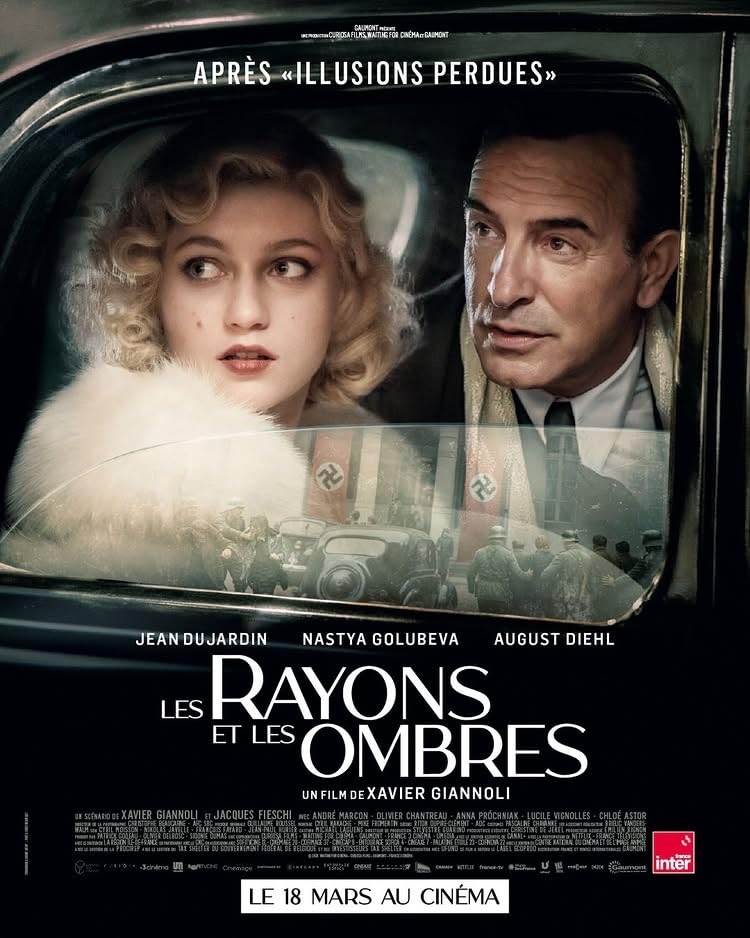
Half a century after Gaumont's seminal "Lacombe Lucien" by Louis Malle first addressed France's complex history with Nazi collaboration, the studio once again finds itself at the heart of a national culture war with Xavier Giannoli’s highly polarizing film, "Rays and Shadows." Released on March 18, this three-hour, 15-minute period drama courageously tackles the taboo subject of French collaboration with the Nazis during the German occupation of France in World War II. Despite its challenging length and serious theme, the film has achieved remarkable box office success, attracting over 620,000 moviegoers within weeks, a significant feat in a theatrical market often dominated by U.S. blockbusters and comedies. However, its commercial triumph has been met with an equally intense critical battle, unfolding across major newspapers, television, magazines, and social media platforms.
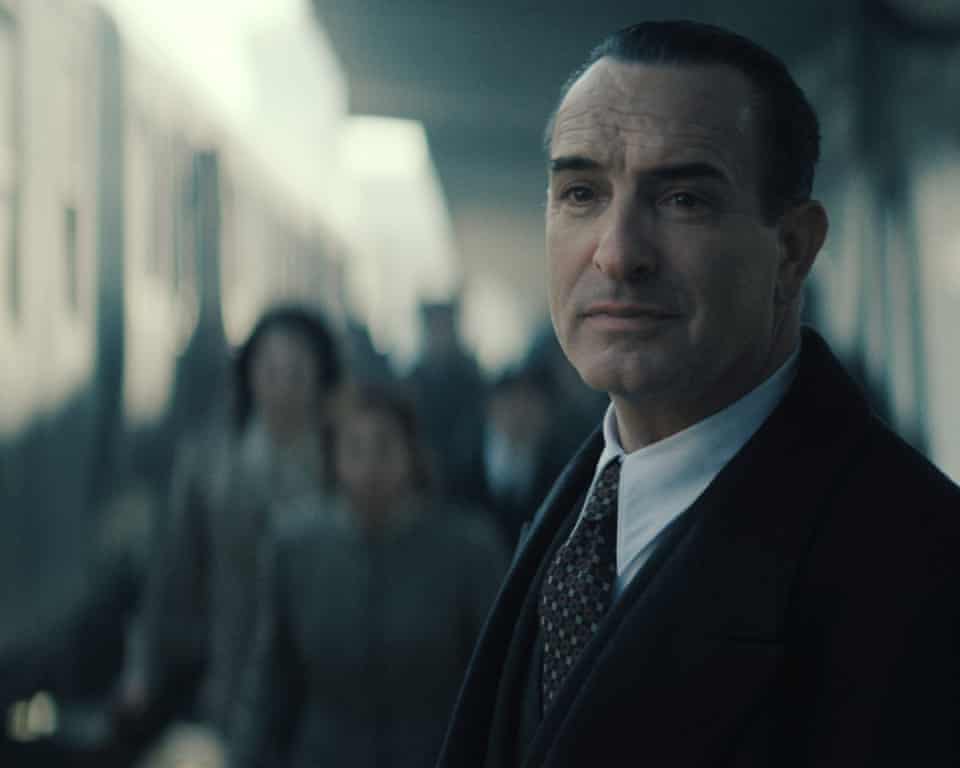
The narrative of "Rays and Shadows" centers on Jean Luchaire, a real-life press baron portrayed by Oscar-winner Jean Dujardin. Luchaire, initially a pacifist militant in the 1930s, gradually transformed into an influential collaborationist and propagandist, a path that ultimately led to his death sentence after the war. The film, rather than being a straightforward biopic, delves into the moral compromises prevalent within French high society during that era, chronicling the rise and fall of Luchaire and his daughter, Corinne (Nastya Golubeva), a promising young actress who followed her father into Nazi circles and subsequently lost her civic, political, and professional rights. The feature also highlights Luchaire’s enduring friendship with Otto Abetz (August Diehl), who became the Reich ambassador in 1940. While the film, Gaumont’s largest budget production since the pandemic, is bolstered by meticulous props and Dujardin's commanding performance, it adopts an immersive perspective, closely following the protagonists' personal struggles, even depicting them coughing up blood or sputum. Notably, the film largely omits direct depictions of antisemitic violence, deportations, or visual markers like Jewish badges. Instead, the rare Jewish characters presented are either saved by Luchaire and his daughter or portrayed as forgiving figures.
The intense debate surrounding "Rays and Shadows" has largely followed predictable fault lines, questioning whether Giannoli indirectly relativizes collaboration by introducing nuances and humanizing protagonists who seemingly aided the Nazis out of opportunism and vanity rather than ideological conviction. Luc Chessel of Libération delivered one of the harshest critiques, labeling the film "a disheartening biopic about the lives of scum" and "a masterclass in historical gaslighting," accusing Giannoli of being "fascinated by its characters to the point of indulgence" in an "XXL attempt at relativization." Historian Bénédicte Vergez-Chaignon, a specialist in WWII, further criticized the film in Le Monde, citing historical inaccuracies and suggesting chronological "adjustments" designed to elicit sympathy for the protagonists. She particularly objected to a fabricated scene depicting Luchaire's brutal arrest by Resistance members, when in reality, he and his daughter were arrested by American soldiers in Italy, arguing that "The Resistance is thus portrayed in its worst light."
Conversely, "Rays and Shadows" has been ardently championed by other mainstream critics. Film critic Léonard Haddad, also in Le Monde, defended the film, asserting that Giannoli does not offer excuses for collaborators but rather allows the audience to draw their own conclusions. Haddad praised the film’s immersive approach, contrasting it with the "clinical" style of other historical dramas, and acknowledged the inherent complexity of a Gaumont-produced film featuring collaborators as protagonists. Right-wing editorialist Eugénie Bastié of Le Figaro lauded Giannoli for "not telling this story in black and white," appreciating the depiction of a pacifist's gradual descent into compromise and collaboration driven by weakness, ambition, and greed. She drew a parallel to Malle’s "Lacombe Lucien," arguing that "Rays and Shadows" is "neither complacent nor Manichean," instead exploring the deep roots of cowardice and indifference to evil.
Adding another layer to the controversy, Giannoli himself politicized the film during promotional appearances on French radio and TV. He controversially drew parallels between the antisemitism found in 1940s socialist circles, like those of Luchaire and Abetz, and what he perceives as a similar trend within today’s radical left party, La France Insoumise, directly criticizing party leader Jean-Luc Mélenchon. Giannoli also defended the film against accusations of historical inaccuracies, stating to Le Monde that he "didn’t want to approach this subject as a historian … but as a filmmaker," despite having consulted with historians during its development.
Indeed, three of these historians – Yves Pourcher, Barbara Lambauer, and Cédric Méletta – co-signed an op-ed in Le Nouvel Obs, dismissing the criticism as an "unofficial ‘Ideological Validation Commission.’" They collectively stated that they "followed and supported the film’s director as he gathered information and then wrote his screenplay," affirming that Giannoli "drew heavily from all of this." However, they clarified that his work operates "on an entirely different level — that of a creator capable of constructing a story with characters and actors who draw us into the tragedy of a France that was occupied, plundered and brutalized."
Ultimately, "Rays and Shadows," produced by Olivier Delbosc, is poised to remain one of the most debated French movies of the year. While it may not break even theatrically, its premium library value ensures a robust life in ancillary markets. The film also sits within a broader trend of French cinema addressing wartime history, following Studiocanal’s "The Children of the Resistance" and preceding Pathé and TF1 Studios' upcoming projects: Antonin Baudry’s two-part saga "De Gaulle" and László Nemes’ "Moulin," a film about French Resistance hero Jean Moulin.
Recommended Articles
You may also like...
Bold Claim! JJ Okocha Crowned More Skilful Than Messi, Ronaldo, and Neymar!

Nigerian legend Jay-Jay Okocha has been ranked the third most skilful player in football history, surpassing icons like ...
Shocking Revelation: Osimhen's Battle with Malaria Led to Heartbreaking Rejections!

Super Eagles striker Victor Osimhen shared his early career struggles, detailing rejections from two Belgian clubs due t...
Controversial WWII Film 'Rays and Shadows' Ignites National Fury in France!

Xavier Giannoli's "Rays and Shadows" has sparked a fierce national culture war in France, decades after "Lacombe Lucien"...
Explosive Michael Biopic: $15M Reshoots, Child Abuse Claims Erased, Sequels Teased!

The upcoming Michael Jackson biopic, “Michael,” faced significant changes during production due to a legal clause, leadi...
Lil Tjay's Explosive Return: Rapper Calls Out Offset After Posting Bond for Florida Shooting

Lil Tjay was released on bond after being charged with disorderly conduct following a non-deadly shooting involving Offs...
Anthropic Unleashes 'Mythos' AI for Cybersecurity Revolution!

Anthropic has introduced Mythos, its new frontier AI model, specifically previewed for cybersecurity applications throug...
Luxury Unleashed: BMW's 2026 i7 xDrive60, A High-Speed Electric Sanctuary

The 2026 BMW i7 xDrive60 emerges as a top-tier luxury electric sedan, masterfully blending effortless acceleration with ...
Experience Tomorrow: The Revolutionary AE.1 Atmos Lightship Redefines Living

Discover the innovative Lightship AE.1 Atmos, an all-electric pop-top travel trailer featuring a 77-kWh battery and the ...