Coastal Catastrophe: Ghana's Communities Swallowed by Relentless Sea
Ghana's coastal communities face a dire humanitarian crisis from the Akosombo Dam spillage, heavy rains, and relentless coastal erosion. Thousands are displaced, vital infrastructure is collapsing, and communities grapple with disease and loss of identity. Urgent, coordinated action is required to address immediate needs and build long-term climate resilience for the most vulnerable.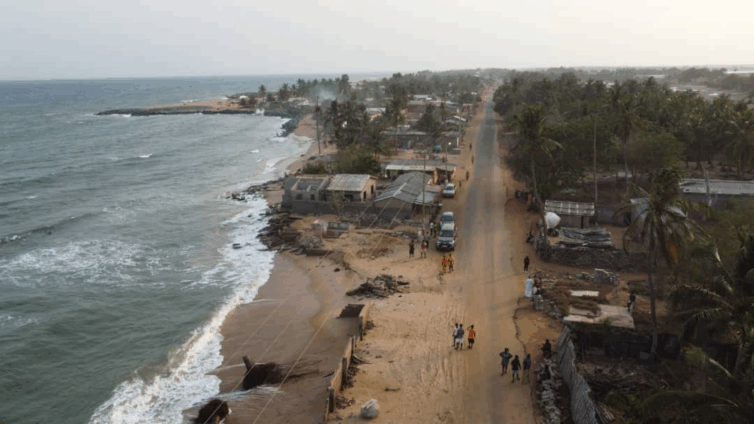
Ghana's vulnerable coastal communities are grappling with a dual crisis: the devastating inland flooding caused by the Akosombo Dam spillage and heavy rains, and the relentless erosion of its coastline. These combined threats have triggered a profound humanitarian emergency, displacing thousands, destroying essential infrastructure, and eroding the very fabric of community life and identity.
From September 15 to October 30, 2023, a critical decision by the Volta River Authority (VRA) to release water from the Akosombo Dam, coupled with torrential rains, unleashed silent but surging floodwaters across a vast area stretching from Mepe to Keta, and from Anloga to Ketu South. This man-made disaster, executed to safeguard the dam's integrity, resulted in the displacement of nearly 38,000 people. Families like Ablavi's, a mother of four, were forced to seek refuge in overcrowded and unsanitary shelters, sharing cramped classrooms in places like Agbledomi with dozens of others. Her harrowing account of clutching her newborn above a nighttime flood surge highlights the terror and lasting fear among survivors, who dread a recurrence.
The impact extended beyond mere housing. In Kedzi, 17-year-old Edem's WASSCE exams were abruptly halted by the invading waters, leaving him traumatized and uncertain about his academic future. The temporary shelters, characterized by leaking roofs, cold floors, and a complete lack of privacy, have become hotbeds for disease. Malaria cases are on the rise, diarrhoeal diseases are spreading, and fears of cholera loom large as latrines have collapsed, leading to widespread open defecation. Girls are disproportionately affected, missing school, some permanently, while mothers resort to trading their last provisions for basic necessities like candles and clean water.
Adding to this immediate catastrophe is the long-term, insidious threat of coastal erosion, which sees Ghana's coastline retreating by over five meters annually in some sections. Communities like Fuveme, Salakope, Agavedzi, Kporkporgbor, and Kedzikope are witnessing their public infrastructure—schools, hospitals, and health centers—literally crumble into the sea. In Fuveme, the school compound, once a hub of children's laughter, now stands fractured, its foundation consumed by waves, forcing the headteacher, Mr. Nyatefe, to conduct classes under trees. Three school blocks in the area have partially collapsed, with others precariously close to the shoreline.
At the Kedzikope Health Centre, nurses like Elorm work under constant dread as waves pound against the walls, cutting off vital access roads for ambulances and delaying medical supplies. Pregnant women are now forced to walk up to nine kilometers for care. Beyond critical infrastructure, the sea is devouring homes, churches, cemeteries, and ancestral lands. Daavi Afi, 78, vividly recounts the night the ocean claimed her six-bedroom compound, taking with it 50 years of memories and her sense of history. Twelve-year-old Dziedzorm laments the loss of his school to the ocean, now unable to attend. Over 200 houses in Fuveme have vanished, and the shoreline has moved more than 100 meters inland in less than a decade, creating climate refugees with no compensation or hope.
This environmental onslaught, fueled by rising sea levels, intense tidal waves, indiscriminate sand mining, mangrove loss, and sediment disruption from previous sea defense projects, has also salinized freshwater sources, forcing mothers to trek long distances for clean water. Fishermen, too, face economic ruin as they must travel to distant towns to launch their boats, losing precious income.
Experts are unequivocal: this is not merely flooding or erosion; it is a full-blown humanitarian emergency demanding coordinated national action rather than piecemeal solutions. Immediate needs include emergency food and water, mobile health services, sanitary materials, and temporary shelter. For long-term resilience, Ghana must invest in proper drainage systems, implement floodplain zoning, establish women-centered emergency shelters, reinforce or relocate endangered public facilities, restore mangroves as natural buffers, implement sustainable dredging, and build climate-resilient infrastructure. Critically, women and children, the most vulnerable and often forgotten, must be at the center of every intervention. The collective call from residents and officials is clear: the time for promises has passed; without swift and comprehensive action, more towns and lives will be irrevocably lost.
This article is written as part of a collaborative project between JoyNews, CDKN Ghana, and the Centre for Climate Change and Sustainability at the University of Ghana, with funding from the CLARE R4I Opportunities Fund.