Burkina Faso Telecom Giant ONATEL Faces Crushing Profit Decline in 2025
ONATEL Burkina Faso reported a 26% drop in net profit to 15.89 billion XOF in 2025, despite revenue growth, as rising external service costs, financial charges, and a higher tax bill squeezed margins. The company faces a challenging operating environment due to military rule, an insurgency, and new government mandates, contributing to its underperformance compared to other Moov Africa subsidiaries.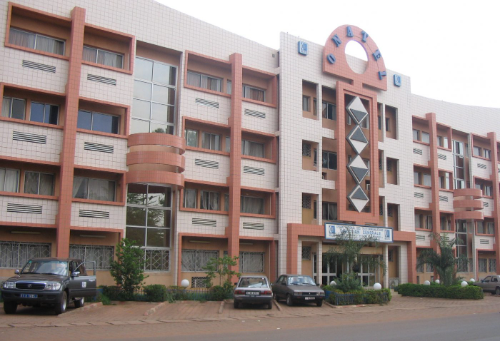
ONATEL Burkina Faso, operating under the Moov Africa brand and majority-owned by Morocco's Maroc Telecom, reported a significant 26% decline in net profit for the year ended December 31, 2025, despite experiencing a modest revenue increase. The telecommunications giant saw its net profit fall to 15.89 billion XOF ($28.4 million) in 2025, down from 21.47 billion XOF ($38.3 million) in 2024. This downturn occurred even as revenue grew by 3% to 146.18 billion XOF ($261 million) from 141.84 billion XOF ($253.2 million), primarily fueled by strong performance in mobile services and accessory product sales.
The discrepancy between revenue growth and profit decline highlights severe margin compression. Provisional financial statements, certified by auditors, revealed that value added dropped by 8% and the gross operating surplus fell by 12%. This squeeze on profitability was attributed to several factors: increased external service costs, higher financial charges, and a substantial 29% increase in its tax bill, which reached 6.5 billion XOF ($11.6 million). After accounting for depreciation charges of 32.5 billion XOF ($58 million), the operating result deteriorated significantly, declining to 25.67 billion XOF ($45.8 million) from 33.57 billion XOF ($59.9 million) in the previous year. The financial result remained negative and worsened slightly due to elevated interest charges on borrowings.
Despite the financial challenges, ONATEL demonstrated strong operational growth in its subscriber base and asset expansion. By the end of 2025, the company's mobile customer base expanded by 6.7% to 7.3 million subscribers. Fixed broadband subscriptions also saw impressive growth, increasing by 28%. Total assets reached 324.9 billion XOF ($580 million), underpinned by continuous investments in infrastructure. Capital expenditure on fixed and intangible assets surpassed 44.5 billion XOF ($79.5 million) during the year. Furthermore, the company paid out 15.16 billion XOF ($27.1 million) in dividends from prior-year earnings, and its net treasury improved to 10.65 billion XOF ($19 million) by year-end, up from 6.06 billion XOF ($10.8 million) in 2024, reflecting stronger operating cash generation despite the weaker earnings.
The profit squeeze at ONATEL is part of a broader, multi-year trend influenced by specific conditions in Burkina Faso. The country has been under military rule since 2022, and an ongoing jihadist insurgency continues to disrupt operations across more than 30% of its national territory. These challenging circumstances necessitate heavy spending on site security, maintenance in insecure zones, and network rehabilitation following acts of vandalism, significantly impacting the company's operational costs.
Moreover, the competitive landscape in the three-player mobile market, which includes ONATEL, Orange, and Telecel, has intensified. While these operators collectively generated 490.5 billion XOF in revenue in 2024, average revenue per user (ARPU) for voice services is falling due to the proliferation of over-the-top messaging services. Adding to the financial burden, the military government has imposed a new regulation requiring telecom operators with revenues exceeding 100 billion XOF to construct permanent headquarters in Ouagadougou. This mandate introduces a substantial capital expenditure, distinct from network investments, with Moov Africa having already initiated a 9 billion XOF headquarters project.
Comparing ONATEL's performance within its parent group, Maroc Telecom, reveals an underperformance relative to regional peers. In 2025, Moov Africa subsidiaries collectively achieved revenue growth of 5.3% at constant exchange rates and maintained an EBITDA margin of 42.5%. This suggests that ONATEL Burkina Faso's financial struggles are more pronounced than those of its sister companies within the same corporate structure.