Akwa Ibom Published Its Budget Report. So Why Can’t Citizens See Where the Money Went?
Akwa Ibom State's Q2 2026 budget implementation report faces sharp criticism from BudgIT Foundation for containing significant data gaps, hindering public scrutiny of over ₦2.943 trillion in government spending. This issue spotlights broader fiscal transparency concerns under Governor Umo Eno, despite most Nigerian states publishing their reports. The incident highlights that mere publication does not guarantee transparency if information is incomplete.
Akwa Ibom has published its second-quarter budget implementation report. On paper, that should make it easier for residents to see how their government is spending public money.
But the report is only three pages long, and according to BudgIT, it leaves out enough information to make proper scrutiny difficult.
That matters because the state has been receiving large amounts of public revenue. Without detailed spending information, citizens can see that money came in, but cannot easily trace how much went into specific projects, ministries or other areas of government spending.
Publishing a report is not the same as being transparent
BudgIT’s latest assessment of budget implementation reports across Nigeria found that 34 of the 36 states had published their Q2 2026 reports.
Akwa Ibom was among them. But BudgIT singled out the state because its report contains what the organisation described as significant data gaps.
Its point is fairly straightforward: putting a document online does not automatically make government spending transparent. The information also has to be detailed enough for people to understand and question it.
That is where Akwa Ibom’s latest report falls short, according to BudgIT’s Half-Year BIR Status and Comparative Insights 2026/2025 report.
Akwa Ibom used to publish more detail
This is not just about one three-page report.
Akwa Ibom previously published more detailed budget implementation reports, giving the public a clearer picture of revenue and expenditure.
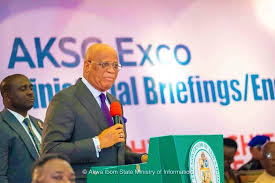
That changed during Governor Umo Eno’s administration. Earlier reporting found that the state moved towards shorter summaries instead of the more detailed reports it had previously released.
The problem with that approach is practical. If a state receives billions or trillions of naira, a broad summary cannot tell citizens enough about how that money was actually used.
And the amounts involved in Akwa Ibom are significant.
According to Premium Times’ report on the Q2 2026 budget report, the Eno administration had received more than ₦2.943 trillion in 38 months, based on previously reported revenue data.
That makes the missing detail harder to ignore.
The governor has pointed to audited accounts
Eno has previously referred to the state’s audited financial statements when asked how its accumulated revenue was being spent.
Those records are useful, but they do not completely solve the problem.
Premium Times reported that the audited statements also lack enough detail on capital expenditure to give citizens a full picture of how public funds were deployed.
So residents are left having to piece together information from different government documents instead of getting a clear account in the budget implementation report itself.
That is exactly the kind of gap fiscal transparency is supposed to prevent.
It is part of a wider problem

Akwa Ibom is not the only state with questions around budget disclosure.
BudgIT found that 34 states published Q2 2026 budget implementation reports, down from 35 states in the same period of 2025. Osun and Rivers had not published their Q2 reports at the time of the assessment.
So Nigeria has made some progress in getting states to publish fiscal information. The harder part is making sure what gets published is actually useful.
For Akwa Ibom, that means giving residents enough information to follow public money from revenue received to money spent and projects delivered.
A budget report should not leave citizens doing detective work just to understand their own government’s finances.