AI's Hidden Cost: Data Centers' Thirsty, Polluting Footprint Rivals Nations
A United Nations University report warns that the environmental footprint of data centers, already comparable to large countries, is set to double by 2030 due to AI growth. The study highlights staggering increases in energy and water consumption, underscoring the urgent need for transparency and more concise user queries to mitigate AI's invisible environmental cost.A recent report by the United Nations University reveals that the environmental footprint of global data centers currently rivals that of some of the world's largest countries.
The report alarmingly predicts that data centers' water and energy consumption, along with their pollution, are set to double within just four years, primarily driven by the escalating use of artificial intelligence (AI).

The Scale of the Problem
In the past year, global data centers consumed an astonishing 448 trillion watt-hours of electricity. This figure surpasses the electricity usage of all but ten countries worldwide.
The energy consumption resulted in approximately 208 million tons (189 million metric tons) of carbon dioxide emissions, equivalent to the total emissions of Argentina.
Furthermore, generating this amount of energy required about 1.2 trillion gallons (4.5 trillion liters) of water. The study, while focused on energy, acknowledged the immense amount of water utilized for cooling data centers.
Projections indicate a significant increase by 2030, with data centers expected to account for nearly 3% of the world's total electricity use, reaching 935 trillion watt-hours.
If data centers were a sovereign nation, this level of power consumption would rank it as the sixth-highest globally. Consequently, this would produce close to 440 million tons (399 million metric tons) of carbon dioxide.
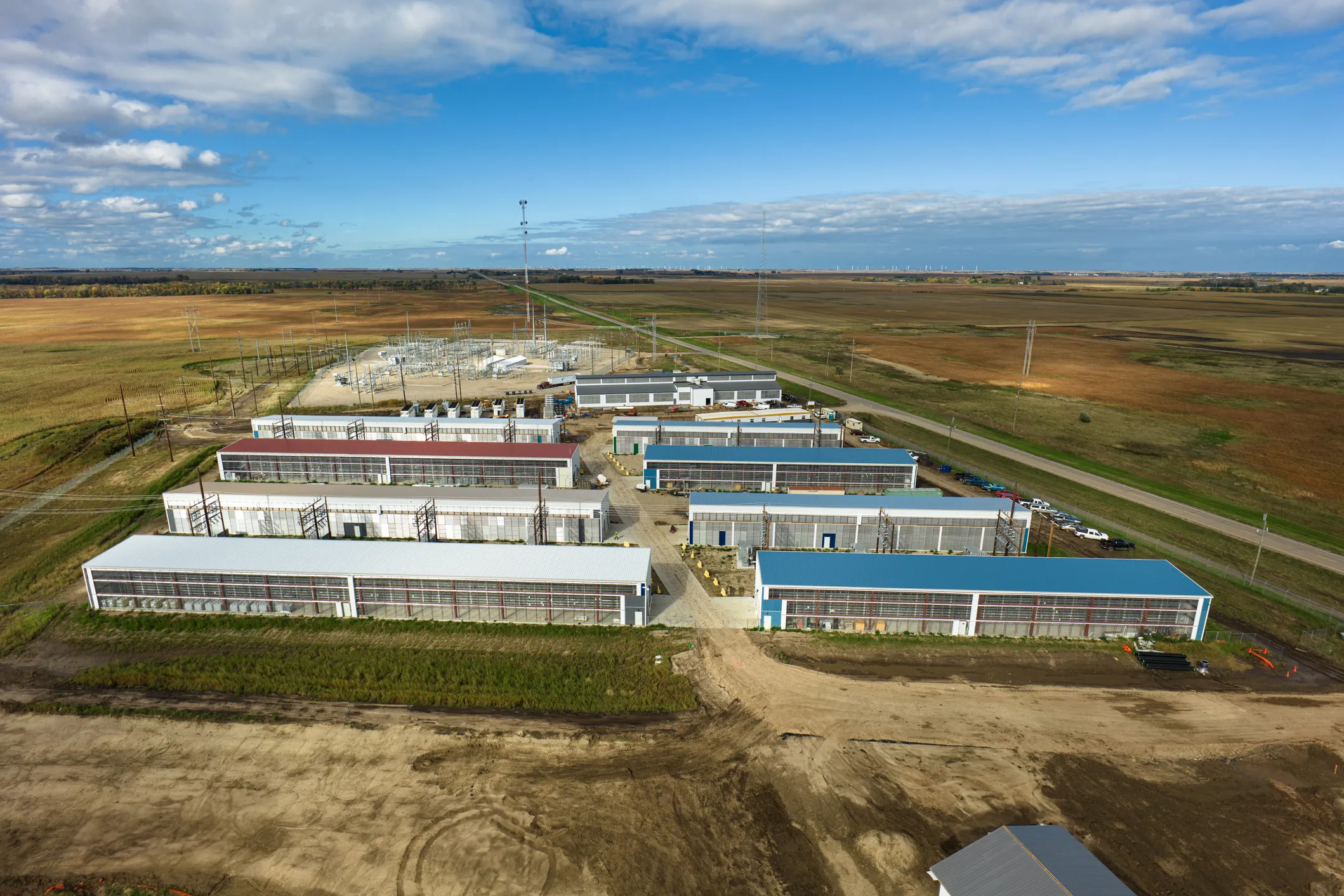
Kaveh Madani, a water scientist and director at the United Nations University Institute for Water, Environment and Health in Canada, co-authored the study and emphasized the sheer scale, stating, "If you look at these numbers, we're seeing scales comparable to nations. The demand is enormous."
Artificial intelligence is a primary catalyst for this surge in data center expansion. Currently, AI is responsible for about 20% of data centers' energy consumption, a figure expected to climb to 40% by 2030.

The report's findings gain significant weight due to the credibility of the U.N. institution behind it.
Fengqi You, a Cornell University energy engineering professor focusing on AI sustainability, commended the report for integrating carbon, water, land, life-cycle impacts, and environmental justice into a single framework for an issue often obscured by secrecy.
Jean Su, director of the Energy Justice Program at the Center for Biological Diversity, highlighted its importance as the first U.N. or global report to shed light on AI's environmental harms.
Industry representatives, however, emphasize efforts toward efficiency and the societal benefits of AI.
Caleb Max, President of the National Artificial Intelligence Association, underscored how AI is improving safety, health, work efficiency, food production, and poverty reduction, asserting that the energy return on investment for AI development is transformative.
Josh Levi, President of the Data Center Coalition, affirmed the industry's commitment to addressing its environmental impact, vowing to collaborate with policymakers, communities, and partners for responsible and transparent growth.

Challenges and the Path Forward
Despite industry assurances, Madani cautioned against perceiving AI as a 'clean' virtual technology. He noted that unlike mechanical devices with visible pollution, AI's environmental cost is often unseen but real.
"AI is not just a virtual thing. We're talking about something that has physics, something that has real impacts. There is infrastructure there. There is energy that is being used," Madani explained, pointing out that while our devices don't emit smoke, the environmental burden falls elsewhere.
Users can play a role in mitigating AI's substantial energy demand by making their queries more concise.
The report indicates that reducing word count in requests by 30% can decrease AI's energy use by 25%, saving electricity equivalent to what 700,000 people in Africa consume annually.

A typical ChatGPT-style query, for instance, is about 200 times more energy-intensive than basic text classification like an email spam filter, with AI-generated images or video requiring even more energy.
While training complex AI models like GPT-3 (1.3 billion watt-hours) and its successor (50-70 billion watt-hours) is energy-intensive, Miriam Aczel, a United Nations University environmental policy researcher and co-author, clarified that approximately 90% of AI's power consumption comes from operational requests, citing GPT's 2.5 billion daily prompts.
However, an efficiency paradox exists. As technologies become more efficient, their increased usage often leads to an overall surge in total energy consumption.
Madani also challenged claims of using renewable energy for data centers, arguing that this often merely depletes the supply of clean electricity, leading to dirtier energy use elsewhere.
A significant challenge in studying this issue is the lack of transparency from many companies regarding the energy and water consumption of their data centers and AI operations, as well as their locations and sizes.
As Cornell's You aptly put it, "We cannot manage what companies do not disclose."