AI Didn't Suddenly Appear — Humans Have Been Building Its Logic for Centuries
Artificial intelligence is often seen as a sudden breakthrough, but it is actually the result of centuries of human systems designed to structure knowledge, formalize reasoning, and externalize thinking.
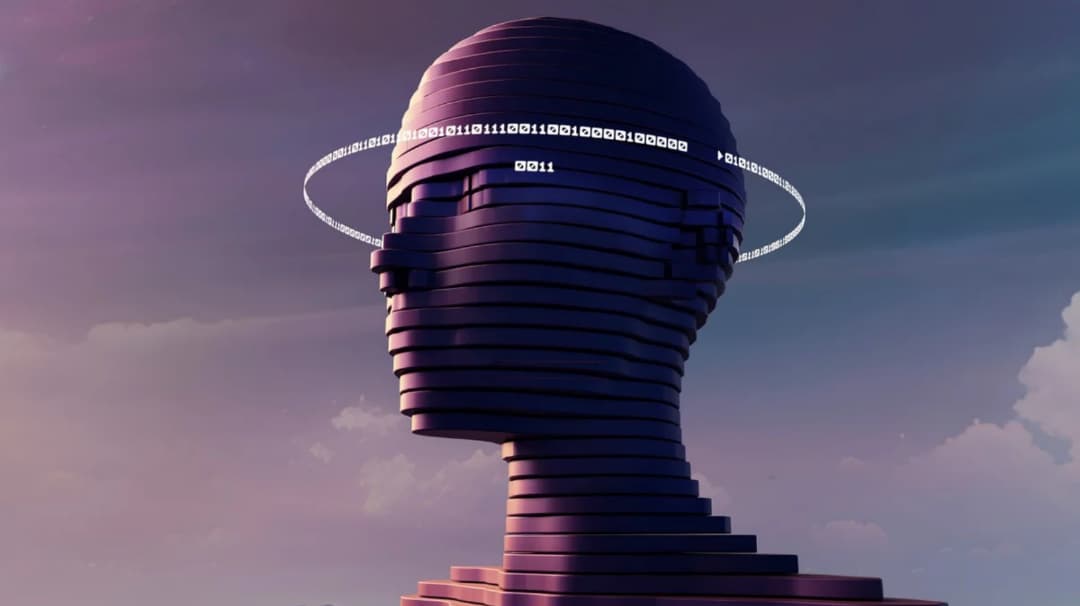
Artificial intelligence did not appear suddenly. It grew out of centuries of attempts to do one thing: move thinking outside the human mind and into systems that can hold, organize, and process it.
When Thinking First Left the Human Mind
Long before machines, humans faced a simple limit: memory does not scale, but information does.
The response was not technology in the modern sense, but structure.
Writing systems turned memory into something external, libraries turned knowledge into something spatial and catalogues turned information into something searchable.
Inancient Mesopotamian archives, knowledge was already being treated less as something remembered and more as something arranged. Clay tablets and scrolls were grouped, labelled, and indexed so that retrieval did not depend on recall alone.
The earliest survivinglibrary catalogues, found at Nippur and dating to around 2000 BCE, show that the impulse to organize knowledge into searchable systems is far older than computing.
Later, in places likeAlexandria, this impulse became institutionalized. The Library was not merely a storehouse, it was a system for organizing and operating on knowledge at scale.
This shift matters because it introduces an idea that still defines AI today: intelligence increases when information is structured in ways that allow operations to be performed on it.
At this stage, intelligence is no longer just in the mind, it is partially in the system.
From Mechanical Logic to Symbolic Thought
Centuries later, the question changed fromhow do we store knowledge? Can reasoning itself be structured?
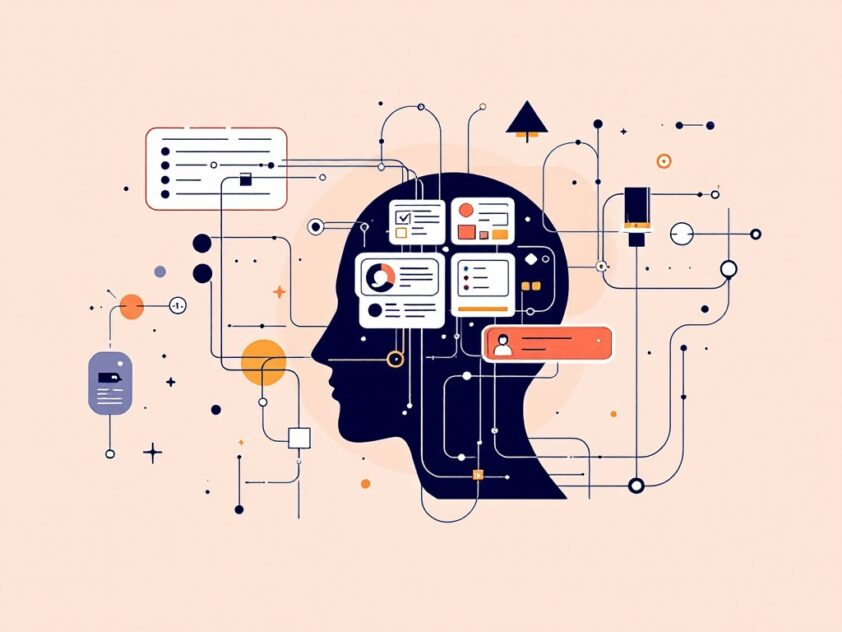
Charles Babbage's Analytical Engine was one of the earliest attempts to treat calculation as a mechanical process. It was not just a calculator, it was an imagined machine that could follow instructions in sequence, like a physical version of logic.
Ada Lovelace pushed this idea further. She suggested that such a machine would not be limited to numbers alone. If symbols could be arranged into rules, then a machine could manipulate more than arithmetic, it could, in principle, process structured meaning.
As the Computer History Museum notes, her insight marked the fundamental transition from calculation to computation.
That shift is subtle but important. It marks the moment thinking begins to detach from human intuition and move toward formal procedure.
Later,Alan Turing made this idea explicit. In his landmark 1936 paper, he showed that any logical process could be broken into steps a machine could execute. What we now call computation is simply structured thinking made repeatable.
Once thought becomes a sequence of rules, it becomes transferable. And once it becomes transferable, it becomes automatable.

How Modern AI Actually Works
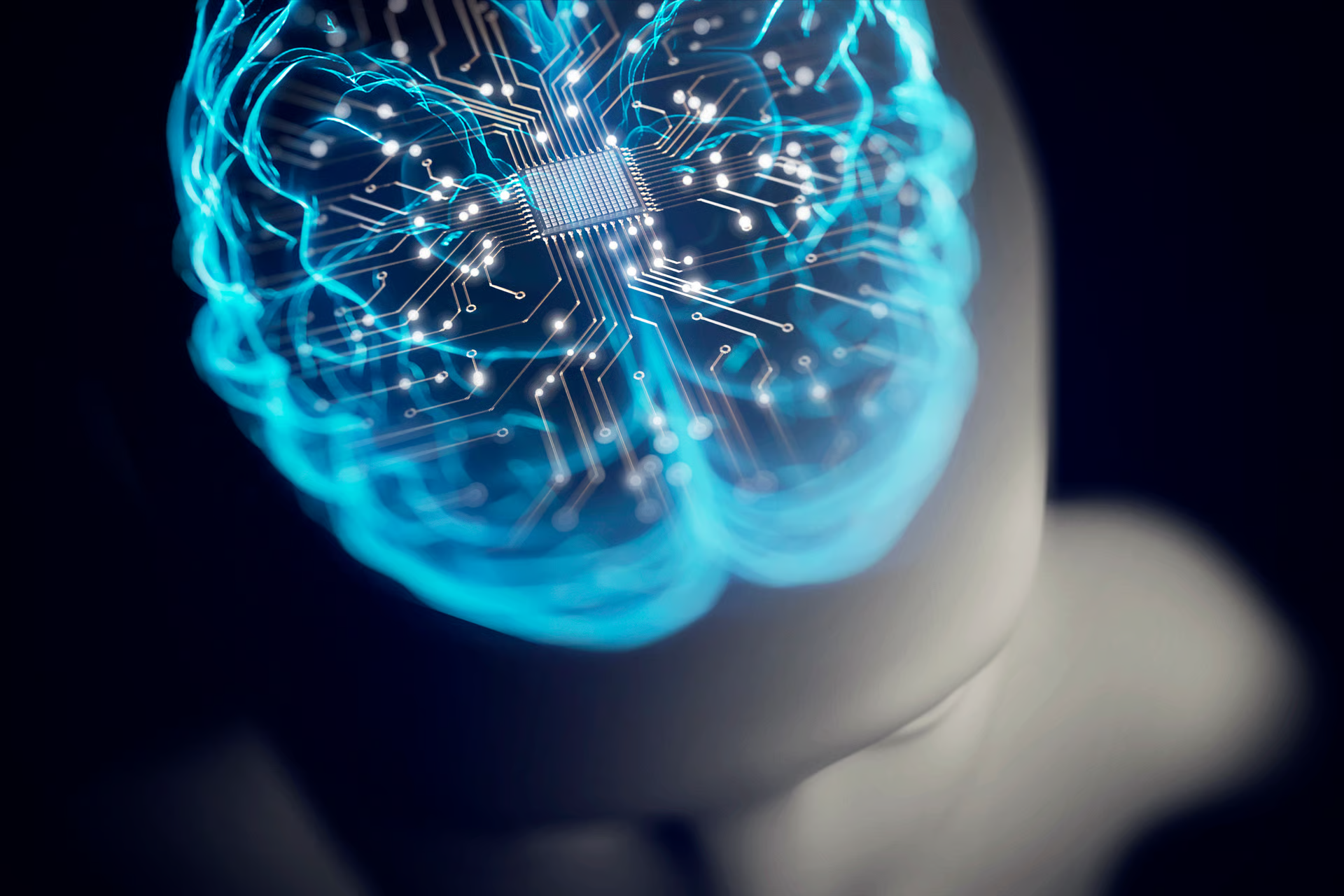
Modern systems developed by companies such as OpenAI are not conscious and do not "think" in the human sense.
They operate by learning patterns from vast amounts of text and data. During training, the system identifies statistical relationships between words, phrases, and structures of meaning. When given a prompt, it generates responses by predicting what comes next based on those learned patterns.
Not the truth, not understanding but Prediction.
At a simplified level, the process looks like this: AI breaks language into smaller units called tokens, analyzes relationships between them, and generates a response step by step based on probability.
This is why AI can sound confident even when it is wrong. It is not verifying reality — it is continuing patterns. As OpenAI's own researchers have acknowledged,AI models hallucinate, producing false information with apparent confidence, partly because they are trained to predict fluent responses rather than verify truth.
That distinction is small in wording, but large in consequence.
Because it means AI does not "know" in the way humans know. It produces language that resembles knowing.
The Hidden Pattern: Outsourcing Thinking

Across this entire history, one pattern repeats itself.
Thinking is gradually being broken into parts and moved outside the human mind.
Writing externalized memory, libraries externalized storage, indexes externalized retrieval, machines externalized calculation and AI now externalizes parts of reasoning and language.
Each step does not eliminate human thinking. Instead, it shifts part of it into systems that can perform it more consistently, quickly, and at scale.
But something changes along the way.
When thinking becomes easier to access, it also becomes easier to rely on.
And this is where the real tension begins.
AI is the latest stage in a long human project:turning thought into something that can be structured, repeated, and executed outside the mind.